AT A GLANCE
- Known for
- Close, personal animal portraits, from Ranthambhore's tigers to the little owls of the English countryside
- Works in
- Color, also monochrome and infrared
- Camera
- Sony A1 II since 2024; earlier Canon, Nikon and Olympus
- Also
- Former computer consultant; author of many books; presented the Discovery Channel series Wildlife Photographer; leads photo tours on all seven continents
- Start with
- Concepts of Nature: A Wildlife Photographer's Journey (Aurum Press, 2008)
- Links
Andy Rouse (born c. 1965) is a British wildlife photographer based in South Wales. He left a career as a computer consultant to photograph animals full time in 1999. He has won awards in Wildlife Photographer of the Year many times and is known for working very close to his subjects.
The story
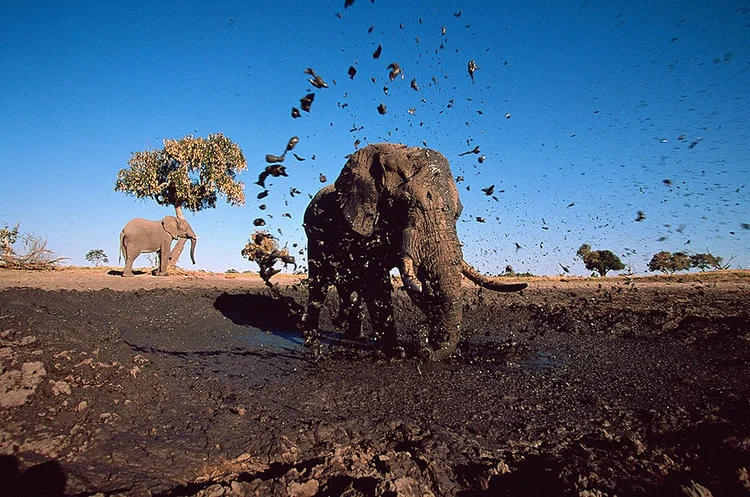
At a mud pool in Africa, Andy Rouse hid a remote-controlled camera under a handful of earth. Elephants came there to wallow. One of them was angry. It came within a few metres of him and attacked with mud, throwing it high into the air. The hidden camera caught the moment. In 1998 the picture won the Animal Behaviour (Mammals) category of Wildlife Photographer of the Year.
Yet photography was not his job. He worked in computers, and he had never had a lesson. “I have never been taught photography by anyone, I have just learnt it myself,” he said. By the time he reached 30, he felt he was going nowhere. The office was wearing him down. “The job was too stressful, came with too much responsibility and I didn't quite like the person I was,” he told a Sri Lankan newspaper in 2003.
So he took the leap. The BBC had already published some of his pictures, and Amateur Photographer offered him a column. In July 1999 he became a full-time wildlife photographer. The work took him far. He presented the Discovery Channel series Wildlife Photographer and wrote many books. In 2010 he won the Gerald Durrell Award for Endangered Species at Wildlife Photographer of the Year, after following a young tigress as she stalked deer in Ranthambore. Two years later the Royal Geographical Society gave him its Cherry Kearton Medal.
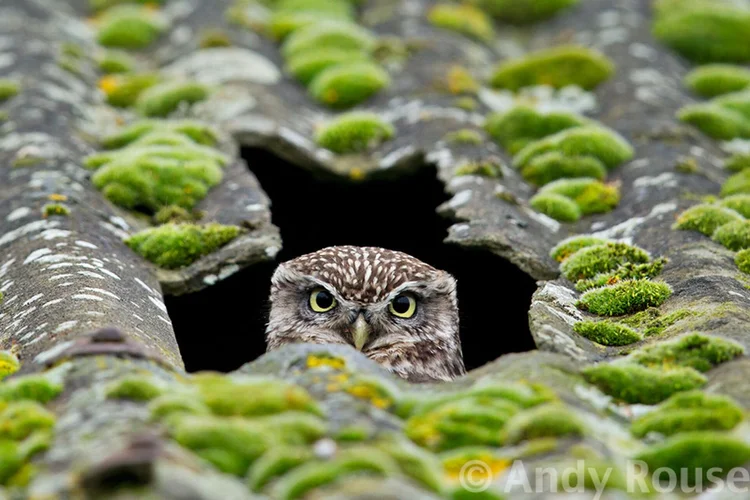
Some of his favourite subjects live much closer to home. He found his first little owl nest in a broken bough in Surrey. From the dark hole, a beady eye watched him. Then a young owlet shuffled out, with feathers that looked too big for it. He was hooked. His book Little Owls gathers ten years of work with three owl families.
The elephant at the mud pool never saw its picture. Still, the animal is what he keeps in mind when he works. “I like to think that I take a photograph that the animal would like, if he ever got the chance to see it,” he says.
The work


- c. 1965Born
- 1984Wins the Humorous Views category of BBC Wildlife Photographer of the Year
- 1998Wins Animal Behaviour (Mammals) at Wildlife Photographer of the Year with his elephant picture
- 1999Leaves his job as a computer consultant and turns professional in July
- 2008Publishes Concepts of Nature
- 2010Wins the Gerald Durrell Award for Endangered Species, Wildlife Photographer of the Year
- 2012Receives the Cherry Kearton Medal of the Royal Geographical Society
- 2018Publishes Noor: Queen of Ranthambhore with Dicky Singh
- 2026Overall winner of the MontPhoto competition
Lessons
Learn the animal first. For Rouse, fieldcraft matters most: tracking an animal and predicting its movements. Technical knowledge comes after that.
Be ready to wait. On his first evening in Yala he searched for leopards for hours. They appeared just as the team was ready to stop.
Work close to home. Hares, roe deer and little owls are some of his favourite subjects. He has photographed one species for ten years.
Try this: choose one common animal near your home, like a garden bird or a squirrel. Watch it for a week without a camera and note where it goes and when. In the second week, wait for it in the right place with your camera.
Gear
Rouse has changed camera systems several times. He believes the photographer makes the image, but he talks openly about his kit.
Canon EOS-1Ds and 1D Mark II: his bodies in 2004, with a 500mm lens, a 70-200mm f/2.8 and a 1.4x teleconverter on a Gitzo carbon tripod with a Wimberley head.
Nikon D3: with a 200-400mm lens, he made his award-winning picture of a stalking tigress in Ranthambore.
Canon EOS-1D X Mark II: as a Canon ambassador he used it, with the EOS 5D Mark IV, for his book on the tigress Noor.
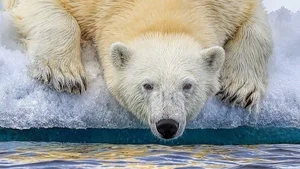
Olympus OM-D E-M1X: in Svalbard in 2019 he held it above his head with an 8mm fisheye lens to photograph a polar bear mother and cub.
Sony A1 II: his system since 2024. He owns two bodies, a 24-70mm f/2.8, a 70-200mm f/2.8 and a 200-600mm lens.
Flexshooter tripod head: he mostly hand-holds, but uses this head when he works from a hide.
Books
Concepts of Nature: A Wildlife Photographer's Journey (Aurum Press, 2008). A 160-page book of color photographs, part photobook and part handbook. It has three parts. Vision shows his landmark pictures, many unpublished before, and his move from close animal portraits to pictures that show a species and its habitat together. Expression explains the ideas and techniques behind themed portfolios, such as his work in South Georgia and Antarctica. Inspiration looks at the wildlife photographers who influenced him. An appendix gives the technical details of every picture. A good book for photographers who want to understand how he thinks.
Tigers: A Celebration of Life (Andy Rouse, 2010). His first tiger book, a 96-page hardback with about 100 color photographs, published by Rouse himself for the International Year of the Tiger. It holds some of his earliest tiger pictures from India and beyond, including award-winning images, and his early work with his friend Aditya "Dicky" Singh. There are chapters on the tiger's life, tips for tiger photographers and advice for visitors, plus two conservation essays by Sarah Christie of the Zoological Society of London. A quarter of the profits went to tiger conservation. Now out of print, but sometimes found second-hand.
Noor: Queen of Ranthambhore (Andy Rouse, 2018). A large-format, 160-page book made with Aditya "Dicky" Singh over four years and hundreds of hours in the field. It follows the tigress Noor through four litters between 2012 and 2016, in about 200 color, monochrome and infrared photographs, from playful cubs to hunting scenes. The chapters read as stories, with leopards, birds and deer along the way, and there are photo tips for readers who want to try big cat photography. The foreword is by the tiger expert Valmik Thapar. Proceeds went to local tiger conservation and community projects.
In his words
“Whilst some technical knowledge can go a long way, in wildlife photography it is perhaps one of the least important skills.”
“Photography for me is just a way of making money to spend time with animals.”