AT A GLANCE
- Known for
- Polar wildlife above and under the ice: leopard seals, polar bears, emperor penguins, narwhals
- Works in
- Color; many fine art prints also in black and white
- Camera
- Canon EOS-1D Mark IV in a Seacam underwater housing for his 2012 award photos; today a Sony Artisan of Imagery
- Also
- Marine biologist; co-founder of SeaLegacy (2014) with Cristina Mittermeier; Member of the Order of Canada
- Start with
- Born to Ice (teNeues, 2018)
- Links
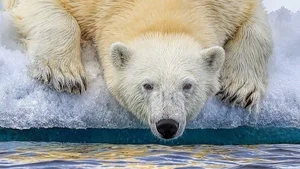
Paul Nicklen (born 1968) is a Canadian photographer and marine biologist who works mostly in the Arctic and Antarctica. He has photographed more than twenty stories for National Geographic, often from under the ice. In 2014 he co-founded the ocean conservation group SeaLegacy with Cristina Mittermeier.
The story
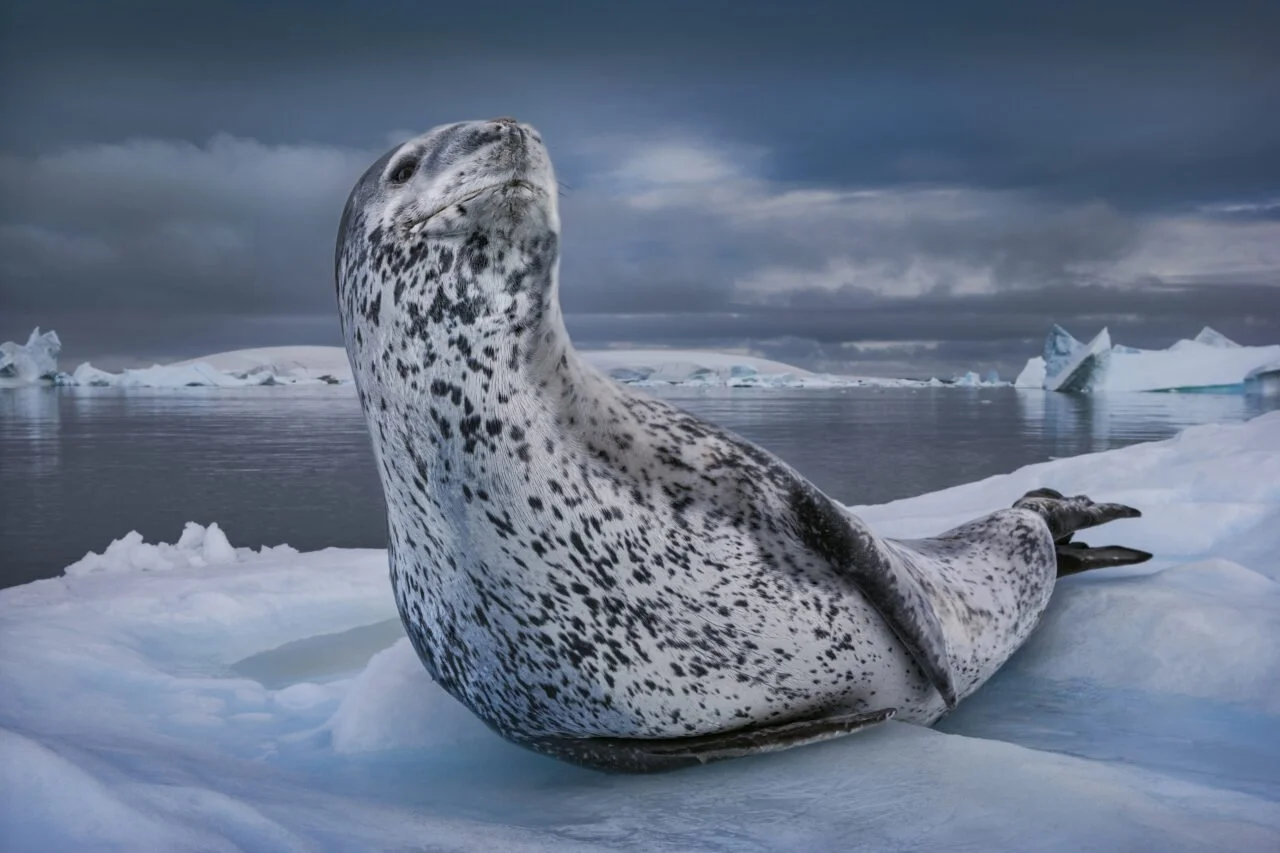
In 2006 Paul Nicklen sat in a Zodiac boat off the Antarctic Peninsula. Next to him was Goran Ehlme, a Swedish diver who knew leopard seals. On the first day a huge female came up to them, as long as their 12-foot boat. She grabbed a penguin and rammed it against the hull. Then Ehlme told him it was time to get in the water. Nicklen asked to wait until tomorrow. Ehlme yelled at him. So, with a dry mouth and trembling legs, he rolled over the side.
She raced at him and opened her jaws around his camera. “And I’m staring down her throat,” he said. He lay still and let her lead. After a few minutes of threat display, she relaxed. Then she caught a penguin and let it swim toward him. “And it dawned on me that she’s trying to feed me a penguin,” he said.
Ice had been his world since childhood. Born in Tisdale, Saskatchewan, he was four when his family moved to Baffin Island. They lived in an Inuit community of about 200 people, with no television and no telephone. “The snow and the ice were my sandbox, and the Inuit were my teachers,” he said. Later he studied biology at the University of Victoria and worked as a biologist in the North before he turned to photography. The leopard seal story was his fifth for National Geographic, and his favorite.
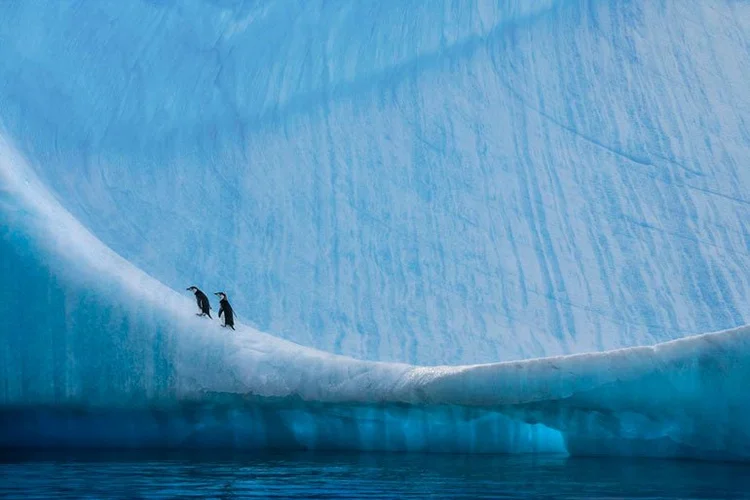
For four days the seal kept bringing penguins. When he could not catch live ones, she brought dead ones. He laughed and cried so hard that his mask flooded. Afterwards he swam with 30 other leopard seals and never had a scary encounter. From that same year comes Home Ice Advantage: two penguins on a wave of blue sea ice.
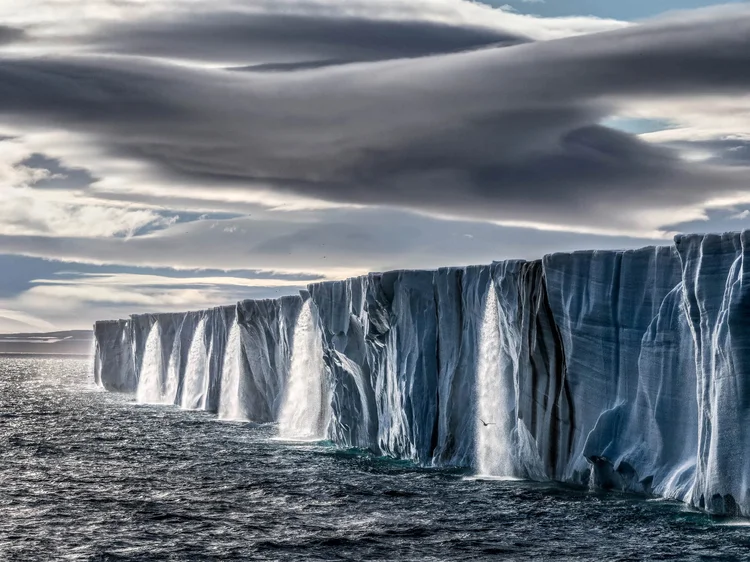
But the ice itself was changing. In Svalbard in 2014, a storm pushed his boat behind the Nordaustlandet ice cap. The air was 68 degrees Fahrenheit, and about twenty waterfalls were pouring off the ice. Ice Waterfall became one of his best-known pictures. Al Gore has used it to show the effects of climate change.
He went to Antarctica to give a feared animal a fair shake. Now he does the same for the ice that every polar animal needs. “I want people to realize that ice is like the soil in the garden,” he said. “Without ice, the polar regions cannot exist.”
The work


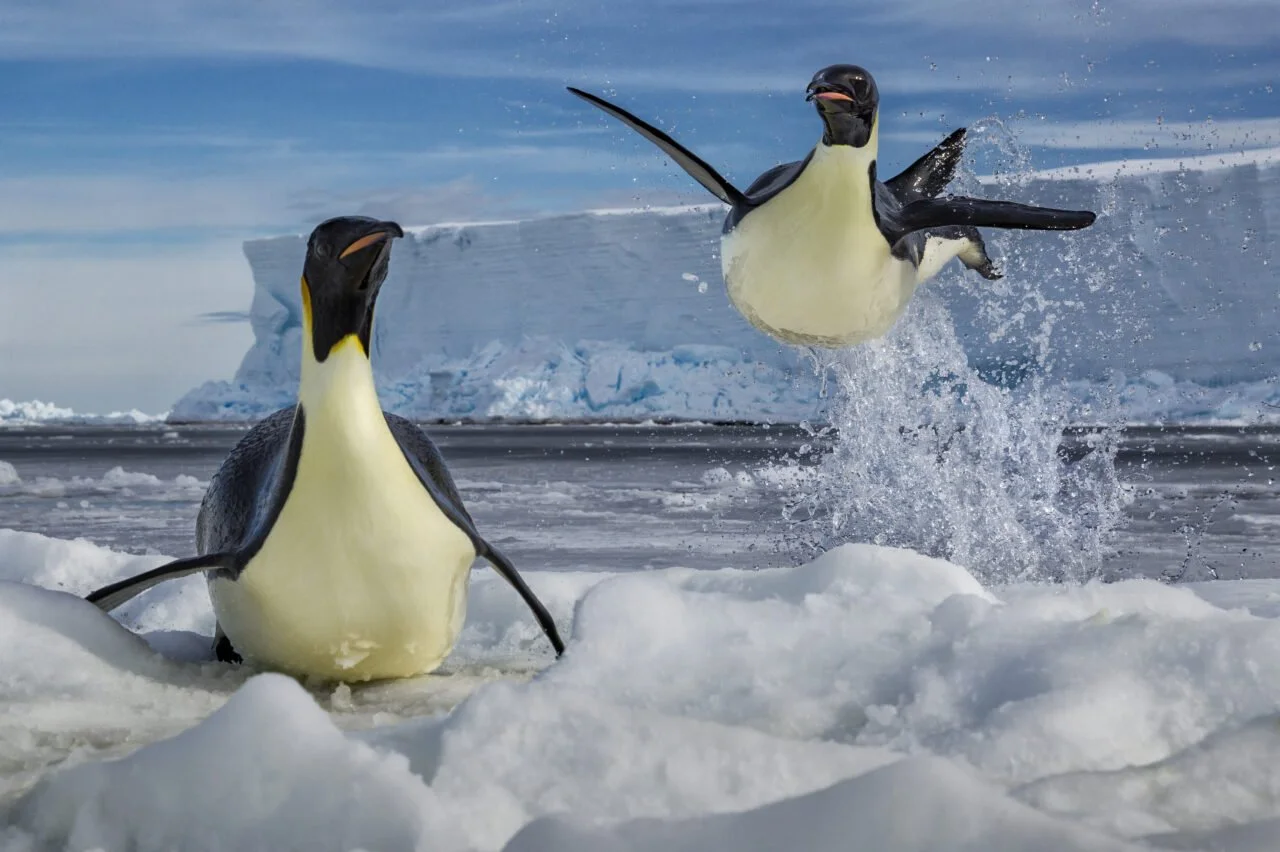
- 1968Born in Tisdale, Saskatchewan
- 1972Family moves to Baffin Island
- 1990Graduates in biology from the University of Victoria
- 2000First book, Seasons of the Arctic, with Hugh Brody
- 2006Leopard seal assignment in Antarctica for National Geographic
- 2009Publishes Polar Obsession
- 2012Wildlife Photographer of the Year
- 2014Co-founds SeaLegacy with Cristina Mittermeier
- 2019Order of Canada; International Photography Hall of Fame
Lessons
Let the animal lead. With leopard seals and bears, he stays still and lets the animal decide how close the meeting goes.
Get really close. He works with wide-angle and fisheye lenses, close enough to almost touch, so the viewer feels inside the picture.
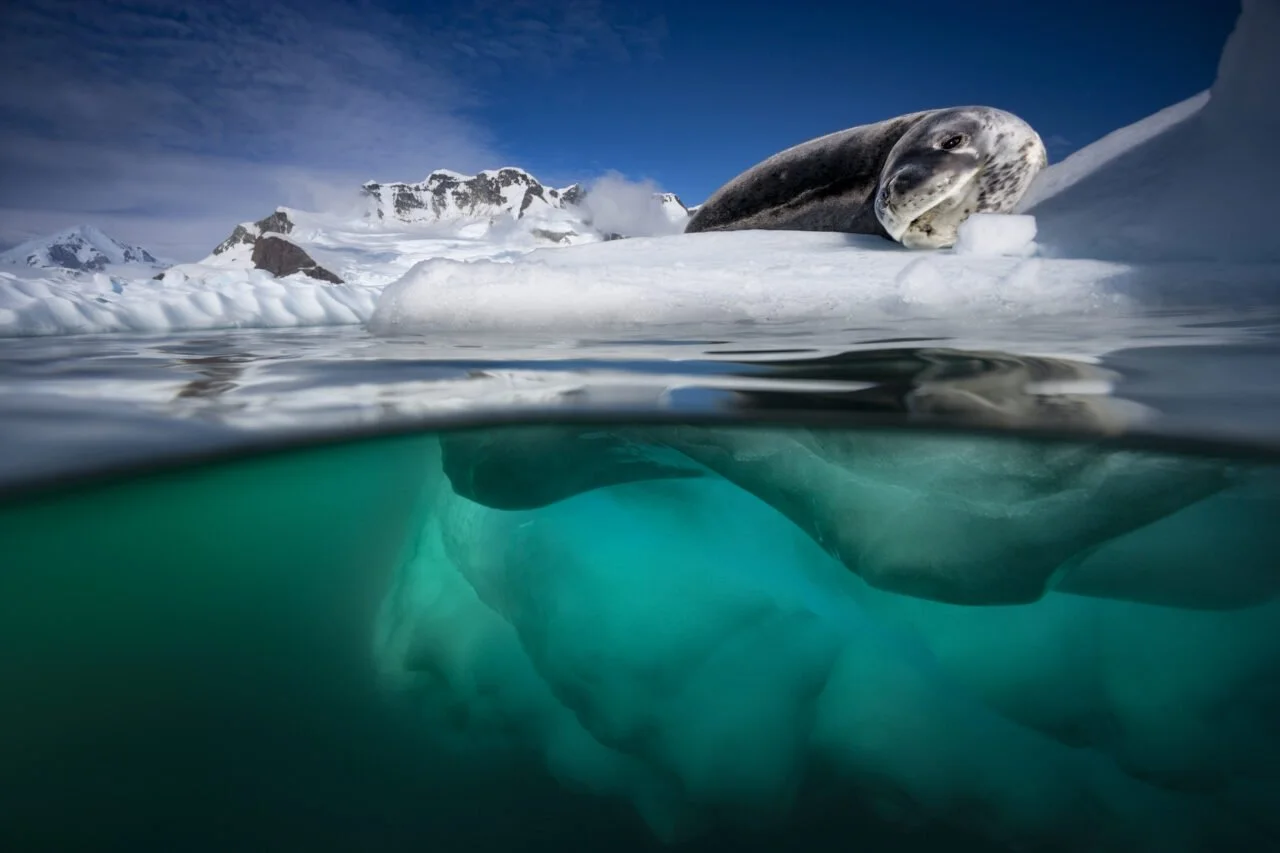
See a place from every level. He photographs from the air, at eye level and under water, and puts these views together.
Try this: choose one place and photograph it from three heights: from above, at eye level and from as low as you can get. Then compare which view tells the most.
Gear
Canon EOS-1D Mark IV: the camera listed for all three of his 2012 Wildlife Photographer of the Year images, with a 16-35mm f/2.8, a 24-105mm f/4 and an 8-15mm fisheye lens.
Seacam underwater housing: protected the camera in the freezing water of the Ross Sea for his emperor penguin pictures.
Pentax K1000: his mother, a photographer with her own darkroom, lent him this film camera on a family trip to Italy when he was 15.
As a student he worked hard to get a Nikonos V underwater camera. Today he is a Sony Artisan of Imagery. To reach narwhals on the sea ice, he even learned to fly an ultralight plane on floats.
Books
Born to Ice (teNeues, 2018). A large retrospective of 344 pages, with an introduction by Leonardo DiCaprio. It brings together photographs from his life in the Arctic and his years in Antarctica, in color and in black and white: wide landscapes and close views of polar bears, belugas, leopard seals, penguins, harp seals, walruses and narwhals. Short essays tell stories from his childhood on Baffin Island and his work in the field. The text is in English, German and French. The best single book if you want to see his whole polar work.
Polar Obsession (National Geographic, 2009). A 240-page hardback of his work from both ends of the Earth. It shows leopard seals, whales, walruses, polar bears, bearded seals and narwhals, many photographed up close in icy water. The book connects the pictures with the science of climate change in the polar regions. It also explains how his Baffin Island childhood taught him to read the weather and live on the land. Good for wildlife lovers and for photographers who want to see what close underwater work looks like.
Bear: Spirit of the Wild (National Geographic, 2013). A 208-page book about North America’s bears: grizzlies, polar bears, black bears and the rare white Kermode, or spirit, bear. His photographs sit next to essays by Wade Davis, Sylvia Earle, Werner Herzog and Nicklen himself, with quotes from writers through the pages. It looks at myths and facts about bears and the threats to their habitat, and ends with an epilogue about their future. For readers who love bears more than ice.
Seasons of the Arctic (Greystone Books with Sierra Club Books, 2000). His first book, 128 pages. The photographs come from the remote Arctic where he had lived for many years. The text, by the anthropologist and writer Hugh Brody, follows the six seasons of the Inuit year. A quiet early book that shows where his love of the North began.
Reverence (Hemeria, 2026). His largest retrospective so far: 160 photographs on 360 pages, made over three decades in the polar regions, the oceans and other wild places, including pictures never published before. He began the project after his mother died, and the book became a tribute to her and to the mothers of the natural world, from humpback whales to polar bears and grizzlies.
In his words
“If we lose ice, we stand to lose an entire ecosystem.”
“I call myself an interpreter and a translator.”