Eric Meola Made Color His Subject – From India’s Ceremonies to Tornadoes on the Great Plains
What turns a childhood magic trick into fifty years of legendary photography?
For Eric Meola, it started in a basement darkroom at age twelve. He watched a blank piece of paper transform into an image in the developer solution. This moment changed everything because Meola realized he had found his new kind of magic.
That twelve-year-old boy became one of America's most respected photographers. Meola spent decades capturing Bruce Springsteen's most iconic album covers, chasing deadly tornadoes across the Great Plains, and documenting the vibrant ceremonies of India. His work hangs in galleries worldwide, but his approach remains surprisingly simple.
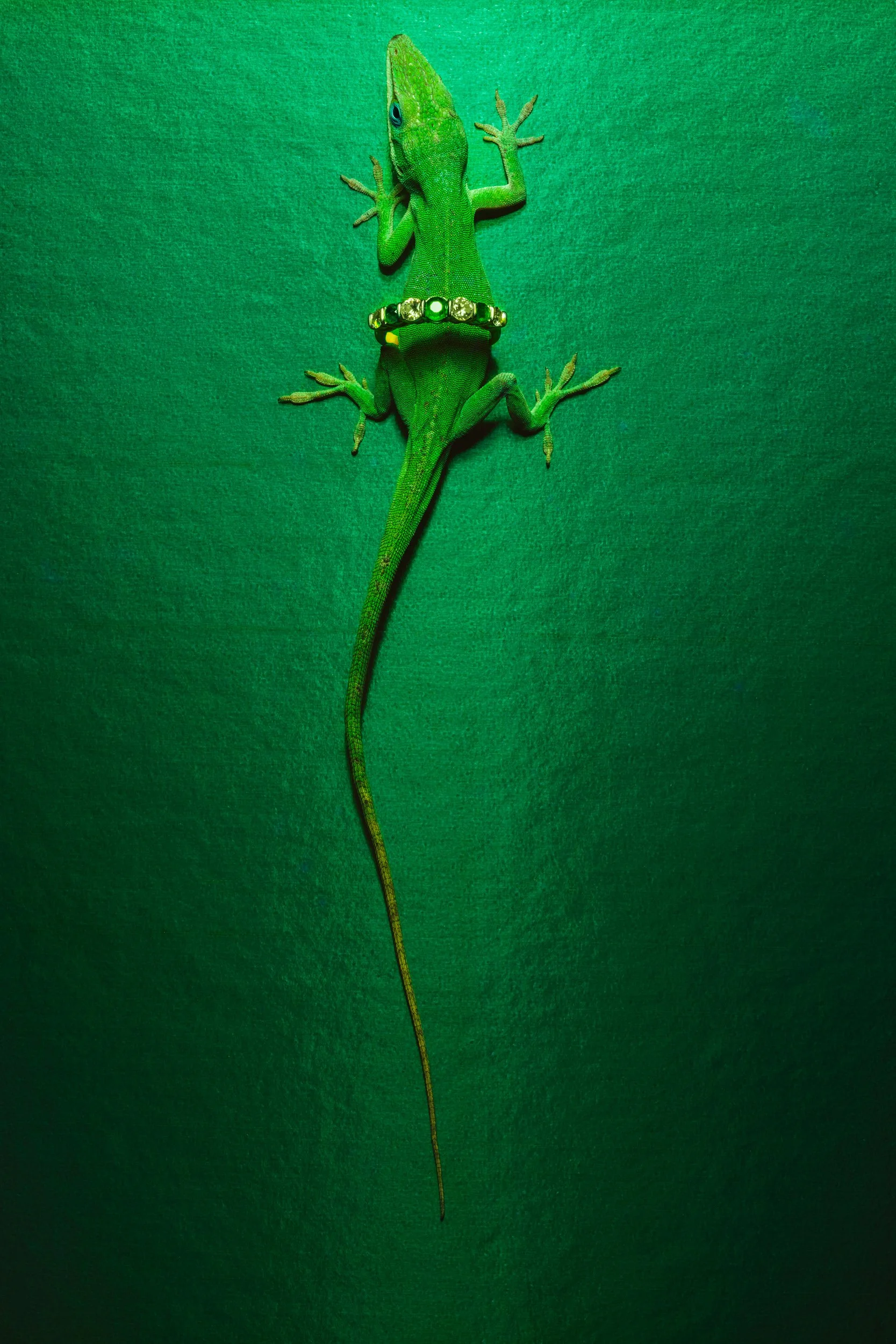
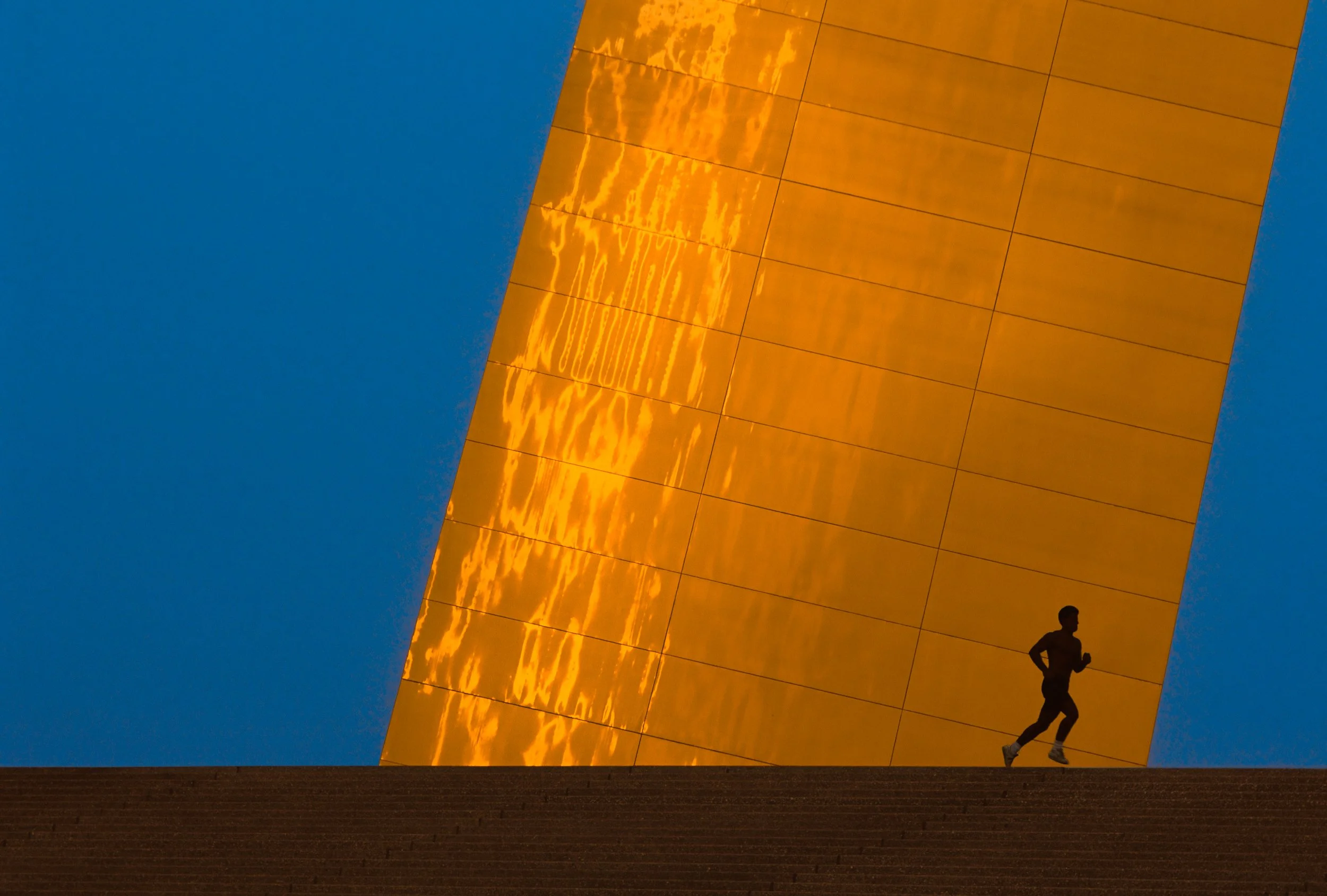
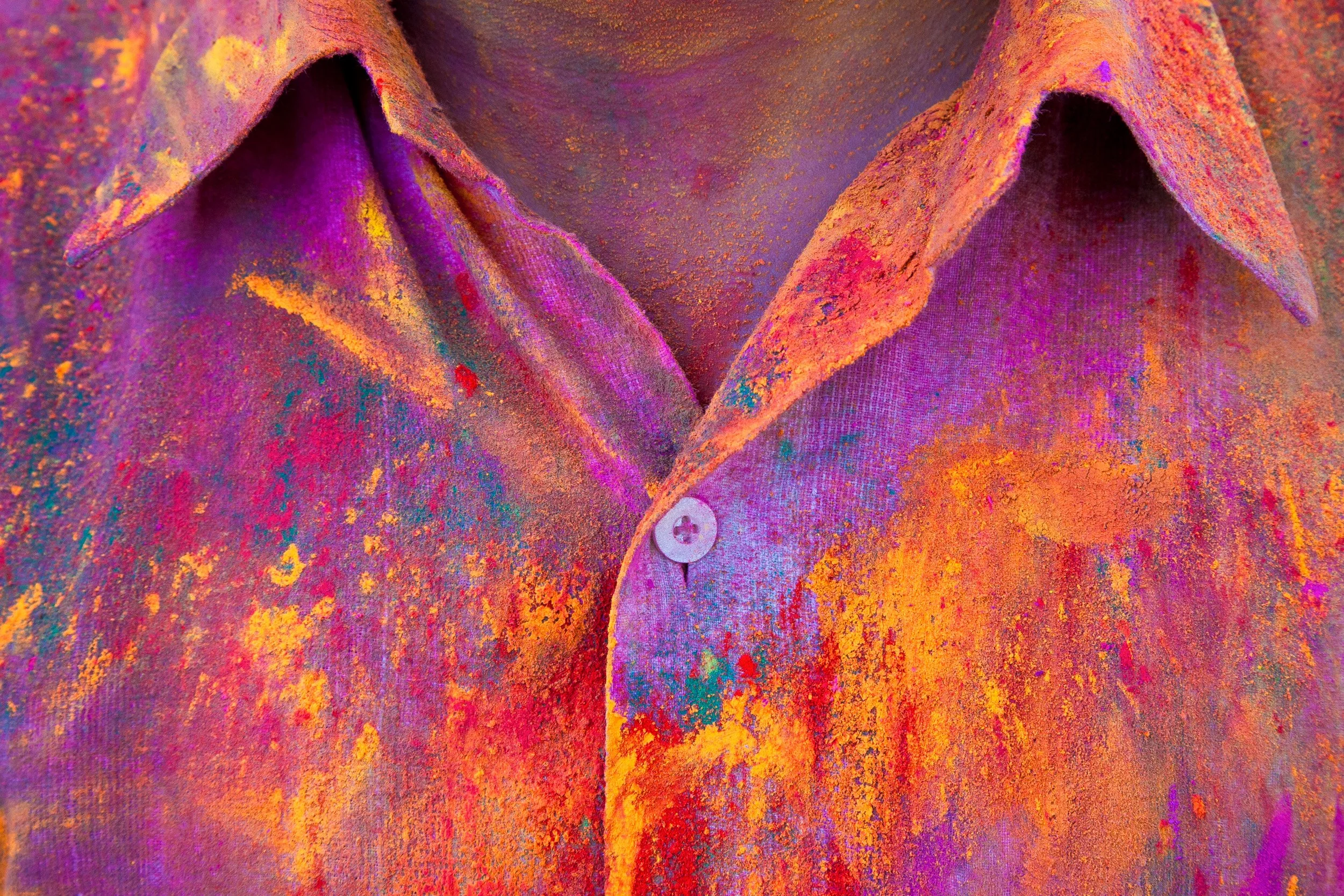
Most photographers take pictures in color, but Meola makes pictures about color.
He learned this philosophy from studying painters like Mark Rothko and Georgia O'Keeffe, not photography schools. Meola treats each photograph like a painting, using geometry and emotional response to guide his composition. This approach helped him create some of the most memorable images in American photography.
Eric Meola's father wanted a doctor, but got a photographer instead.
Martin: Can you tell me how you started taking photos?
Eric: My father was a doctor, and one of his patients was an engineer whose hobby was photography. When I was twelve years old, my dad asked this engineer if he would teach me how to process film and make prints. I think he just wanted to get me out of his hair.
I went to the engineer's house, and the first time I saw a print materialize in the developer, I knew immediately that's what I wanted to do with my life. It was one of those aha moments that hit me like a bolt of lightning. Instantaneous.
At the time, my hobby was magic tricks. And this was magic to me. Here's a blank piece of paper. You submerge it into a liquid, and suddenly an image appears. The whole process felt mysterious because I didn't understand the chemistry behind it. I just watched this image emerge in a dark room, like actual magic happening right in front of me.
From that moment on, I knew I wanted to be a photographer.
When did you realise that photography was more than just a hobby; it was your way of seeing the world, perhaps even your profession?
My father kept Life magazine in his waiting room, and we'd get a new issue every Friday. I started studying the photographs, discovering the work of Eugene Smith, Dorothea Lange, Elliot Erwitt, and all the famous photographers of that era. I began shooting black and white film myself, and little by little became entranced with the idea of becoming a photographer.
Unfortunately, my dad realized he'd made what he considered a tragic mistake. He wanted me to be a doctor. So we had this yin-yang relationship for several years.
Then I discovered the work of Pete Turner. During my junior year at Syracuse University, about 200 miles north of Manhattan, I flew down to New York and interviewed with him. I loved his work. The next year, I went back to New York and started assisting him.
He also taught you to use bright and bold colours, as you mentioned in our previous interview. You also said you learned photography by yourself, but studied colour theory in school. How did learning about colours help you improve your photography?
Learning about color happens by assimilation, very slowly. Some of it you're aware of, some of it you're not.
In college, we had a teacher named Tom Richards who loved color photography. I was still at that stage where you're trying to decide whether to photograph in color or black and white. At some point, you realize that if you took a black and white photograph in those days, there was no way to convert it to color. But if you took a color photograph, you could always print it in black and white. So you had this constant back and forth, trying to make a decision. And of course, when you're young, you're experimenting with all different kinds of processes.
At Syracuse University, we learned color printing. I fell in love with it. I set up a color darkroom in my basement and spent hours printing.
Working with Pete was fascinating because what we were really learning was his approach to photography in general. He would look at a subject and approach it from all different angles and sides. He wouldn't find one way to photograph something. He would find many ways to photograph it. He emphasized this constantly: don't fixate on just one way of looking at something. Walk around it. Whether it's a landscape or a portrait, approach it from all different angles and all different ways of thinking about it.

What qualities do you find most appealing in a color photograph?
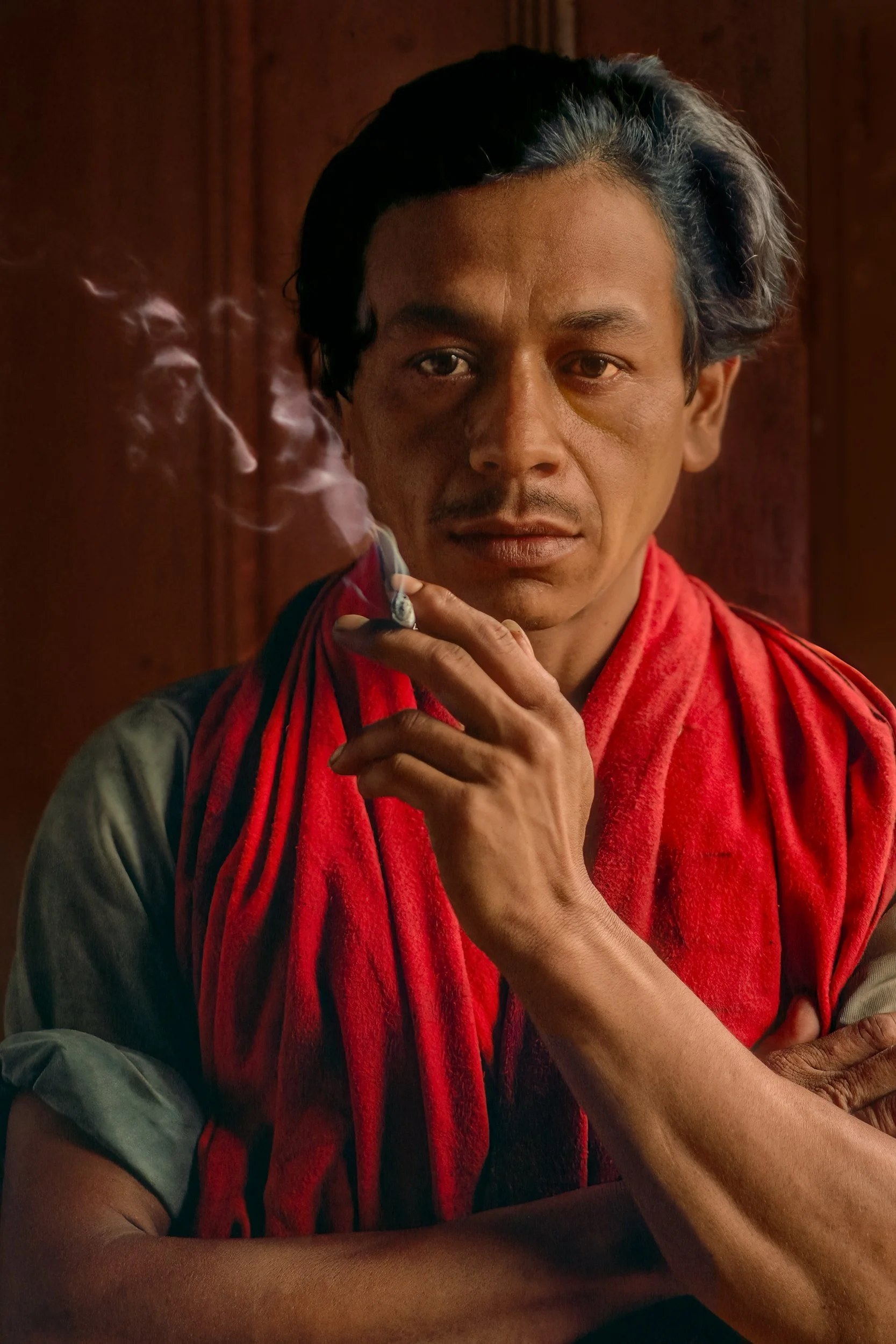
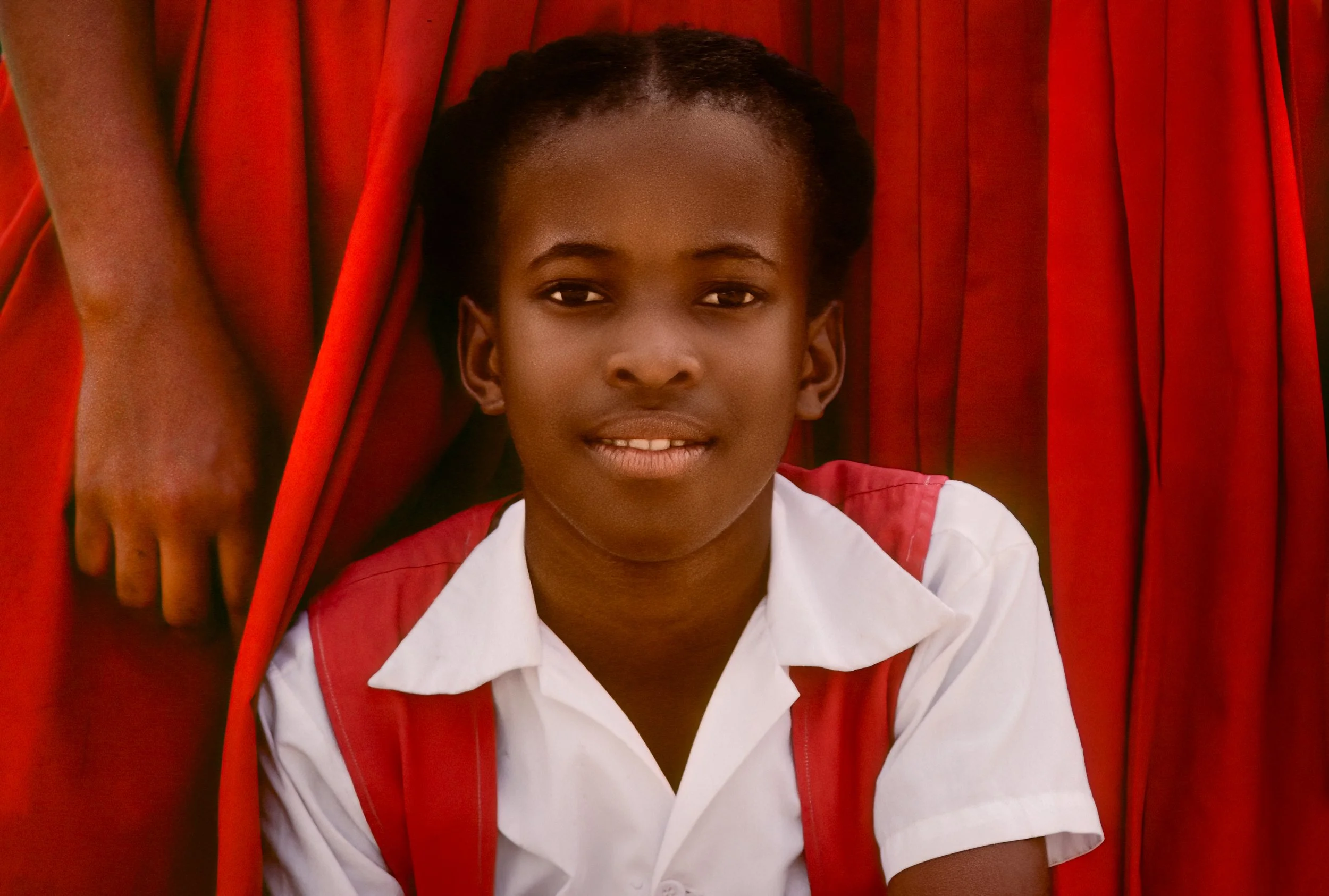
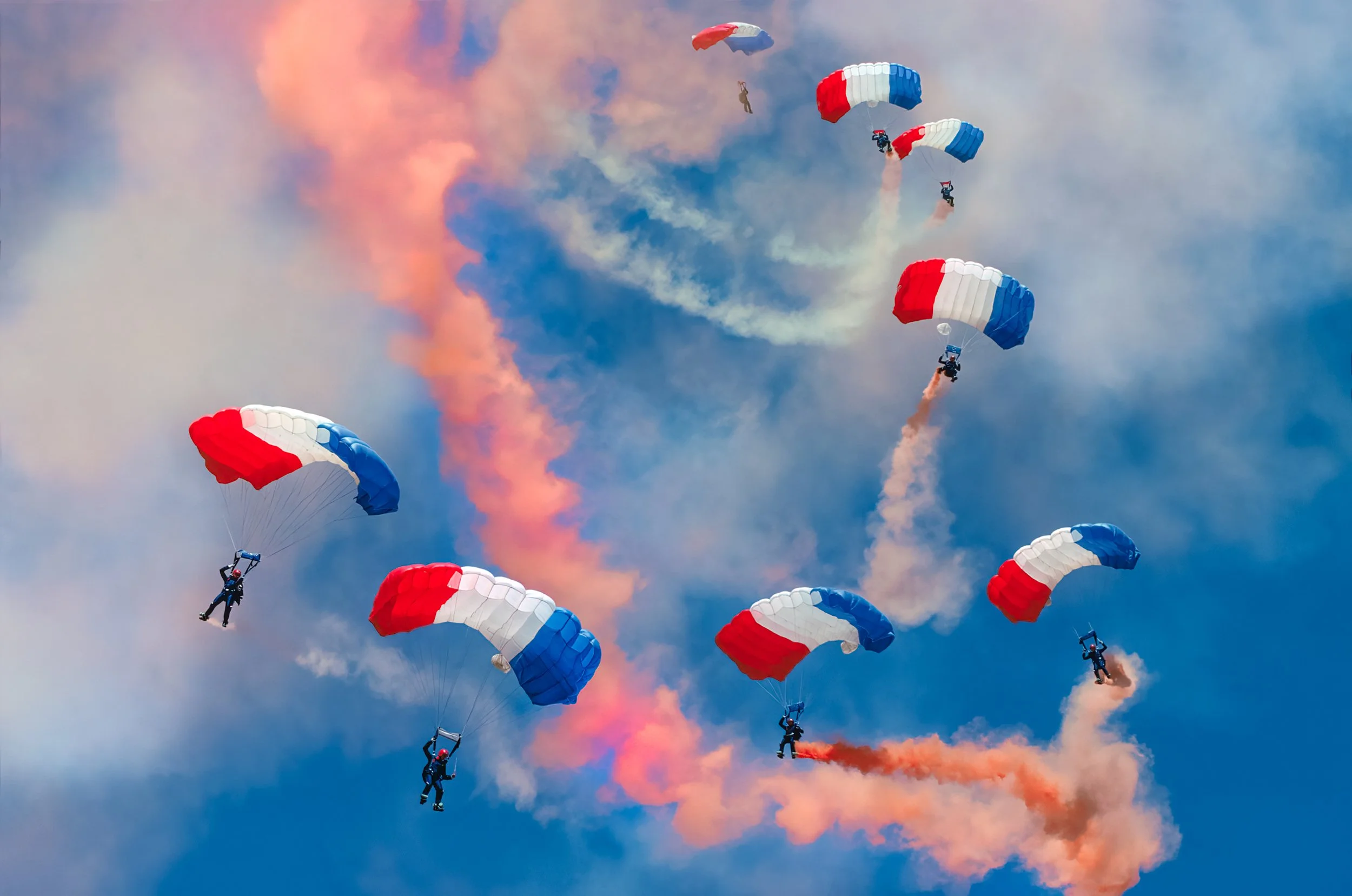
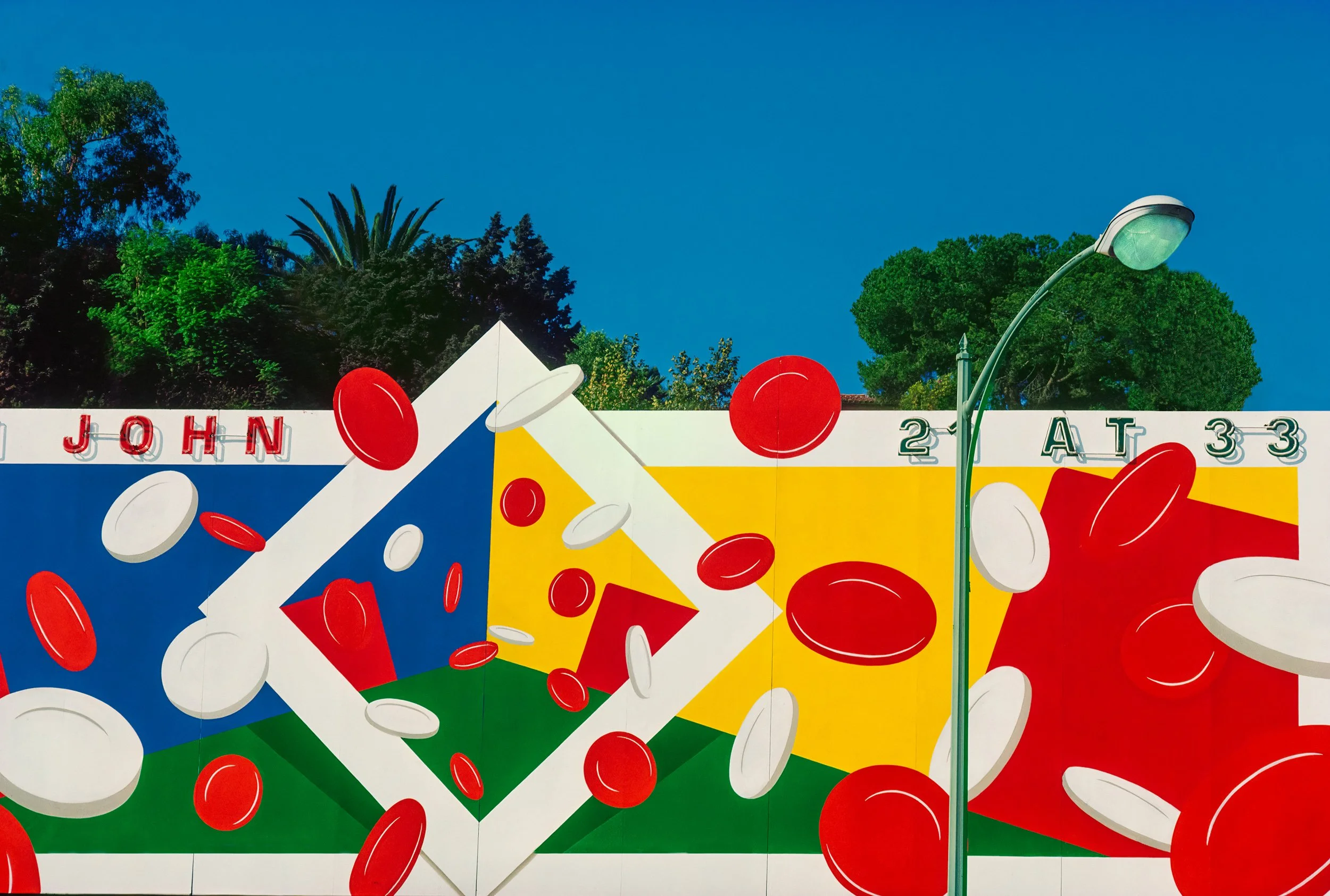
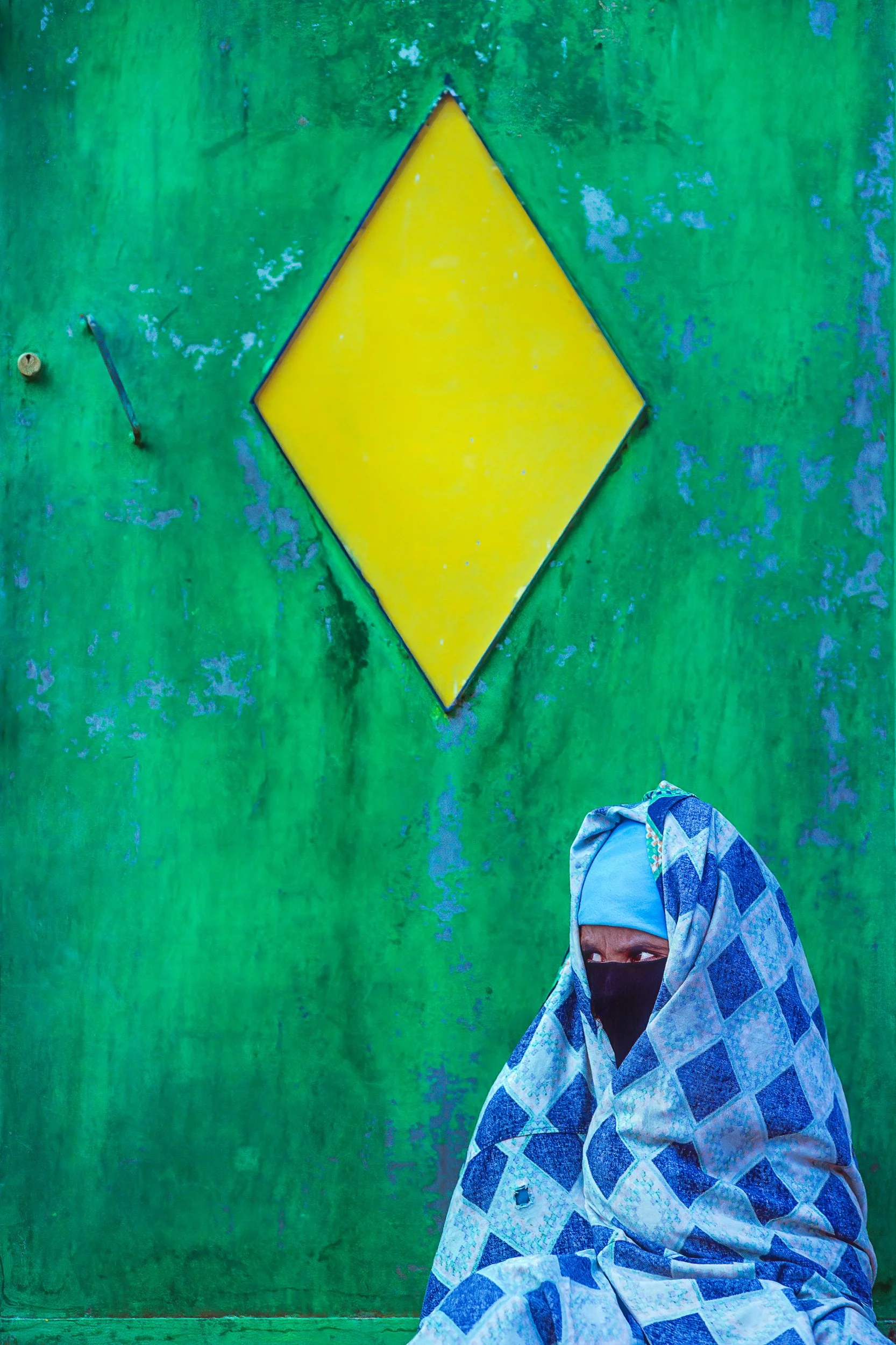
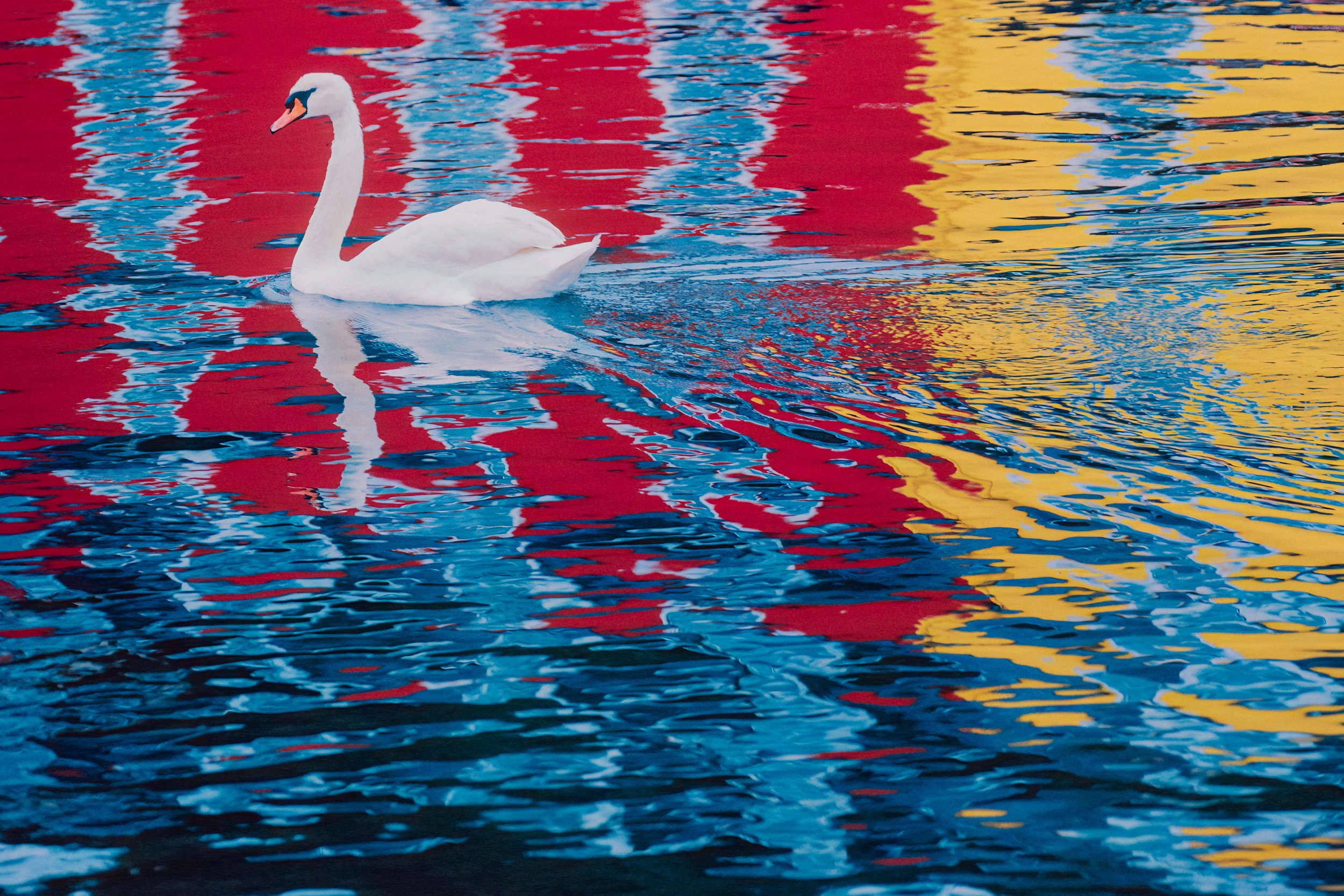
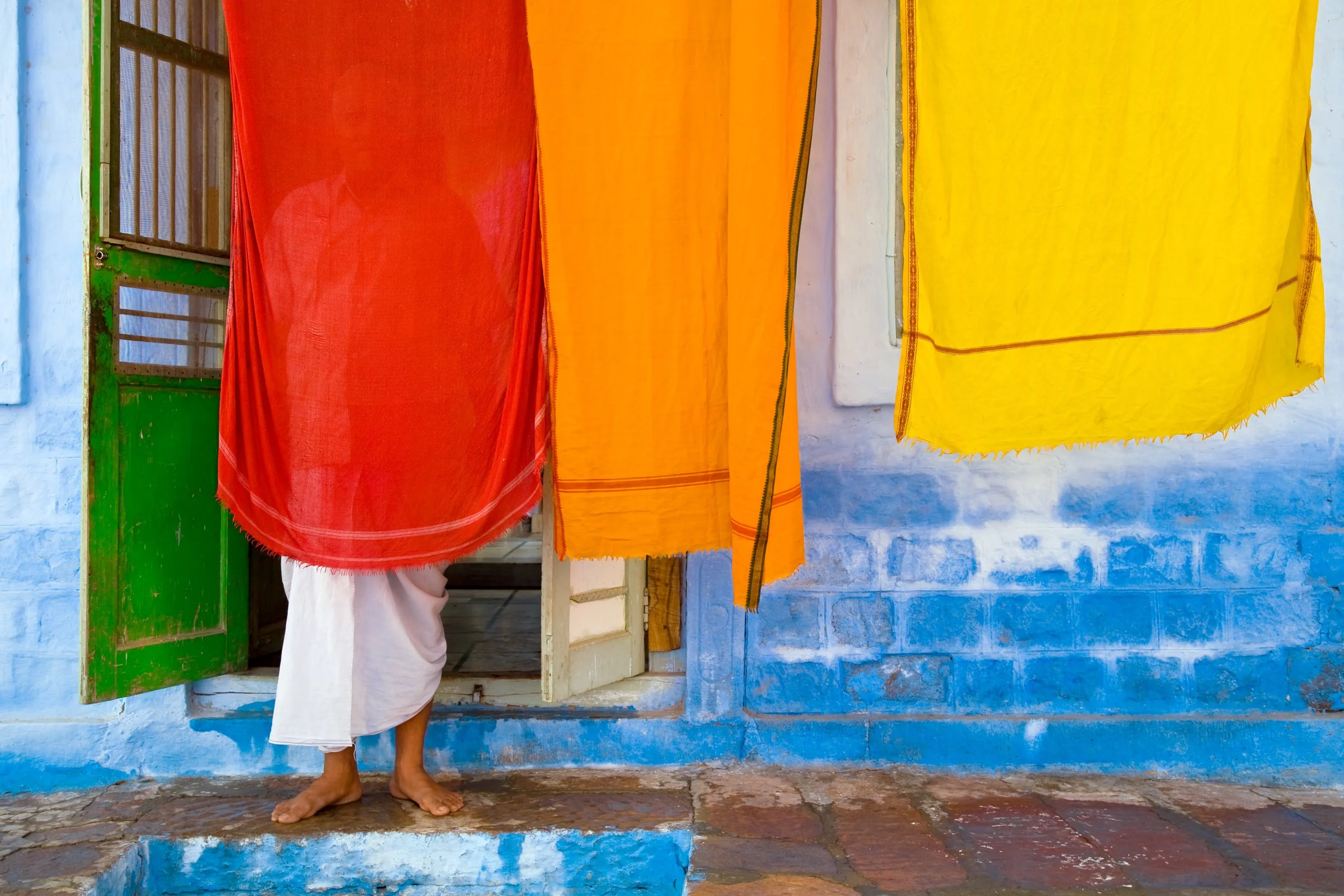
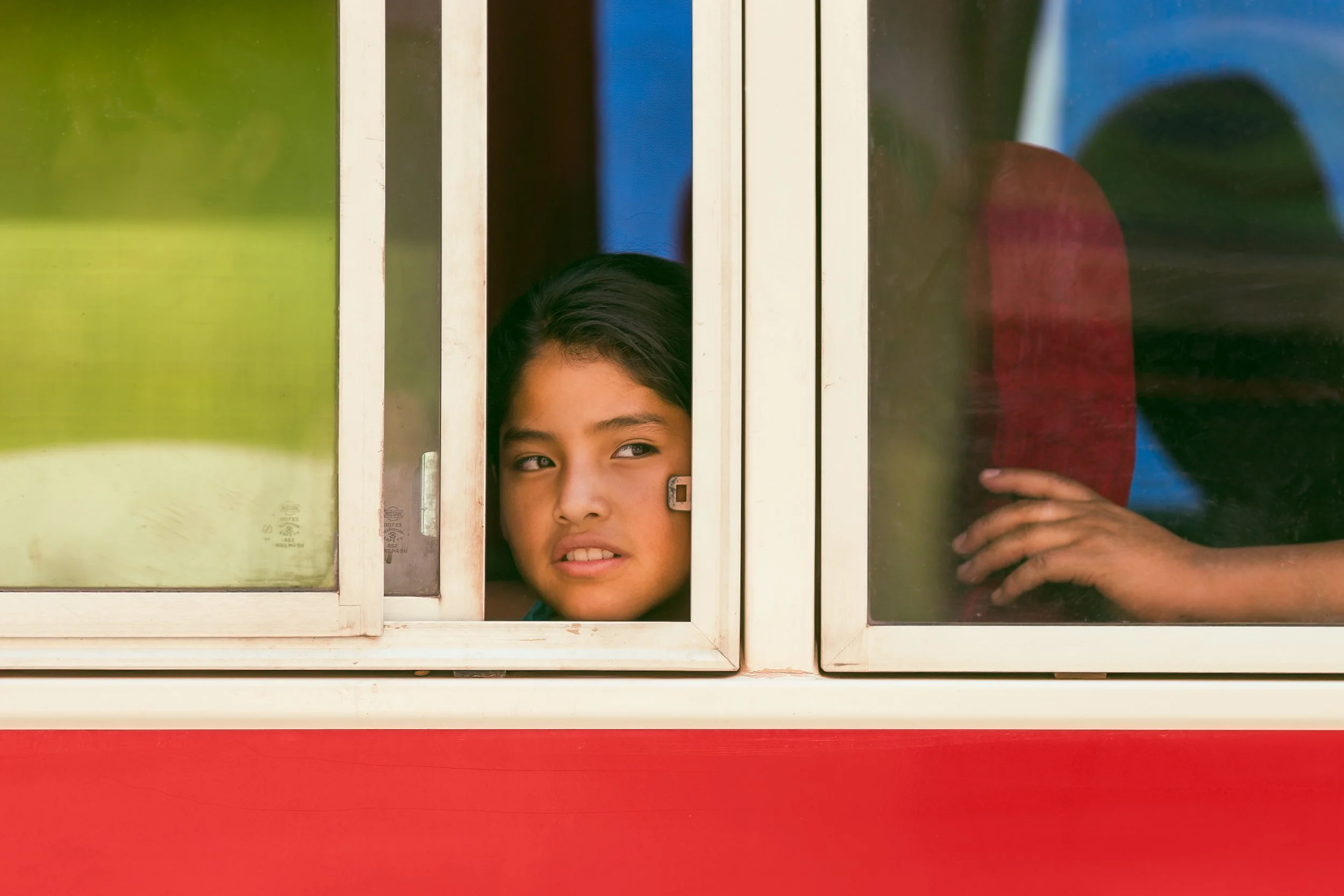
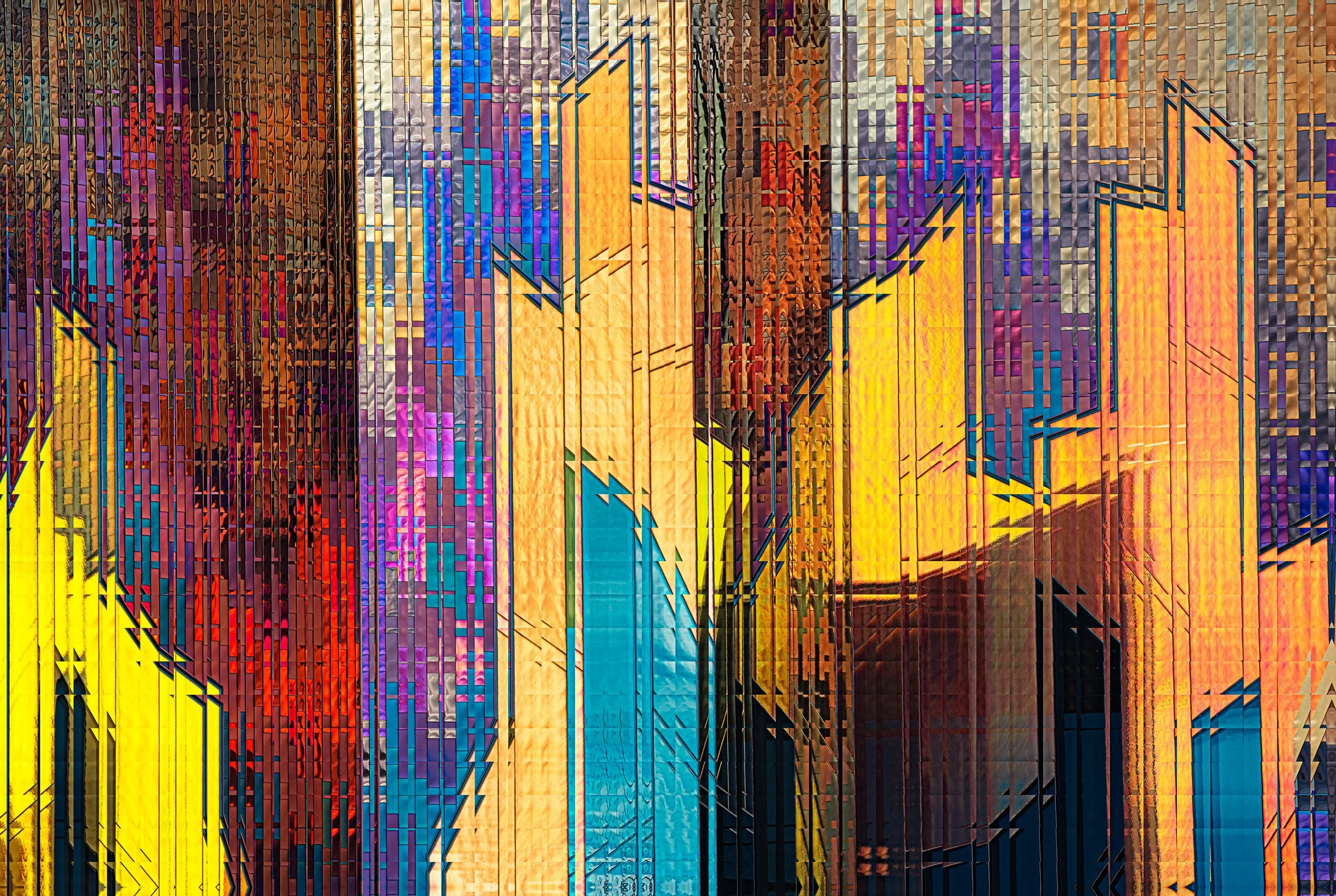
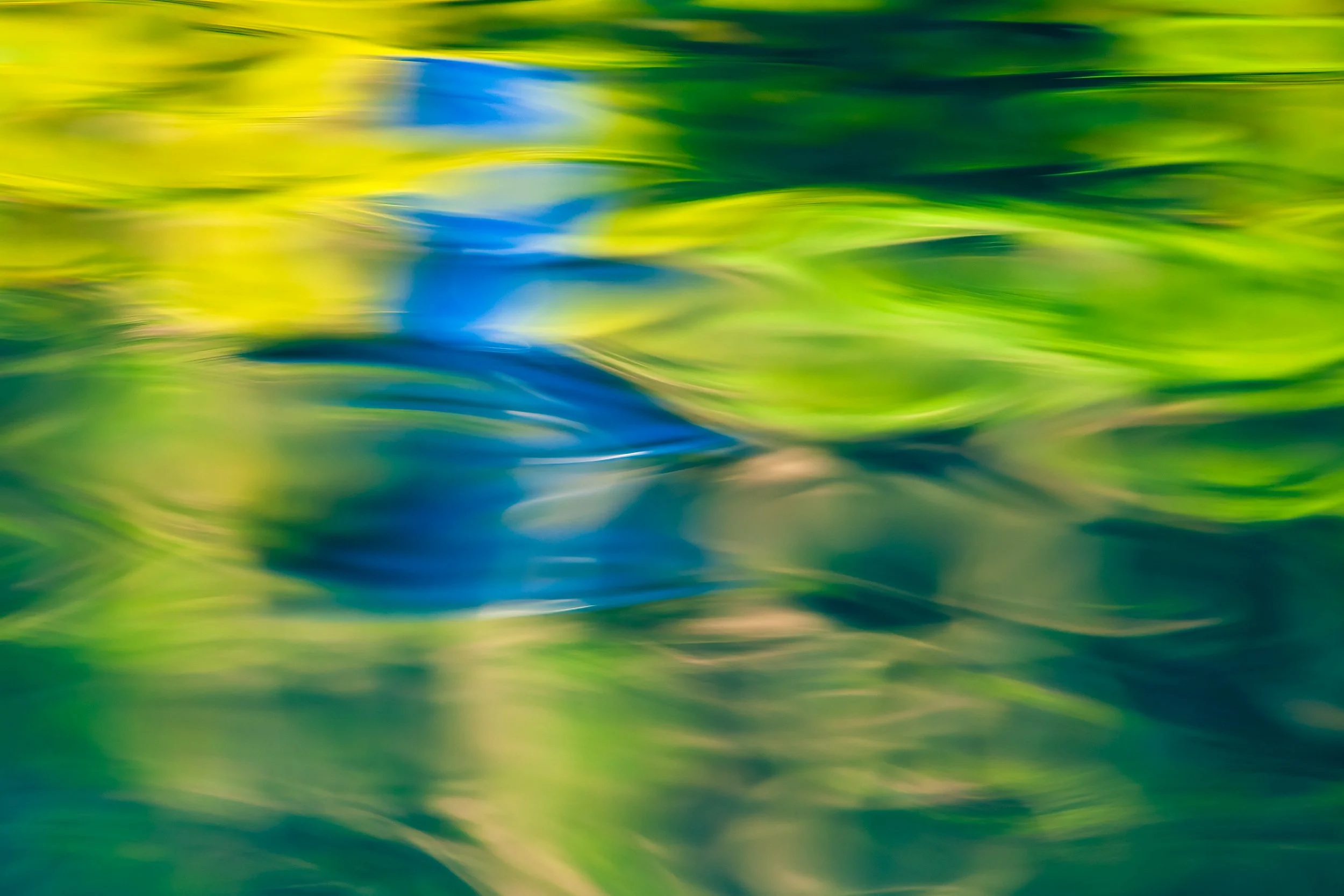
There's no one simple answer to that. Sometimes I concentrate on a single color in the photograph. Other times it's about complementary colors, a blue against a yellow, for instance. Other times it's more monochromatic. Other times it's mixing many colors together. But what makes a great color photograph is when your eyes are attracted to the color and the color makes a statement.
Does it happen naturally or do you think about which colors work together?
It happens naturally. Unless you're controlling the color in a studio, you don't really have control. You walk around a corner and there's a blue door, and then someone walks into the frame wearing green or yellow. It comes together in front of you.
What I learned pretty early on, for instance with the Coca-Cola kid photograph, was to wait. If all the elements are there except for something critical to the photograph, you just wait for something to happen. This little boy walked by wearing white shorts, which didn't clash with the red Coca-Cola sign. In fact, it was complementary because the letters were white. That little boy walked by and made the photograph. It was an early lesson in being patient and waiting for the photograph to occur when the missing element came into the frame.
Here's the rewritten version:
Did you take more photos of this scene? Did you wait for a long time?
I photographed different people walking by, but I realized none of them were right for what I was looking for. There was something awkward about the way the other people moved through the frame. The colors of what they were wearing clashed badly with the Coca-Cola sign. No one was wearing white except this one boy in his white shorts. That really made everything work. It complemented the typography of the Coca-Cola sign perfectly.
Can you share a simple tip or advice for beginners in color photography to improve their skills?
I hesitate to answer a question like that because I have my way of seeing, and it may not be the way someone else sees. But I have this saying: color is my subject as much as the subject itself. What I mean is that I concentrate on the color in the photograph. Sometimes that color isn't there, which doesn't necessarily mean I don't take the photograph. But I'm looking for a predominant color or a complementary color. I concentrate on the color in the photograph. It either works or it doesn't work depending on the color, for me.
I think you said in a previous interview, "I'm not out to make photographs in color. My photographs are about the color." Is that right?
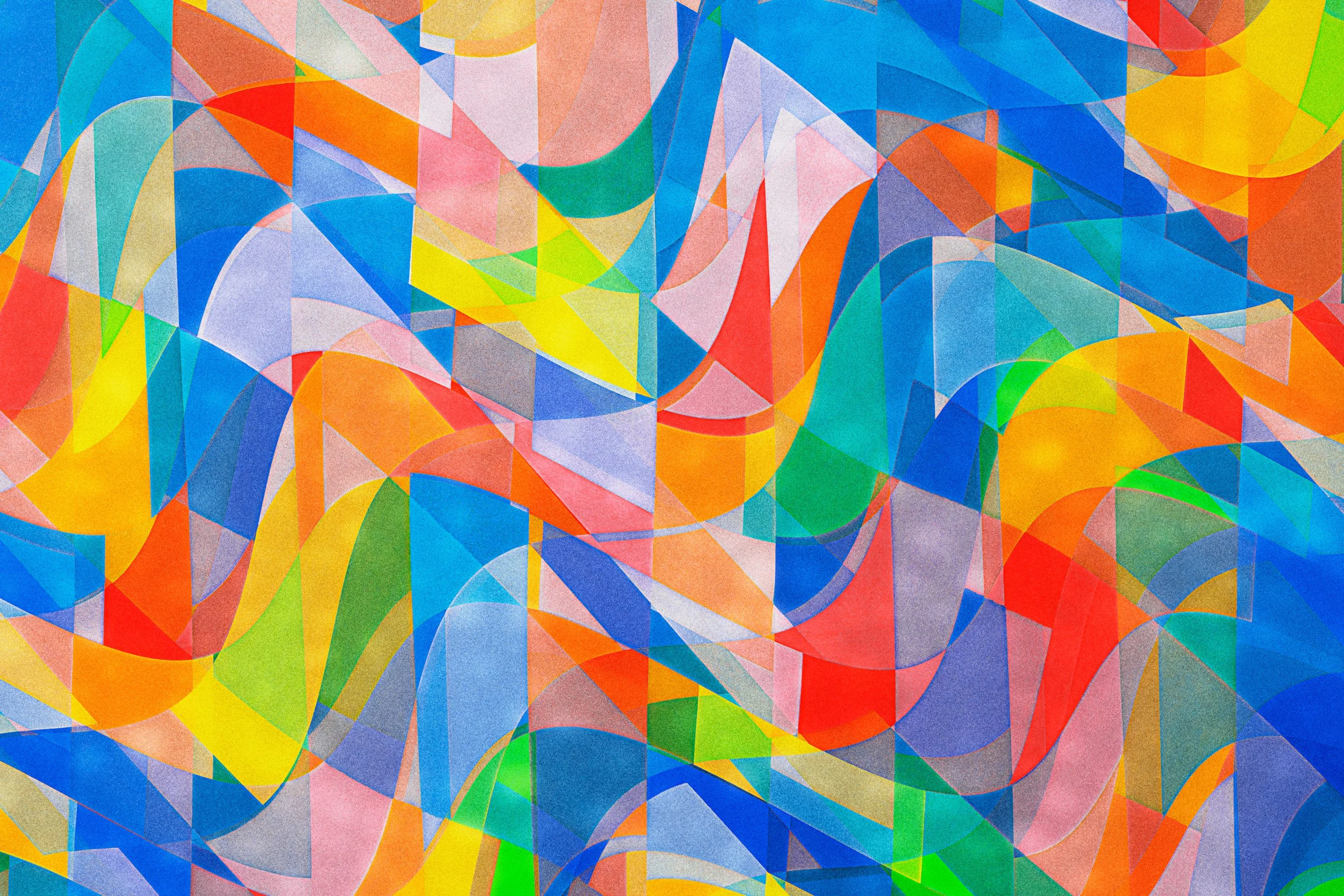
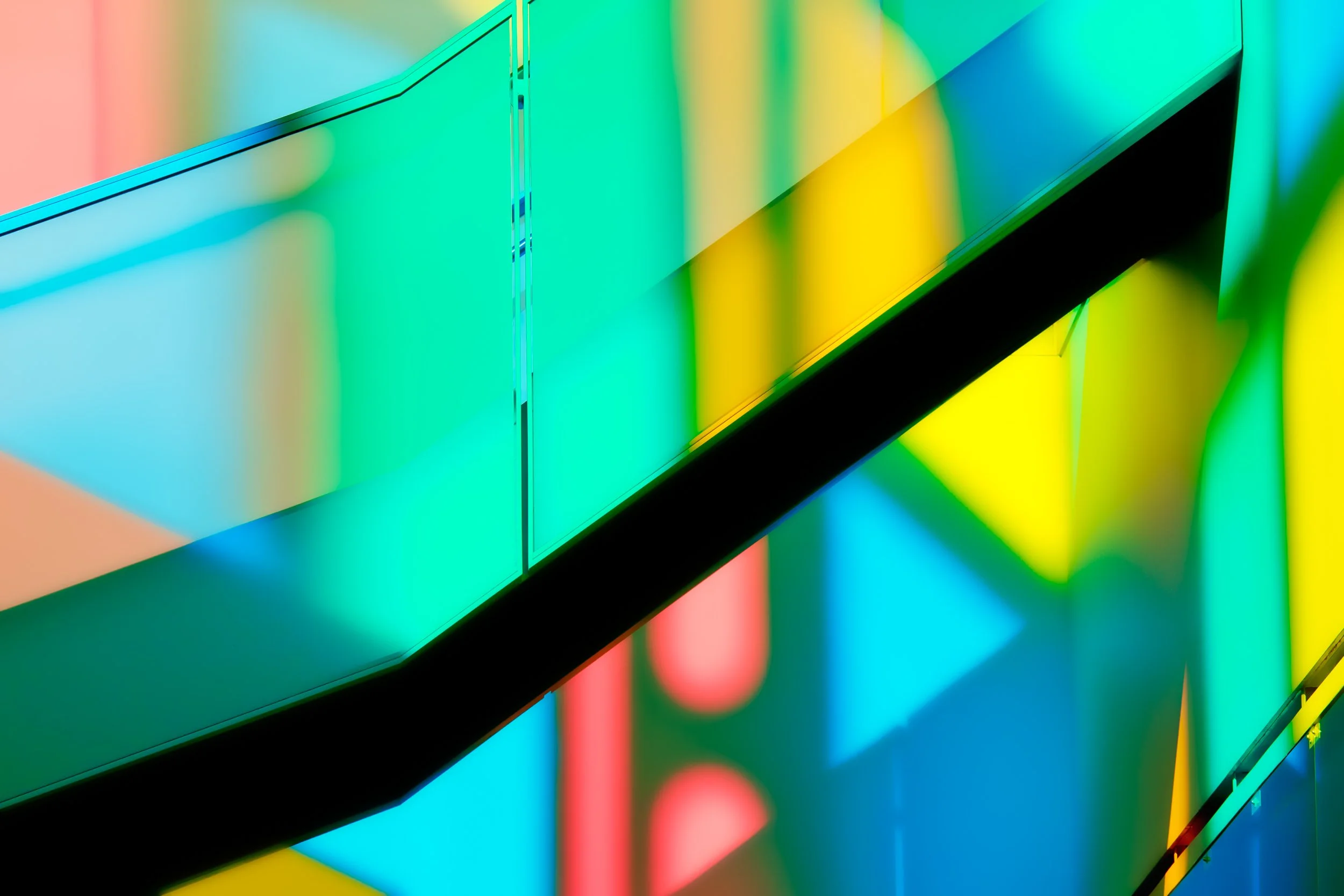
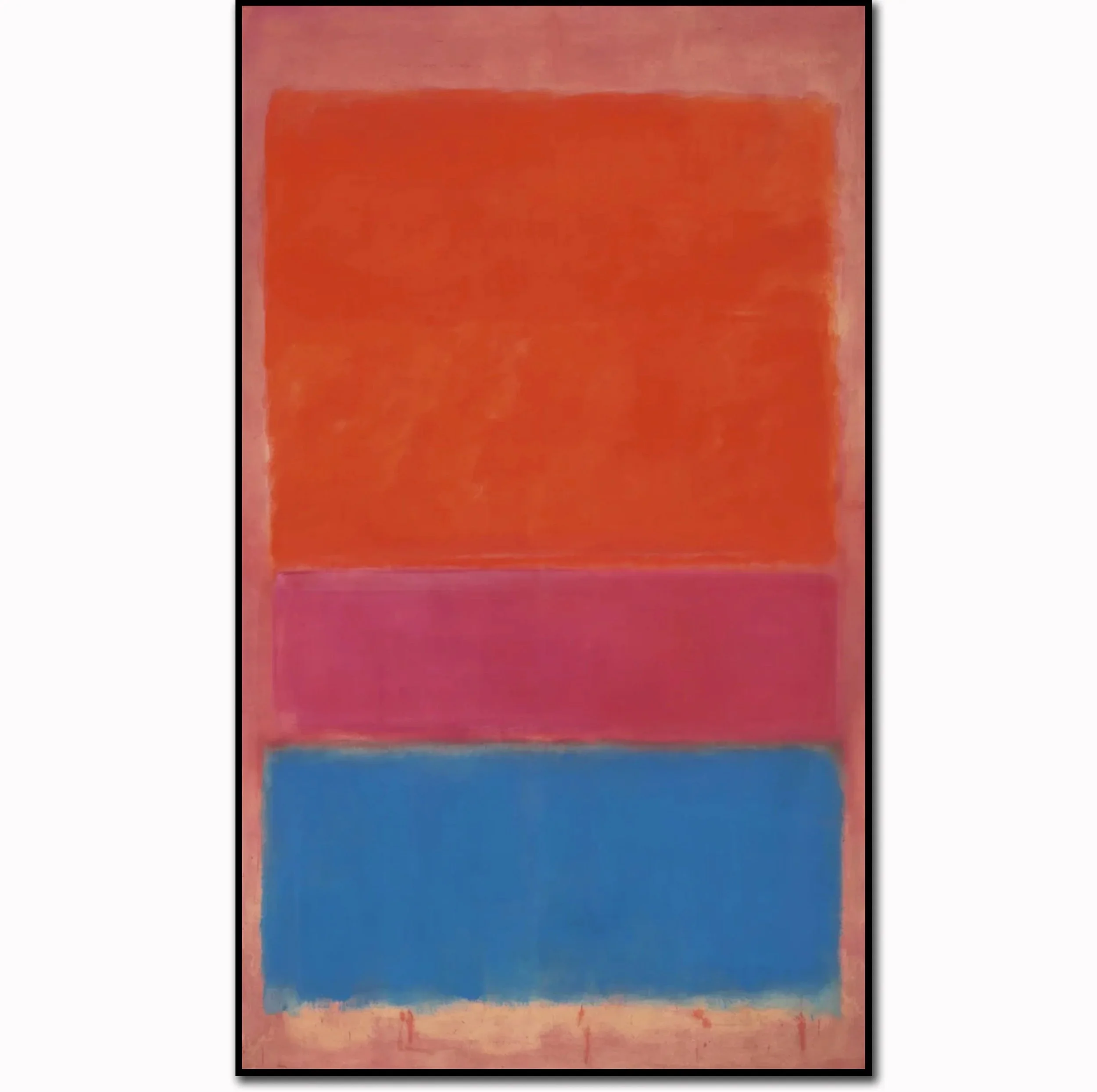
Absolutely. My photographs are about color, and I have no hesitation saying that. I'm very much influenced by painters like Mark Rothko and Kandinsky. Art interests me enormously. Georgia O'Keeffe and the way artists use color. I think that's something that's been largely ignored in photography. Obviously photographers have been influenced by art, and the two go together, but I study painting specifically for its application to photography. A lot of my work is very abstract. Even the work from the past, you can see the influences of these artists.
What is your favorite painting?
I wouldn't single out one painting from Mark Rothko's work. Same with Georgia O'Keeffe. There's no single painting that stands out. It's mainly abstract art in general.
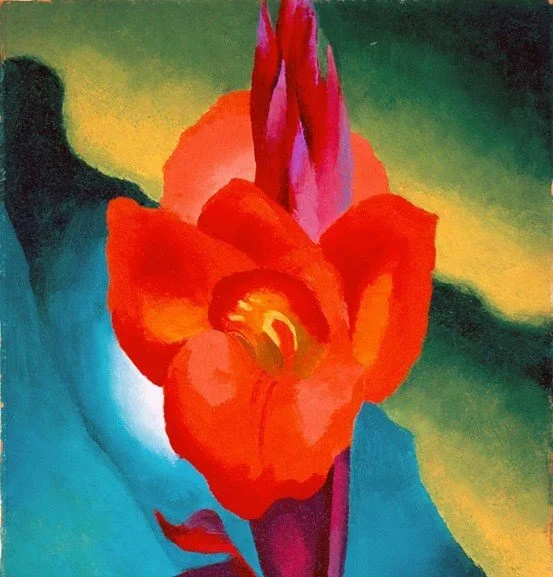
You also said "see the color, don't just shoot in color." Can you expand on how photographers can learn to see color?
It's an emotional thing. It's something you feel deep inside that affects you. I tend to crop very tightly, moving in on a particular color.
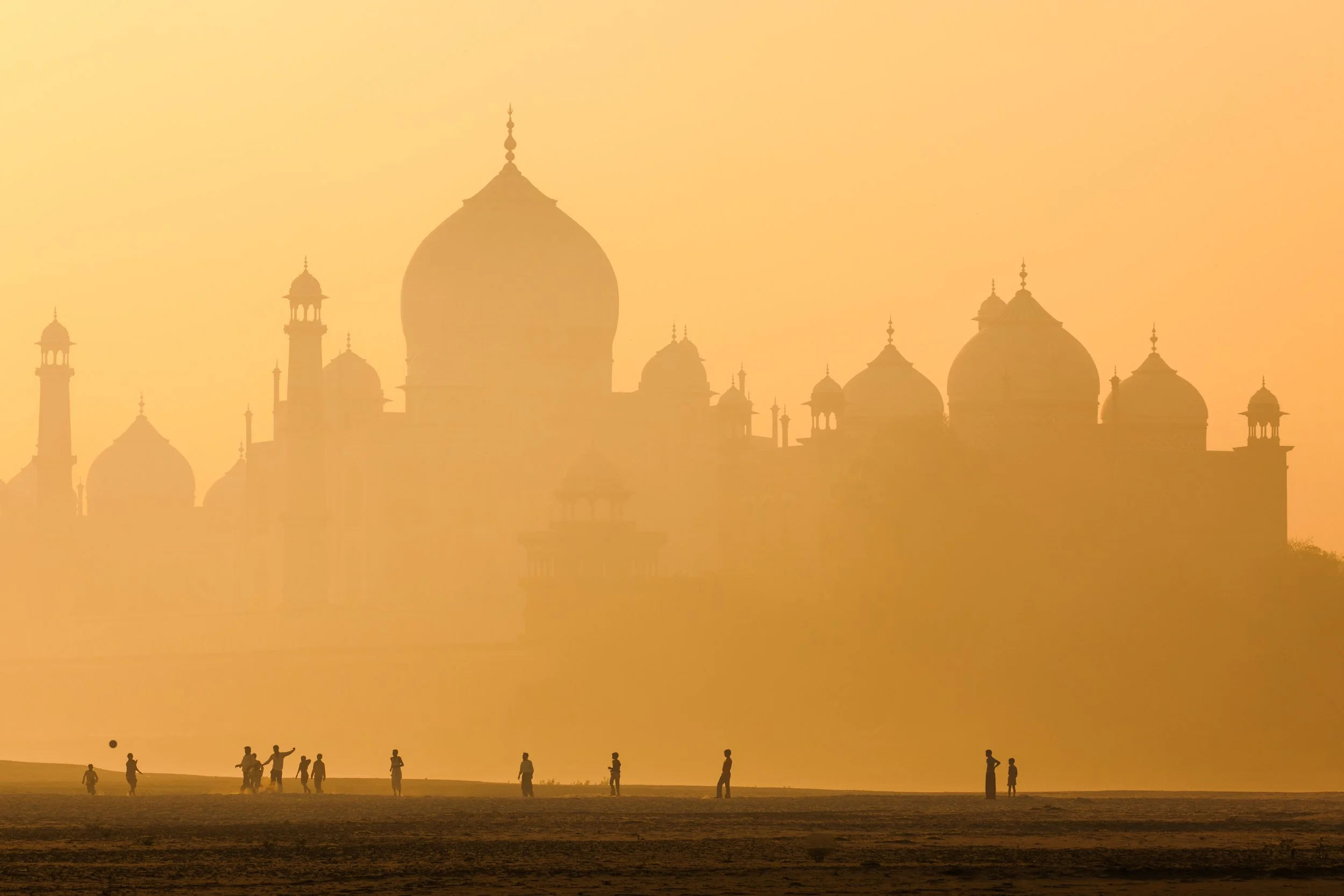
Let me give you an example. I was in India at the Taj Mahal, which I've photographed many times. I woke up planning to shoot it at sunrise, which is what I usually do because there are far fewer people. But it was completely fogged in. I went to where I normally shoot and couldn't see anything. So I moved to a different vantage point and saw something far in the distance. I couldn't make it out, so I put on a telephoto lens. I could see these little figures running left to right. Children.
I thought, maybe I should get closer. I had the driver take me across the bridge to the other side of the Yamuna River. There were children playing soccer on the riverbank. Behind them, lifting out of the mist, was the Taj Mahal. The early morning light cast everything in this very soft yellow. I wouldn't even call it yellow. More like a dusty yellow with a little brown in it.
I'd never seen anything like it. It gave such scale and humanity: these children at eight o'clock in the morning playing soccer on the riverbanks, with this enormous building a quarter mile behind them. The scale was spectacular.
You have to wait sometimes for the light. Sometimes you wait for something like those children to make the photograph. It's like street photography. You start to anticipate things. The first time you see something happen unexpectedly, whether you capture it successfully or not, you've taught yourself a lesson. Turn around. Move to the side. Wait for something. You learn a way of moving, a way of anticipating. It's almost like a ballet. You become part of the scene as much as the scene itself. You learn to go with the flow. The same holds true for shooting in color. At a certain point, it comes very naturally.
Do you think about how much color to include in a frame, or when it's just the right amount versus too much?
I don't think I do. The way of seeing color comes very naturally at a certain point. You make a jump, you make a leap, and you're able to make that decision easily. That doesn't mean I don't photograph it in different ways, varying how much color I include or exclude. I've learned regretfully sometimes that maybe I should have pulled back a little more. I tend to crop very tightly. Pete instilled in us this idea of shooting from different angles: pull back, move to the right, move to the left, keep moving.
At a certain point, your mind and eye and the way you feel the image all come together. There's a photograph of mine of a motel lit up at night in the California desert. We saw it from a distance, but I never photographed it from far away. I only shot it close up because I wanted to crop it tightly. I felt the power of the image came from the horizontal nature of the motel, the red neon of the motel sign, the acid green from the fluorescent lights, and then the deep blue-black sky above. It was dusk. I wanted to concentrate on the colors, almost like it was painted.
It really came down to geometry. I use geometry constantly in my photographs. Rectangles, triangles, spheres. That's one of the tricks of architecture: using these basic geometric shapes to pull you into a space, to move you through the space, to create the illusion of depth. Geometry is underused in photography. We're dealing with a flat medium, so we have to use the same illusions that painters use, where receding lines lead you into the photograph, into the painting. Geometry plays a huge part in my photography.
I'd like to ask you about your storms and tornadoes project. What inspired you to start it?
It was 2011. I'd been working in my office, and I went downstairs and turned on the TV. The second the picture came up, it showed this little town, Joplin, Missouri. A tornado had just gone through. People were screaming and crying on screen. The devastation was absolute. This had happened maybe an hour and a half before, not even that.
You realize that here was this town where one minute, everything was fine. The world was great. It was a lovely day. And all of a sudden, this tornado went through. More than 200 people perished.
It wasn't the tragedy that attracted me. Of course not. I started thinking: what does a tornado actually look like? I mean, we all know what a tornado looks like, but very few of us have experienced one. I started wondering about the formation of the atmosphere, the clouds, the movement of debris spinning up into the air. Was it always black and white? We tend to think of tornadoes as a black and white event. I wondered what happens before, as it starts to form, and what happens after, as the sky clears.
So I contacted a tornado chase company and made arrangements to start photographing storms the next year.
The first year was a revelation. We saw three tornadoes, I think. All of them were incredible. The first one was in Texas. I had no idea what to expect. They give you a briefing every morning about that day: whether nothing is going to happen and you're just going to drive and drive and drive, or whether they anticipate intercepting a tornado.
What was eye-opening to me was how many miles they would drive every day. Five, six hundred miles to get to an area where they thought something might happen. Then they would rush in the last hour or two because it was happening faster than they'd anticipated.
Then a tornado dropped a few hundred feet from me. I'm looking up at this thing, standing there with my wide-angle lens trying to photograph it. Part of me is terrified. But at the same time, part of me is hypnotized. I want to walk closer to it. I want to get closer. It was an unusual feeling that didn't feel unnatural. It felt very natural to want to get closer to it. Yet my mind said, don't do this. You're learning how incredibly beautiful it can be to watch nature produce such a thing, putting aside the damage it can do.
Then you start learning about meteorology. You get interested in studying and understanding it because you want to know how these things are produced.
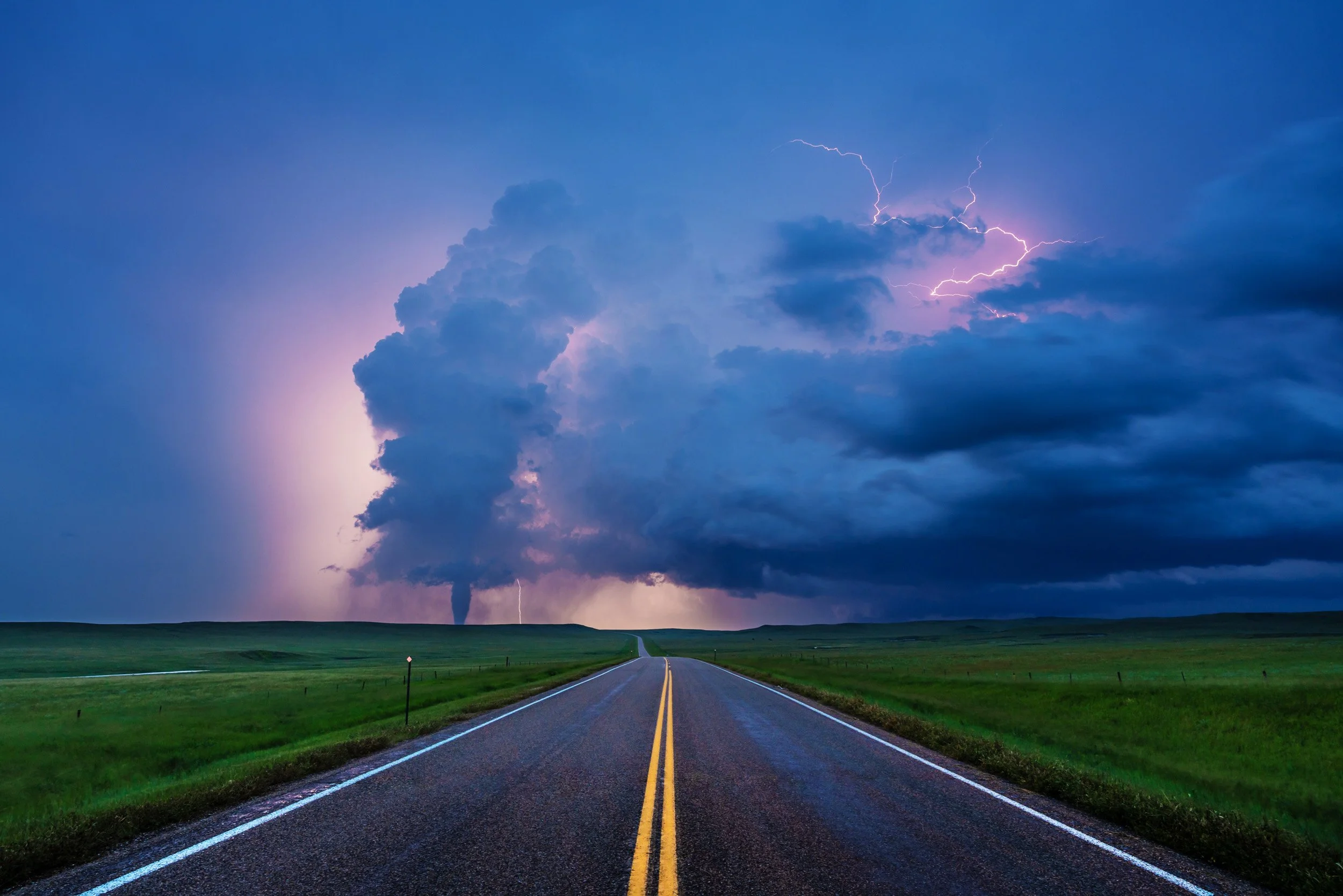
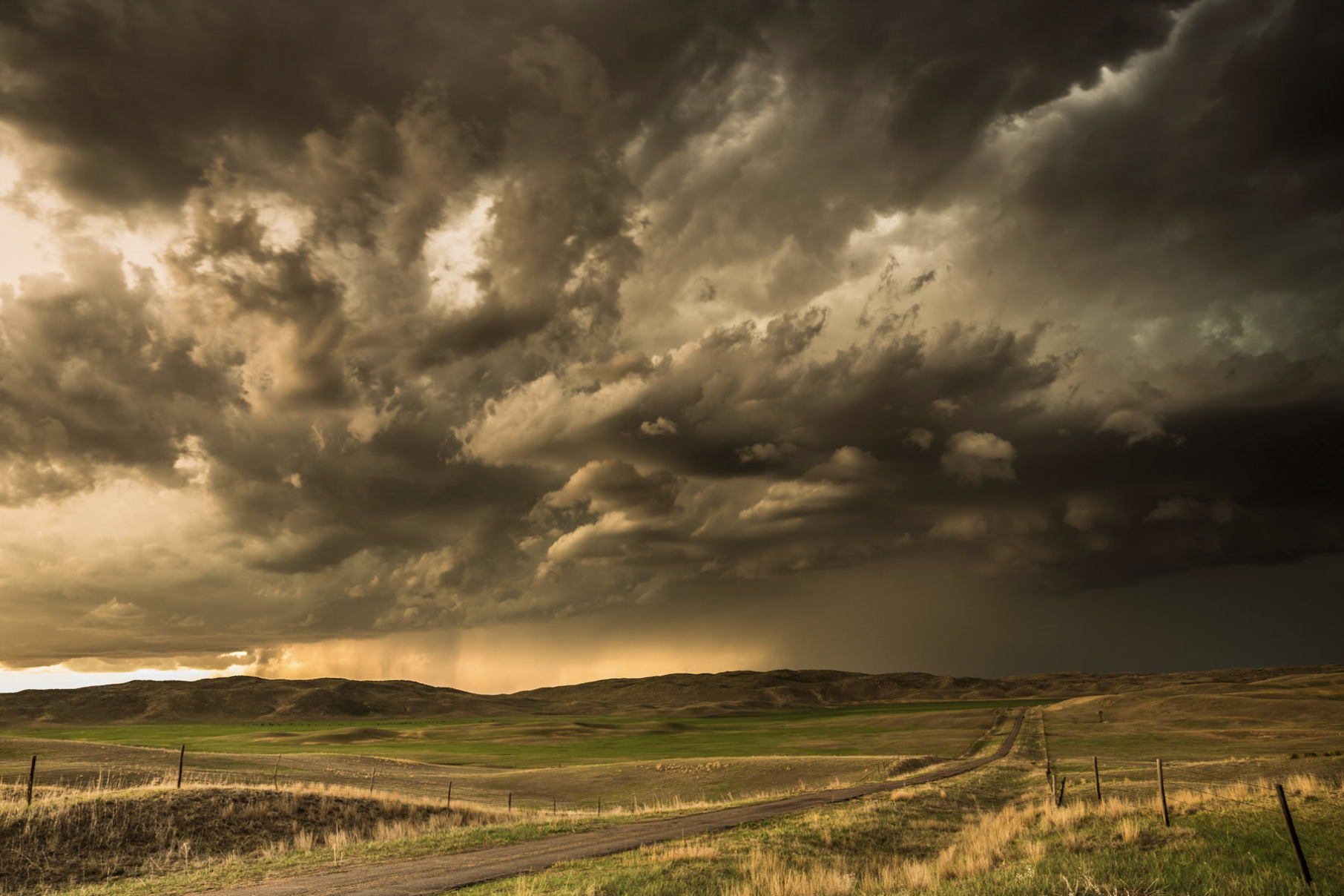
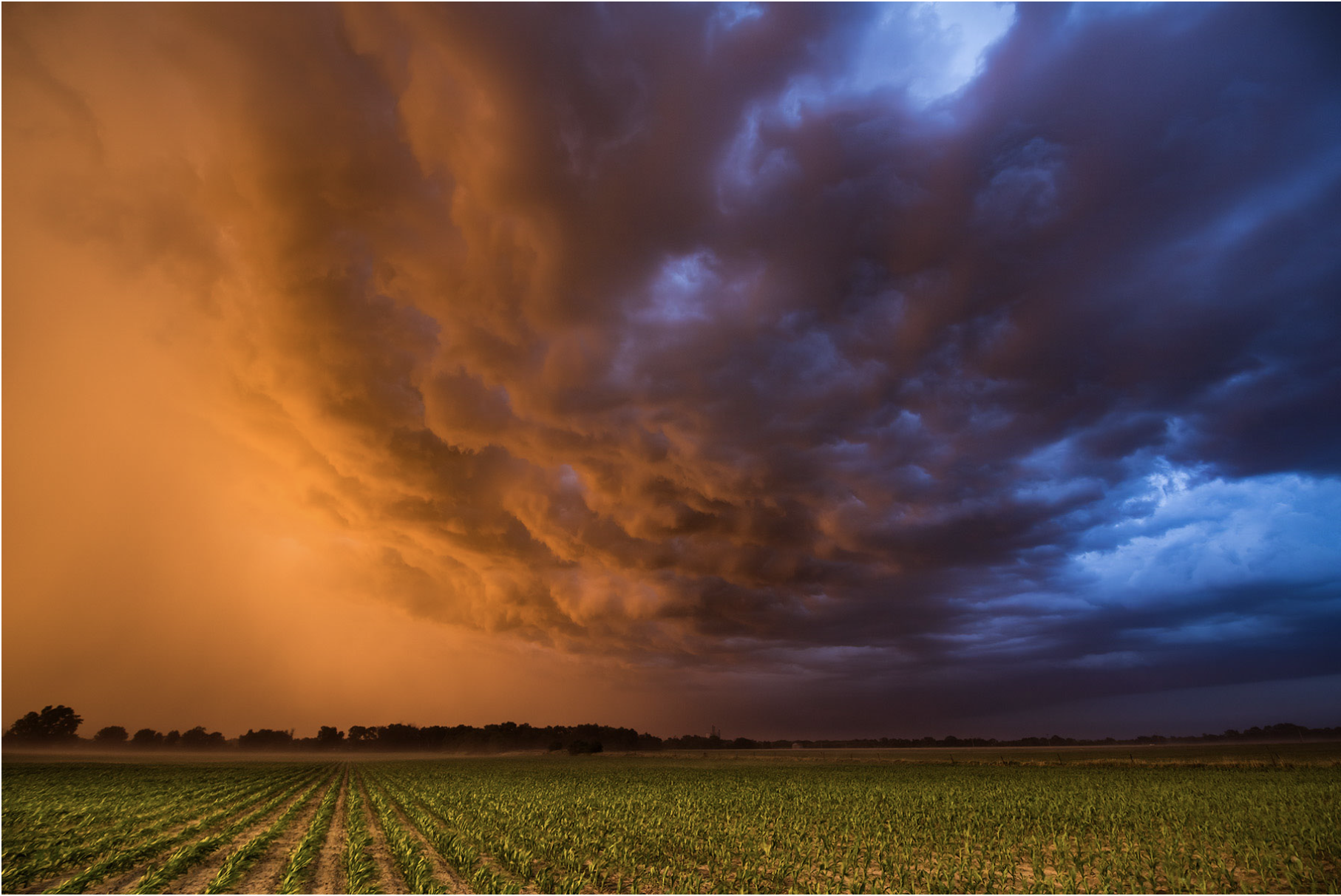
But what I didn't expect was the absolutely spectacular color in these events. The sky would turn black or gray. All these different colors of gray, all these different shades would intermix as everything swirled about, forming the tornado. Then you'd get greens and purples from lightning. Eerie kinds of greens. And sound. The sounds of the lightning, the sounds of the anger of the storm as the hail swirled around. The reason you get the greens or blues is because of the hail spinning around up there in the tornado.
It was definitely an experience that once you start doing it, you want to go back the next year. Which is what I did. Then I realized I wanted to do it as a long-range project because it's very accessible. It's in my country. So I would fly out there every spring for six or seven weeks of photographing. Very often, nothing happens. You're just chasing every day and nothing happens. But then about once or twice a week, you'd get days that you remember for the rest of your life. It became an addiction that resulted in a book.


So what makes a good storm photo?
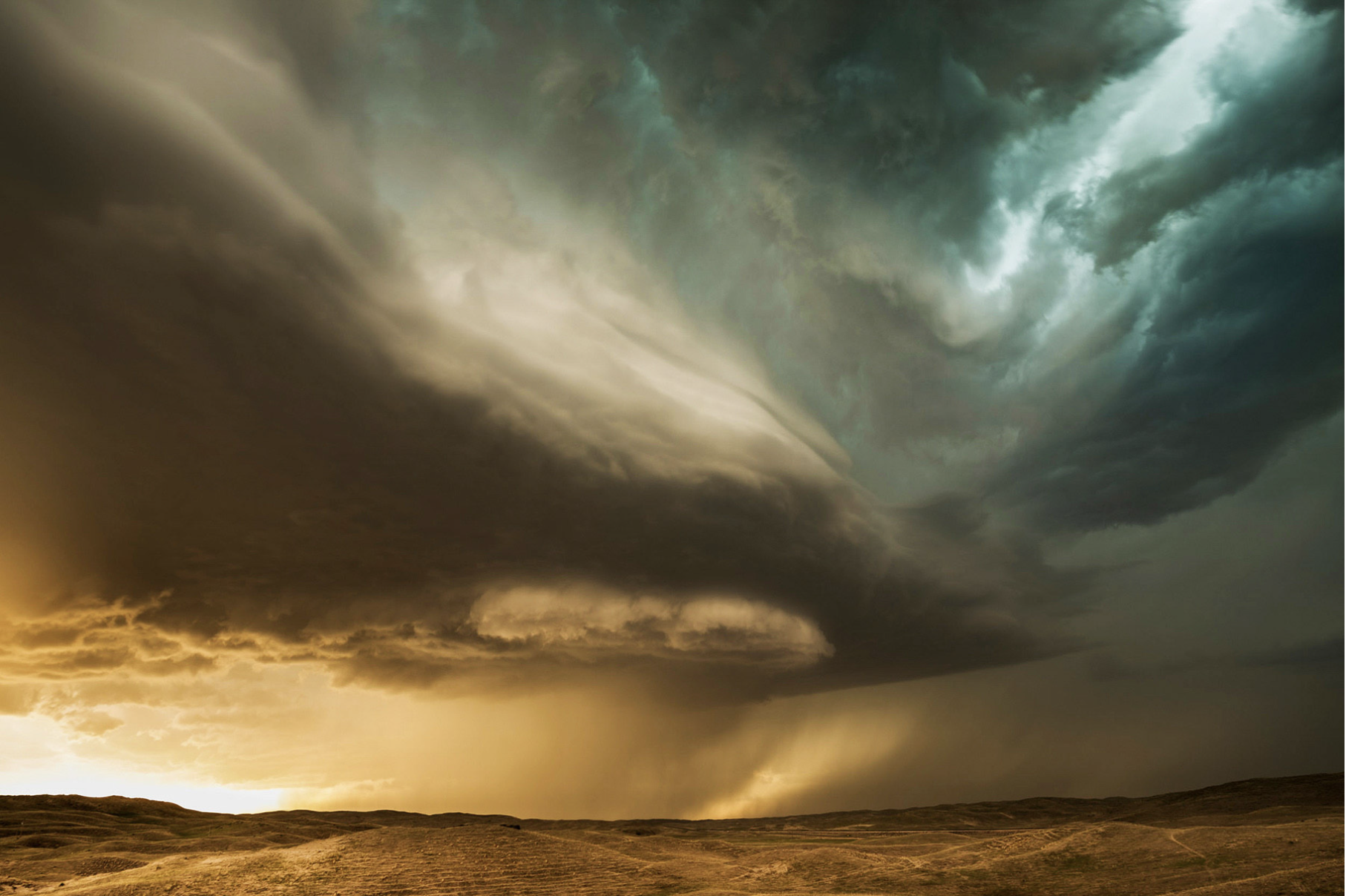
There's no simple answer to that. I'm not someone who tends to concentrate on the lightning or the tornadoes themselves, although like everyone, I enjoy photographing them. I prefer the quieter moments when the sky looks angry and you get these swirling clashes of the atmosphere. It looks like you're staring down into a blender, but instead of milk or coffee, the atmosphere itself is inside. Except you're looking up at the swirling anger of the clouds.
The more subtle images appeal to me most. What's interesting for me in storm chasing isn't the storms themselves, but where the storms occur. They occur in the Great Plains. When we come across an old abandoned house, a church steeple, or just an empty dirt road with a car driving along it, those interest me as much as the storms themselves. This is where the storms occur, and that's a big part of the story for me: the emptiness, the flatness of the Great Plains.
I've done lots of photographs of the Great Plains, the churches, even the interiors, because it means a lot to me in terms of where these storms occur. Here you have a place where people have moved to escape the big cities. They live in an area that's very flat, all farmland. Yet they can't escape the reality of nature. Very often you have these tragic situations where life is lost, towns are destroyed. That human aspect of what occurs is very interesting to me.
Composition-wise, do you think about how to position yourself or what angle works best?
Usually when you're photographing a storm, you concentrate on wide-angle lenses. Very often, because you're chasing with a van full of people, you all jump out and they determine the spot based on a couple of conditions. One is safety. The safety depends on how close or how far away you are from the tornado or the action.
One of the surprises to me was that something can look like it's three miles away from you, but the meteorologist in charge will see that it's moving towards you at a speed you can't comprehend. You want to keep standing there shooting, and he's yelling at you to get out, to get out. You're looking at it thinking it's two or three miles away, yet it's going to cover that distance in a few seconds. That became a real learning experience.
Getting back to the lenses: usually you shoot with wide angles. But there are times when you use telephotos to concentrate on a particular aspect of the storm. I love cropping into a part of the storm where there's a shape, where part of the storm is breaking off and making a right angle or left angle, turning and churning. It shows me the power. When you pull back and show the landscape, it becomes a landscape. You see the tornado in the landscape. But cropping in tight where you can see what's really happening is very important to me.
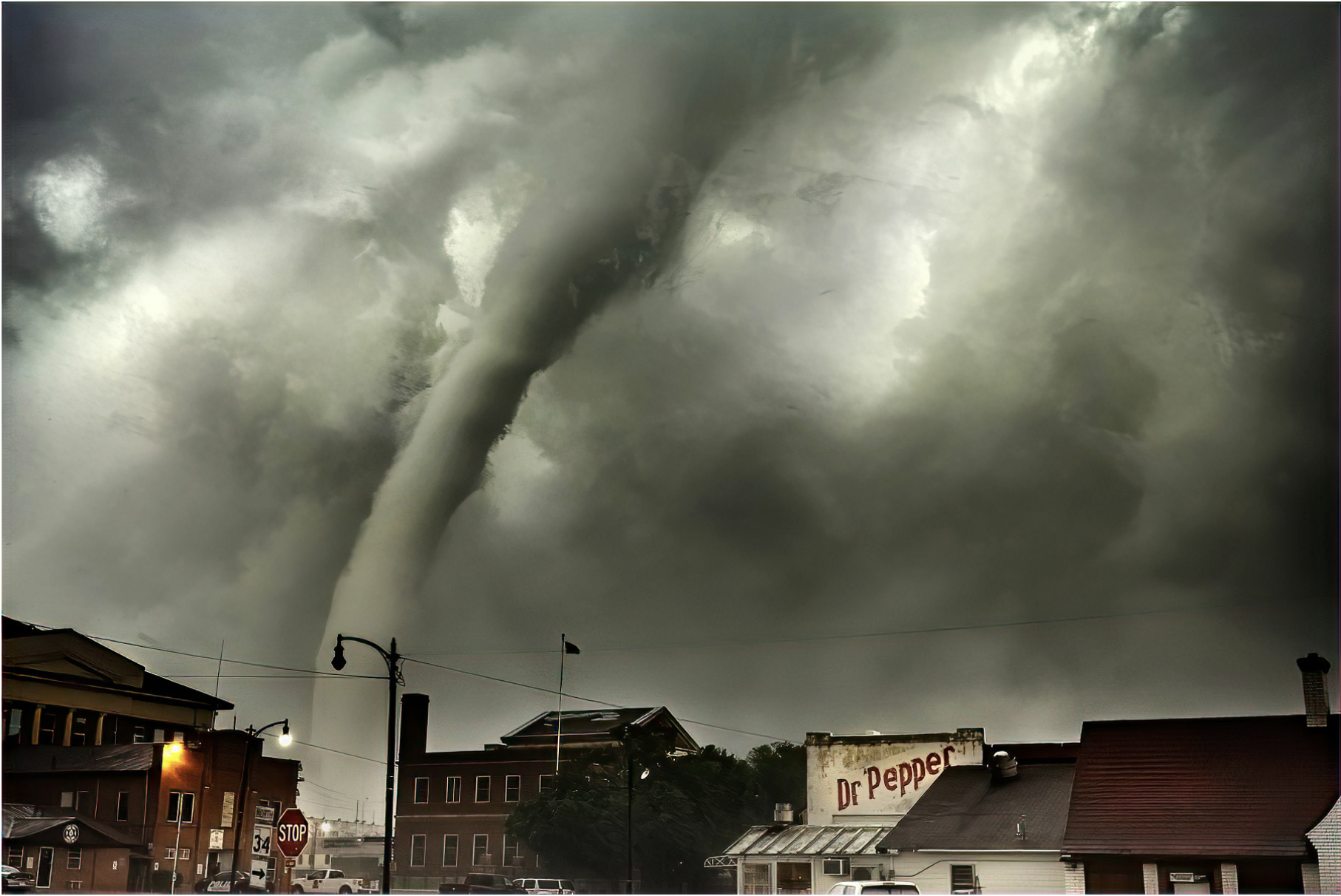
There's a photo called Mangum Oklahoma 2019. It shows a tornado against a city. You photographed from within the town, and you see buildings, then the tornado. This juxtaposition makes it more powerful to me. Have you thought about using juxtaposition to show the scale of storms or tornadoes?
Yes, it's very unusual to be able to drive into a town just as the tornado is moving through it. The photograph you mentioned is one of those times when we arrived at this town in Texas just as the tornado was coming in. We pulled into an empty gas station. It was pouring rain and the wind was ferocious.
From the left side, the tornado started moving in slow motion through the town. Some of the automatic lights had come on in the town, which gave it this very ominous feeling of dusk. Then the sunlight hit this one sign. It was just like a set piece. We were looking at it like one of those model railway town scenes where the little train is going by. You're looking at the buildings, the light, the people, seeing all of this going on, and yet here's this really ominous tornado.
It was one of those things where you say, I don't believe what I'm seeing. You're looking at it thinking, my God, what's going to happen? Am I going to watch people losing their lives right in front of me?
Fortunately, that tornado was further away than it looks, and it was passing through the town. It did cause some destruction. I think there was one death. But all in all, it was not a catastrophic event.
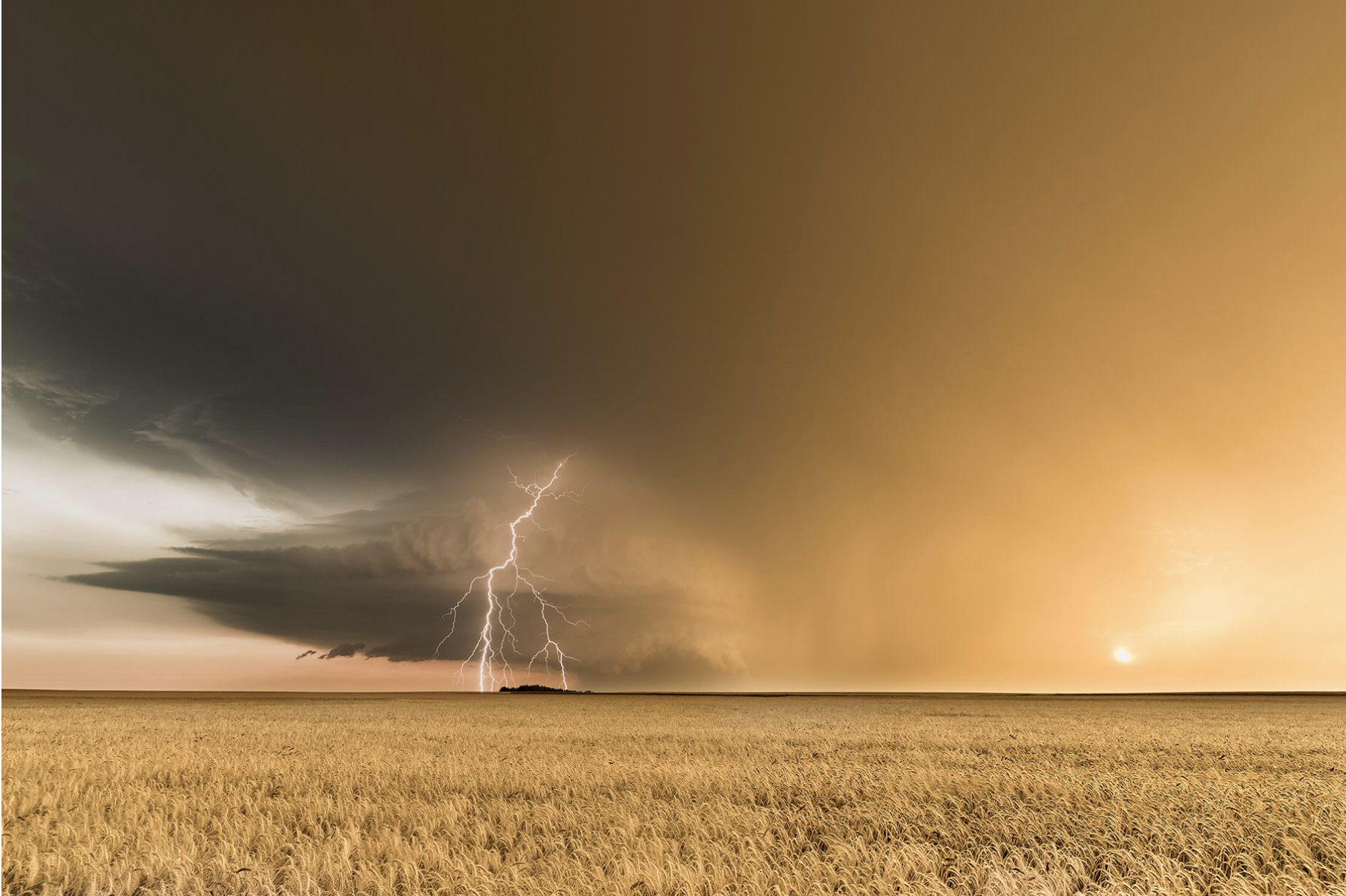
But yes, having those buildings for scale was terrific. I tend to prefer having something in the landscape for scale. It's quite beautiful out there. You have these fields of wheat, these empty landscapes that lend themselves to splitting the frame into thirds. Just beautiful light.
Light is as important in some ways as the color itself, because depending on the light, you get different colors. But the light also gives you that depth, that sense of perspective. I prefer to shoot out in the empty plains.
You have lots of photos capturing lightning strikes. Is there a trick to it, or what did you learn?
Well, the first time I went out, I can't remember if I had a lightning trigger. They've become quite popular in the last eight or nine years.
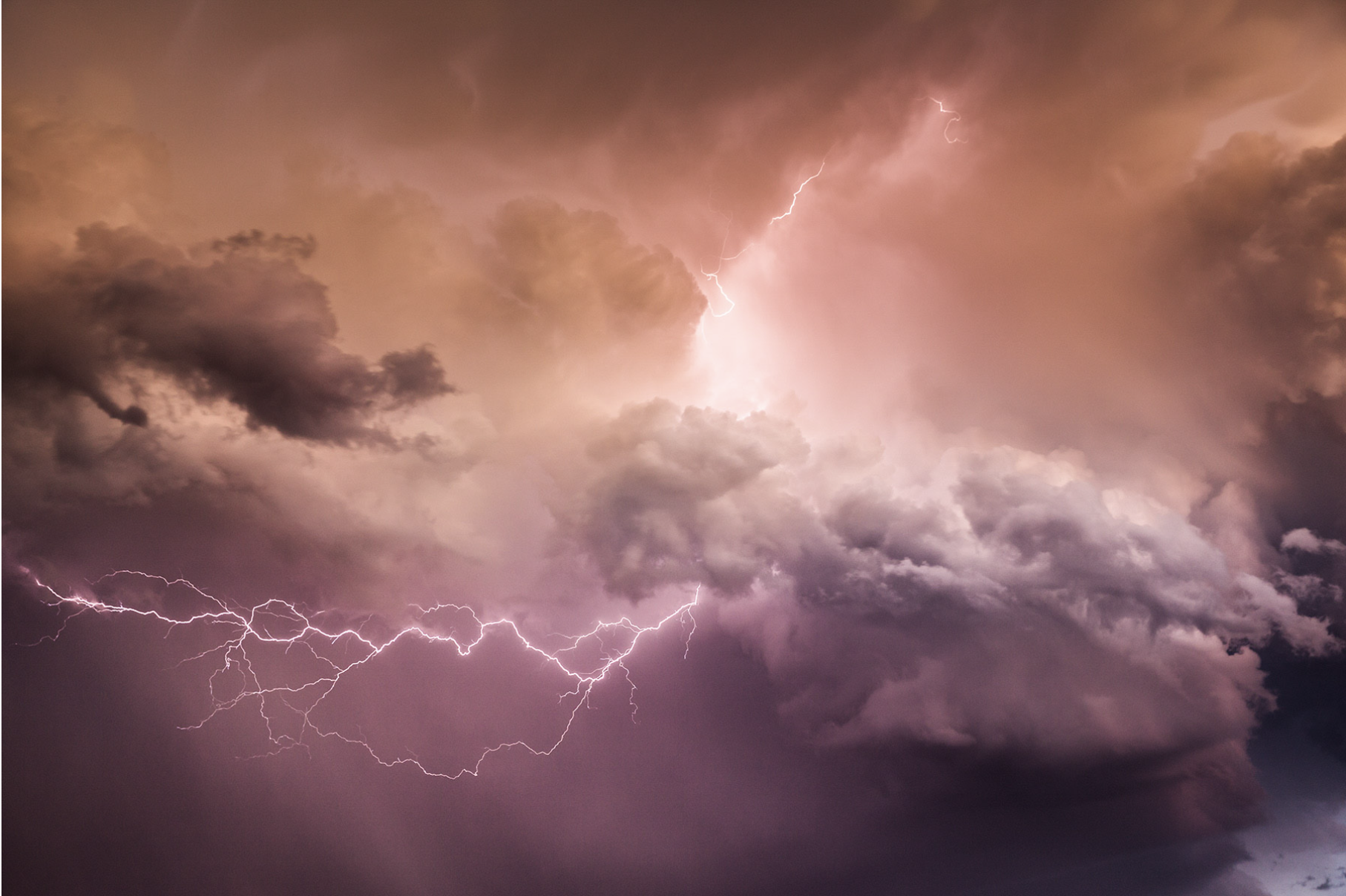
It's so dark out there when these storms form. This happened to be, by pure luck, one of those lightning events where we were standing and there was almost no rain whatsoever. Yet about two miles in front of us was this enormous lightning display, a series of lightning strikes that went on for over an hour. It was one of the most beautiful displays of lightning I've ever seen.


This was 2013. I remember talking with the meteorologist about it years later, and he said he'd never seen an example of lightning like that one. It just went on and on and on. You could close the lens down, drop to a low ISO, and just open the shutter and close the shutter. Almost always you would get lightning in the photograph.
I got some of my best lightning photographs that way. But there are lightning triggers that I've used that work sometimes and don't work other times. There is a pre-lightning strike that's not visible to the eye. It happens in a fraction of a fraction of a fraction of a second just before the lightning hits. That color of the light and that flash triggers the lightning trigger to activate your camera. What you do is attach the trigger to the shutter electronically, and it will anticipate when the lightning is going to flash. It's a big help when it works.










You've photographed famous musicians up close and huge storms. Is there something similar about how you approach both?
What's the same about both is that whatever it is, it affects me in a big way very quickly. When I first saw Bruce Springsteen, I immediately sensed that I wanted to photograph him. I sensed there was a story here that was going to go on forever. I knew there was something different. That first time occurred very early in my career.
I said to myself, I want to photograph him no matter what it takes. Then of course your life goes on. You make this promise to yourself, and then a month goes by and you get busy with other work. I saw him again a year later and this time I said, okay, you've got to carry through with this.
So I sent him a postcard asking if I could come down to New Jersey and photograph him.

That's what happened with the storms. The same thing happened with India. I went to India in 1998 for the first time. It was a short trip, three weeks. I always try to photograph for myself. I've done a lot of commercial work, but I've also concentrated heavily on my personal work. I went to India in 1998 and fell in love with it. I knew I wanted to go back.
The first time I went to India, about a week before departure, I stepped off a curb and heard a crack in my foot. Unbeknownst to me, I had a low calcium level, and it caused the metatarsal bone in my foot to break. I went to the doctor and he put a big cast on my foot and leg. I said to him, "Well, how am I going to walk around with this in India?"
He looked at me like, you think you're going to go to India? There's no way you're going to go to India.
I said, "Well, I'm supposed to leave on Saturday." This was Tuesday.
He said, "You can't go to India."
Of course I went to India. I had been planning it.
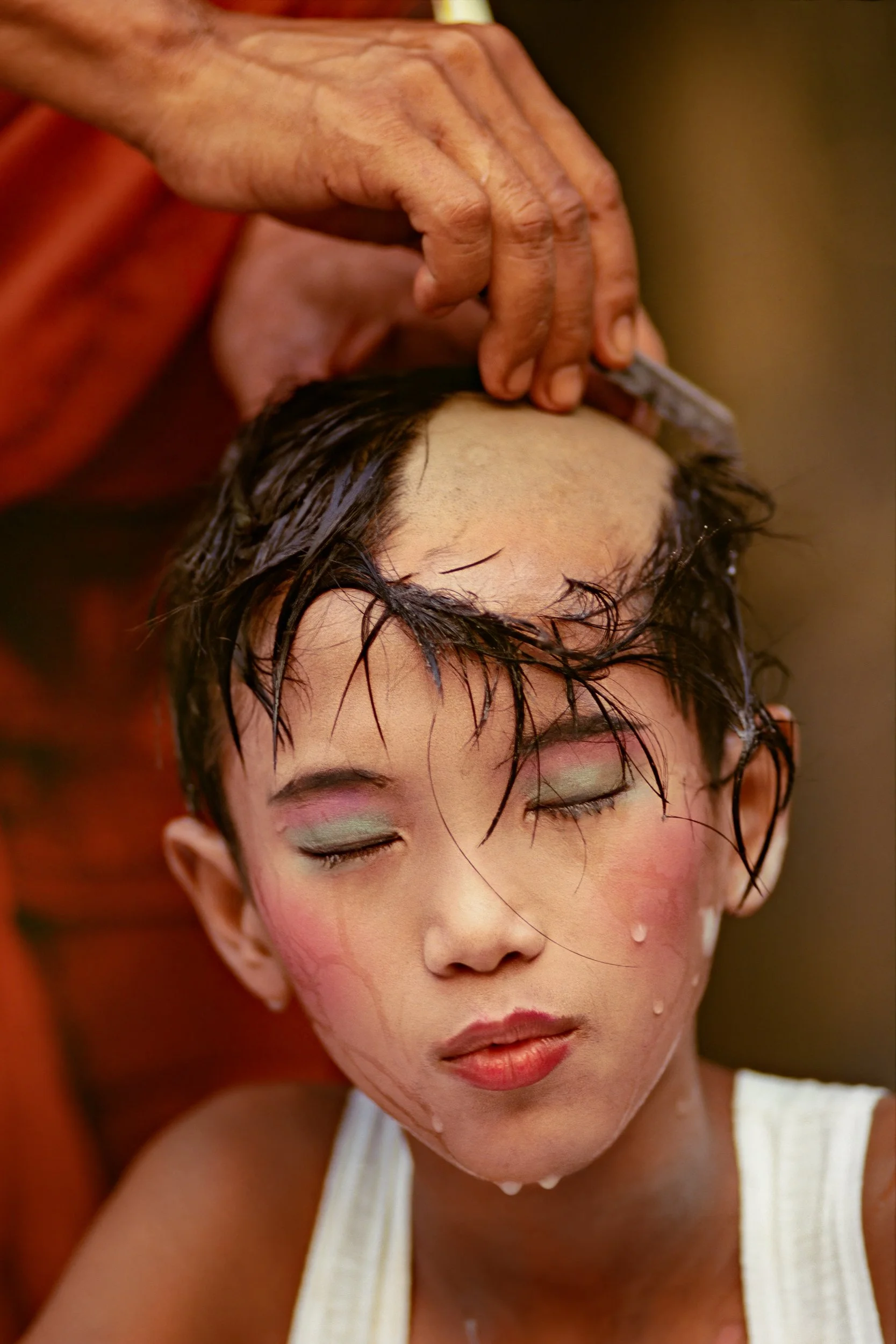
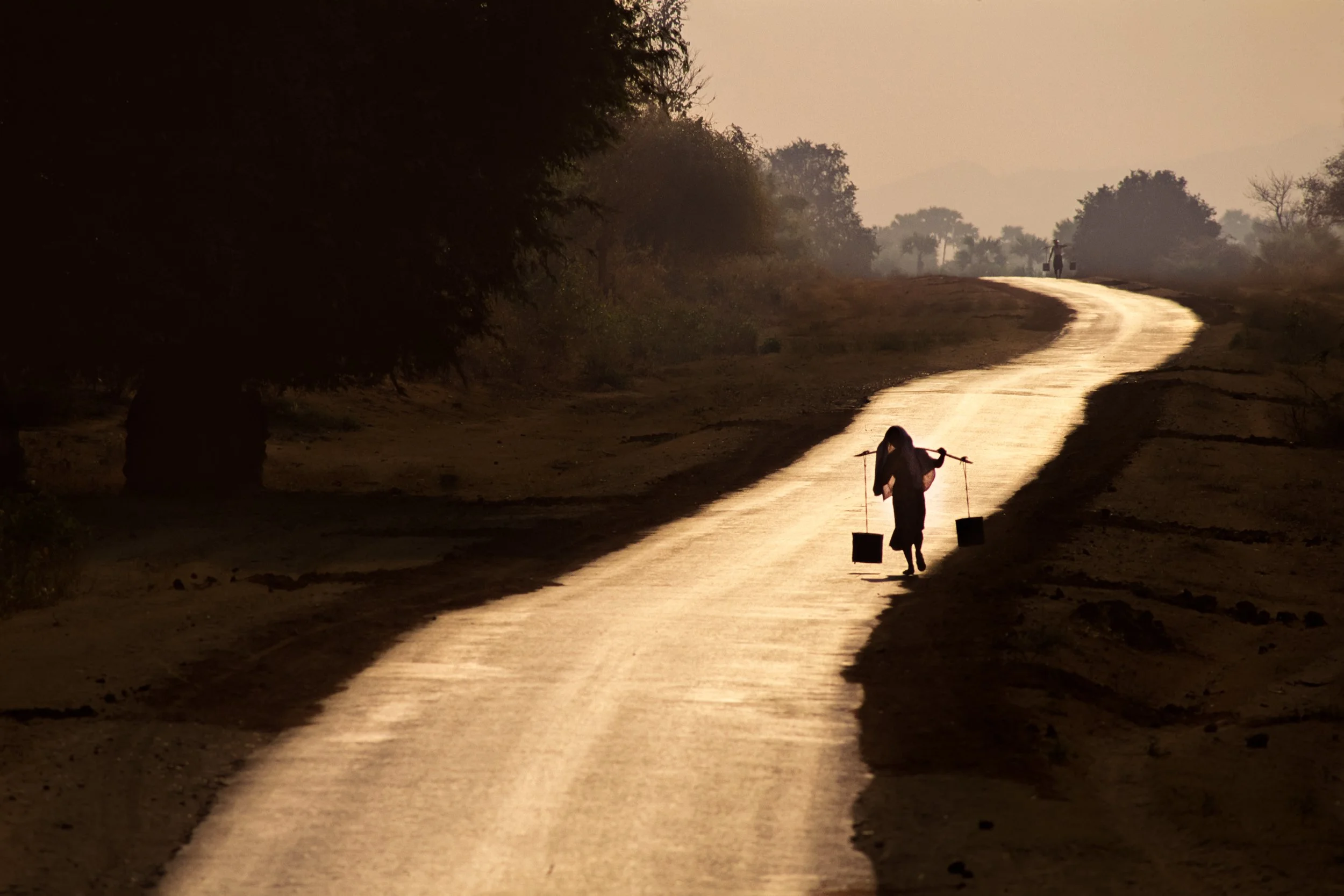
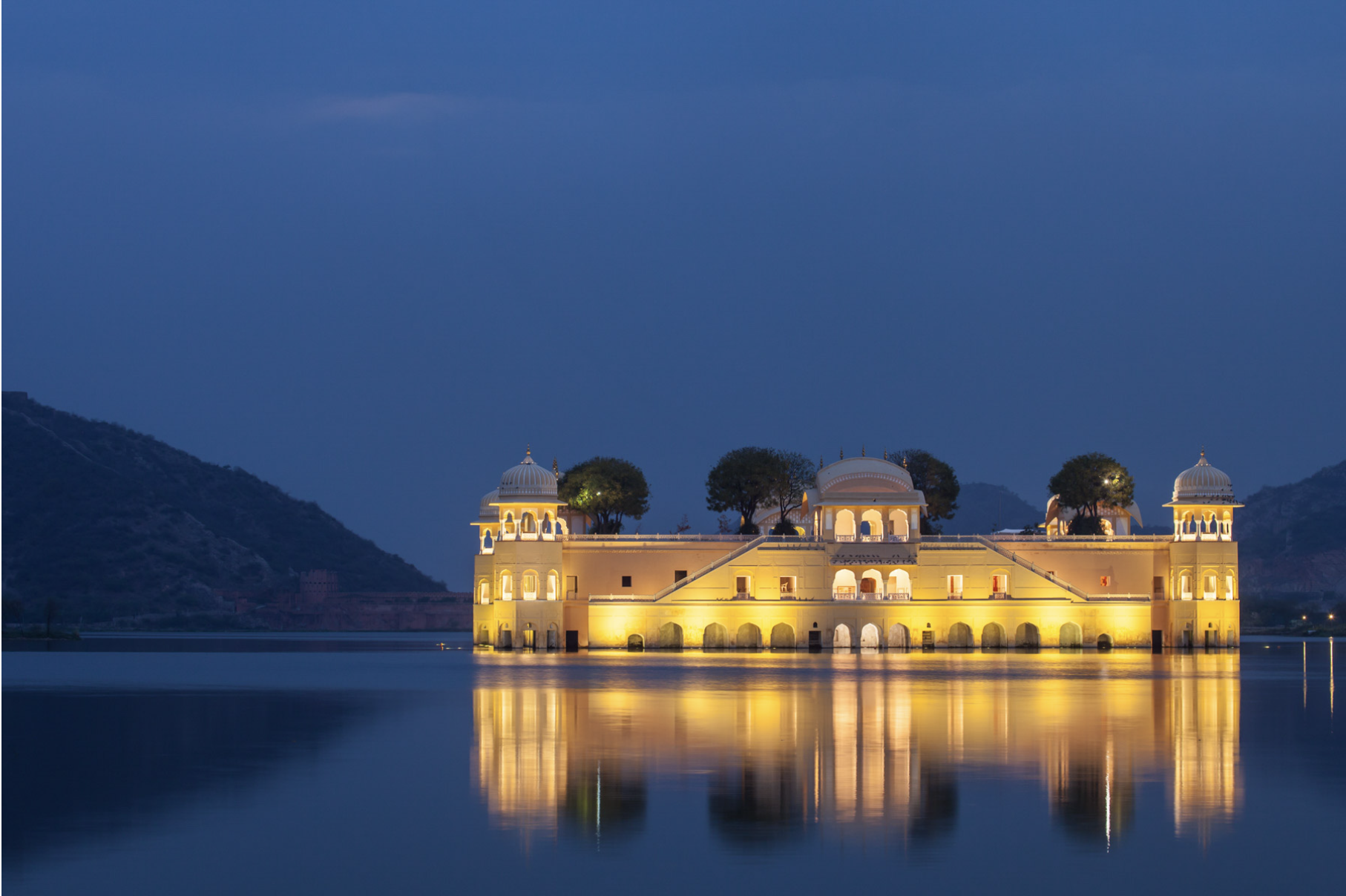
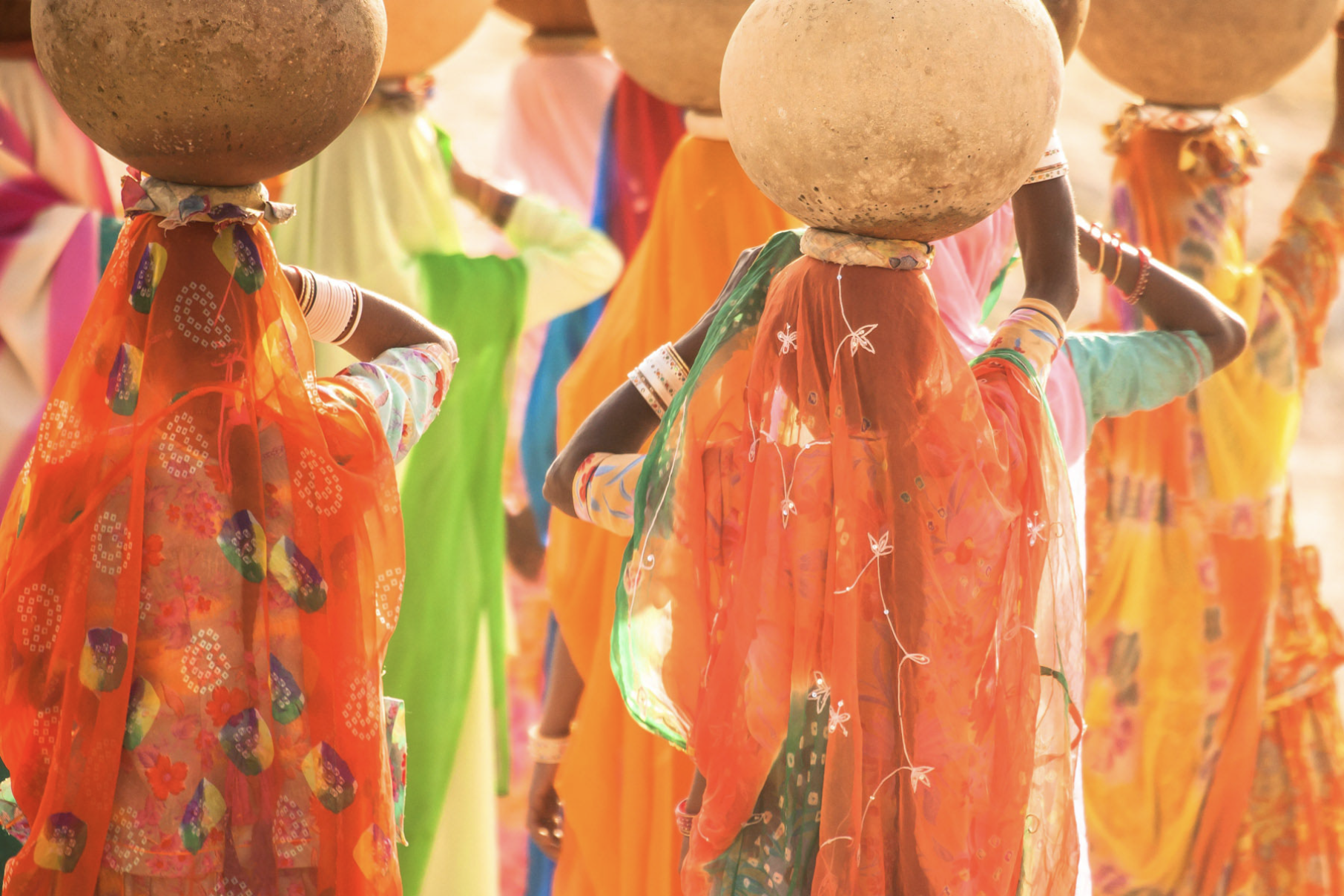
I was really determined after seeing the color and the people. I fell in love with India. I fell in love with the people, the traditions, the ceremonies, the architecture, the light, the color. I determined to go back.
So in 2006, I approached the tourist board of India. I said, I want to go to India. I'd love to photograph it. We went through all these discussions and meetings. The meetings, believe it or not, went on for the better part of a year until they finally said, "We'll pay all your expenses. We'll give you a driver. You'll have your hotels. But you've got to come back with great photographs."
I went for three months. Then I came back for a month. Now we're into the digital era, so I processed the digital photographs and then went back for another three months. Then I went back again for another month in 2011.
I was very happy with the photographs I produced. So much color, so many ceremonies, so many people that I met. I found myself wanting to live in India. I became so enamored of the people and how open and spiritual they were. It changed my life.
I haven't been back since, but I'd love to go back. I could see living in India for the rest of my life.
So why didn't you?
Well, my life has moved in another direction. I'm doing more abstracts now. I'm older. I'm getting to the point where traveling is more difficult, and I'm concentrating on different areas of photography. But I could still see moving to India and just living there. Just being happy to live there.
Alright. Thank you very much for your time.
Thank you very much, Martin. I really enjoyed our conversation.
More photography books and interviews?
We'd love to read your comments below, sharing your thoughts and insights on the artist's work. Looking forward to welcoming you back for our next [book spotlight]. See you then!
Robin de Puy could no longer make this project alone. She first photographed Randy in Ely, Nevada, during a 2015 road trip and kept returning to him for more than ten years. Interviews