How Simon King Found Beauty, Survival, and Coexistence in India’s Temple of 25,000 Rats
Welcome to another captivating photo essay, this time by Simon King We'd love to hear your thoughts. Feel free to comment below and, if you're interested, share your photo essay with us. Your perspectives add valuable dimensions to our collective exploration.
Simon King photographed a place most people misunderstand.
The Karni Mata Temple in Deshnoke is known for something that shocks many visitors: thousands of rats living freely inside a place of worship. For photographer Simon King, this strange reputation became the starting point of a deeper curiosity. His essay Whispers and Squeaks moves past the first reaction of surprise and looks more closely at what everyday life inside the temple feels like. The result is a quiet story about belief, routine, and the unusual coexistence between people and animals.
But the project is also about perception.
What many people see as disturbing or bizarre can look very different when someone spends time observing it without judgment. King returned to the temple and began to notice small moments that most visitors miss: gestures of care, routines of faith, and a shared rhythm between humans and animals. In this interview, he reflects on how the essay developed and what it meant to photograph a place that challenges easy assumptions.
At the center of this conversation is a larger question about looking.
What do we miss when we react too quickly to a place, a subject, or a scene that feels unfamiliar? And what becomes visible when a photographer stays long enough to move past the obvious? Simon King speaks about that tension, and about the patience needed to find something more honest beneath first impressions.
The Essay
Simon King - Whispers and Squeaks
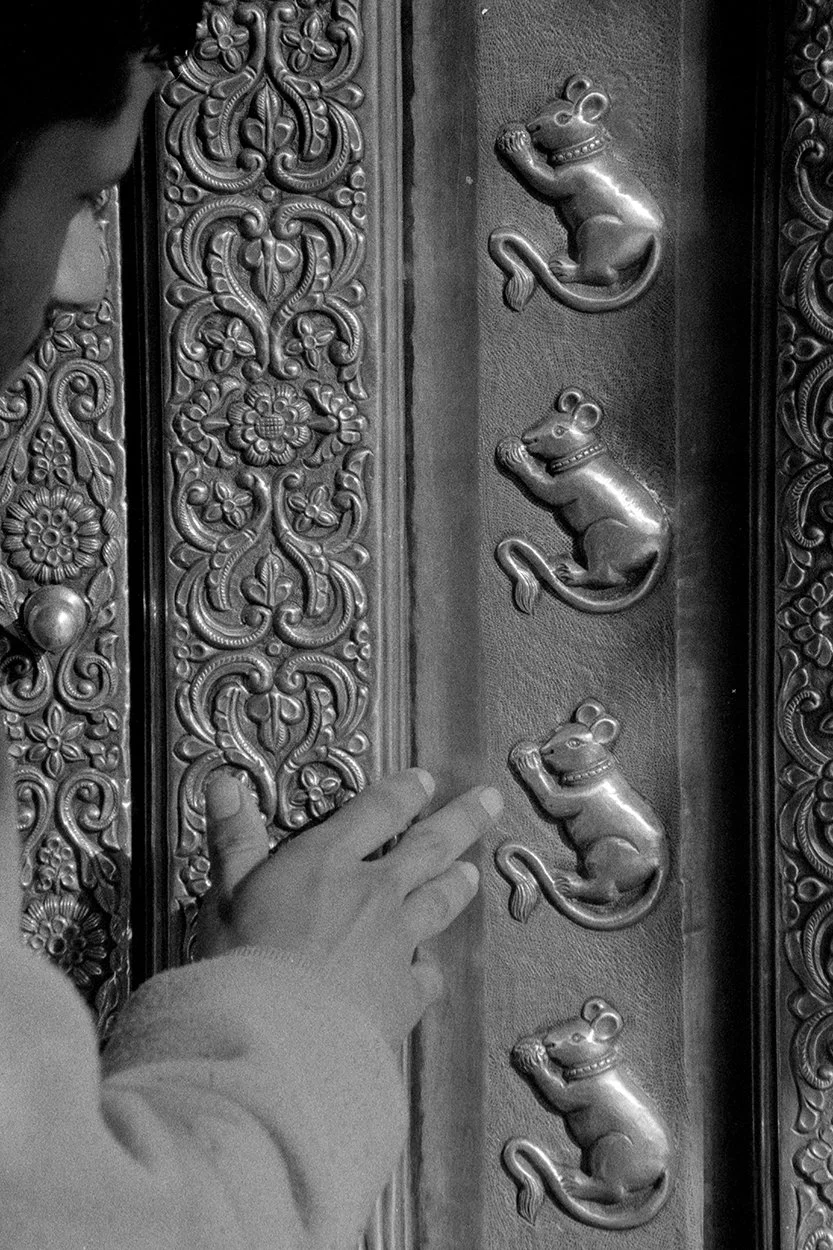
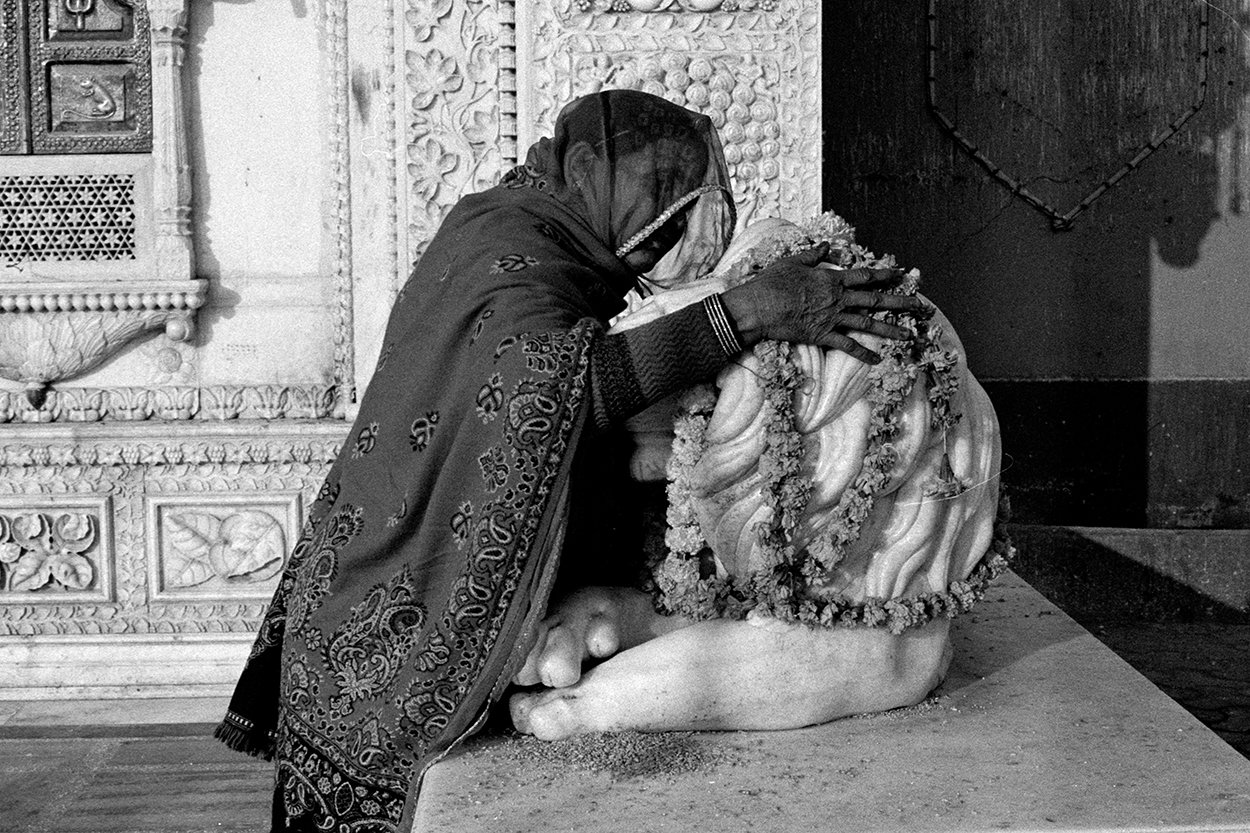
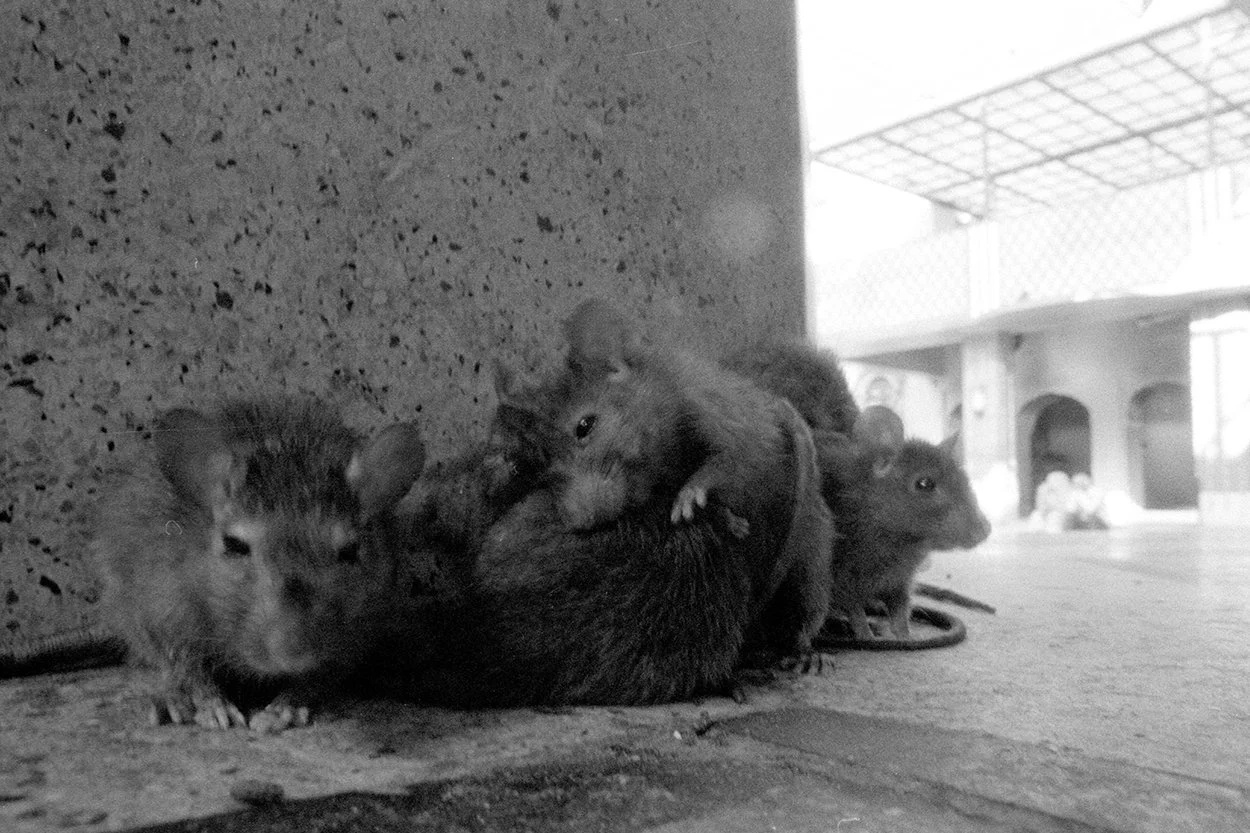
In the Rajasthani desert of north-west India, the town of Deshnoke is home to a very special Hindu mandir. It is home to, along with all the things you'd usually expect to find in a Hindu temple, approximately 25,000 rats. It's all very well singing "all things great and small," but in practice, it is rare to find such a devoted space to what is often seen as maligned beasts, disease-carrying pests, and so on as they are framed by Western thought.
The fact that such a habitat is tended for, carved out as a space for coexistence, when what's needed is survival, is a real testament to the ability to recognise beauty where others see ugliness.
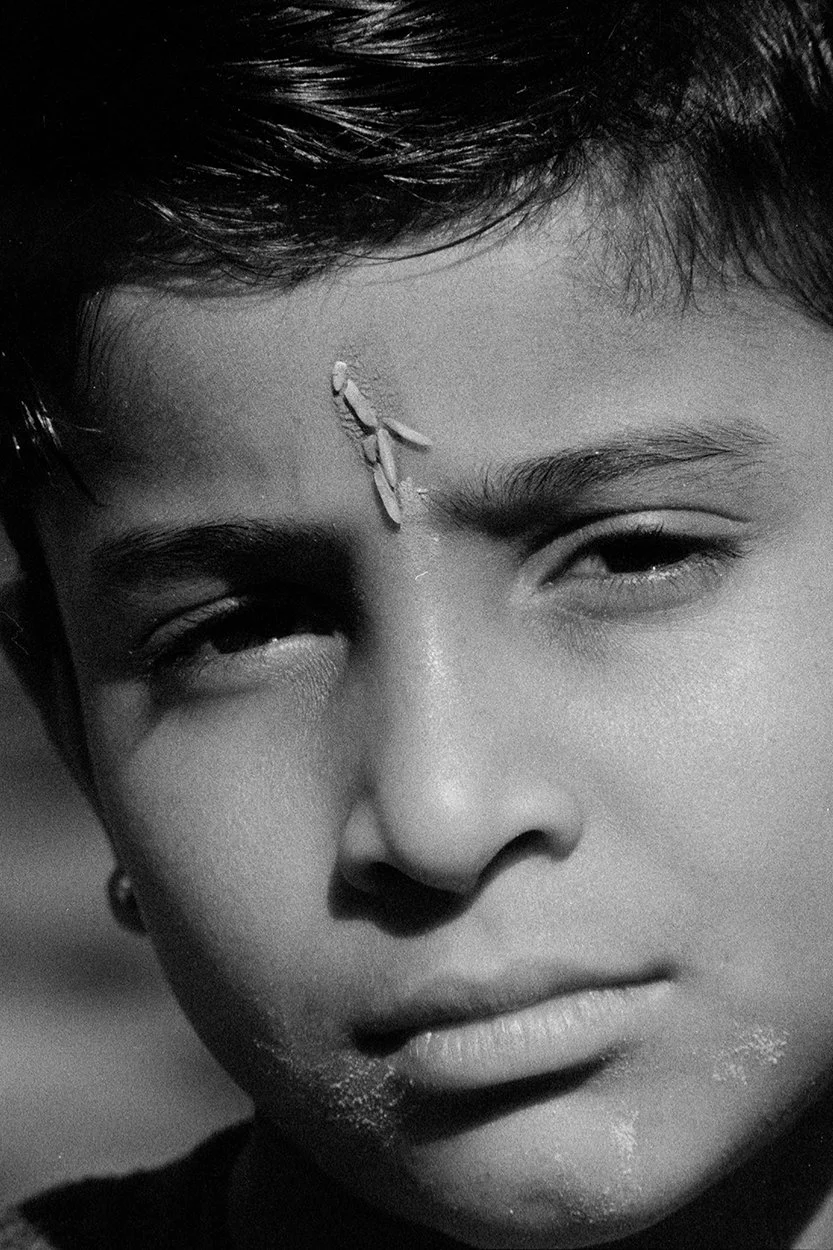
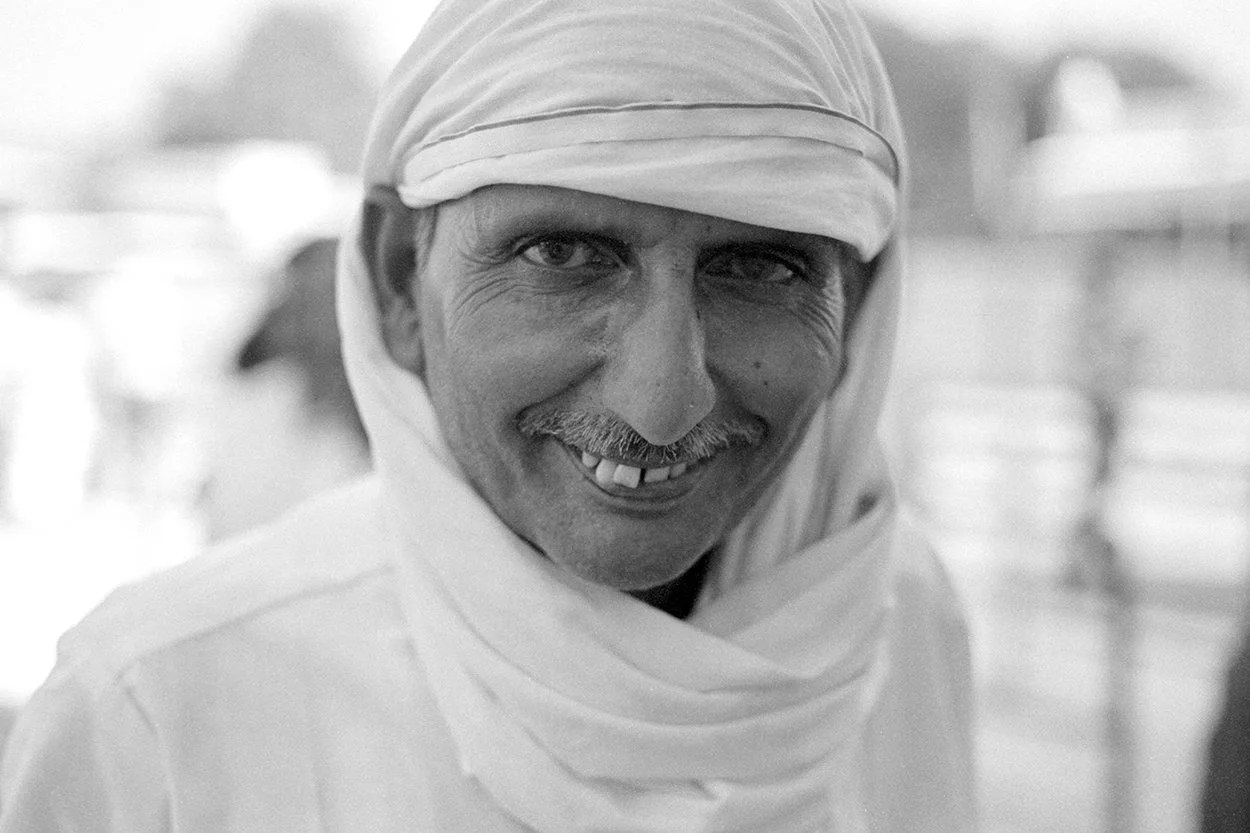
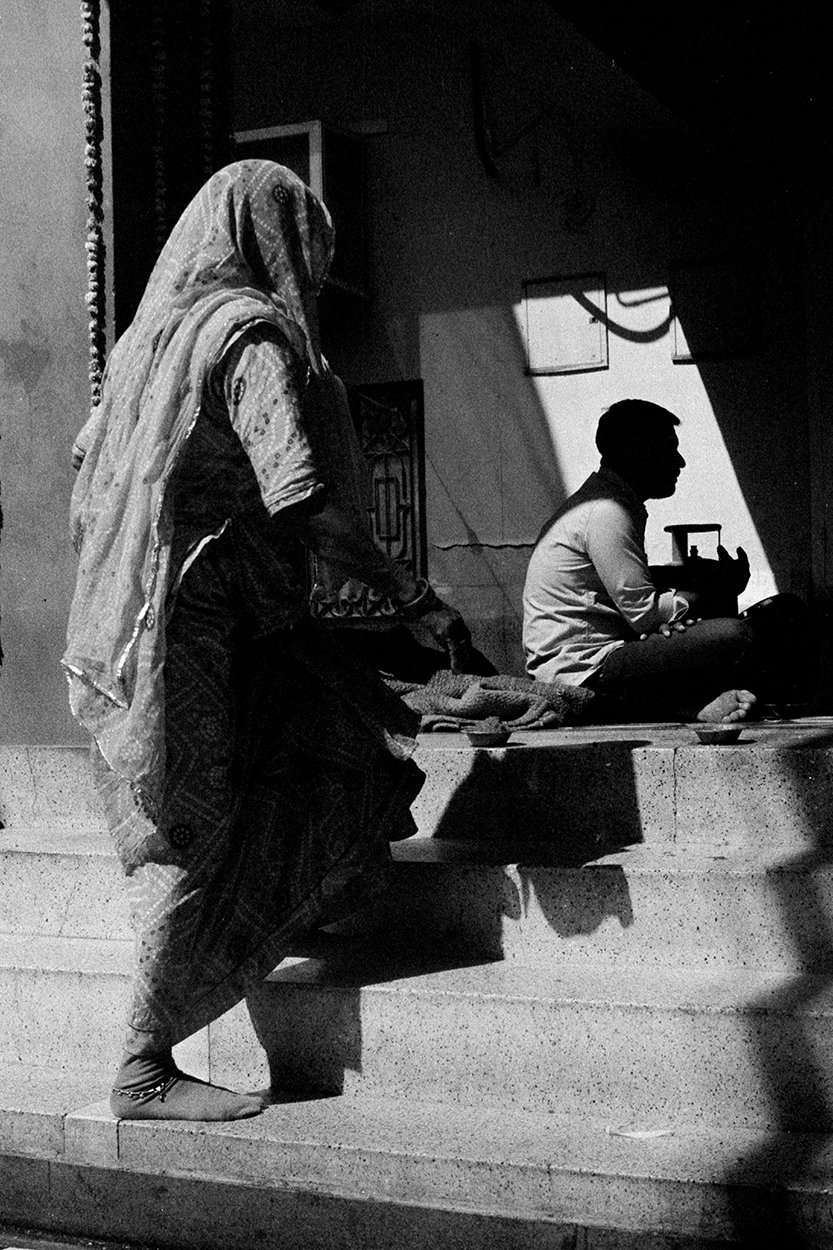
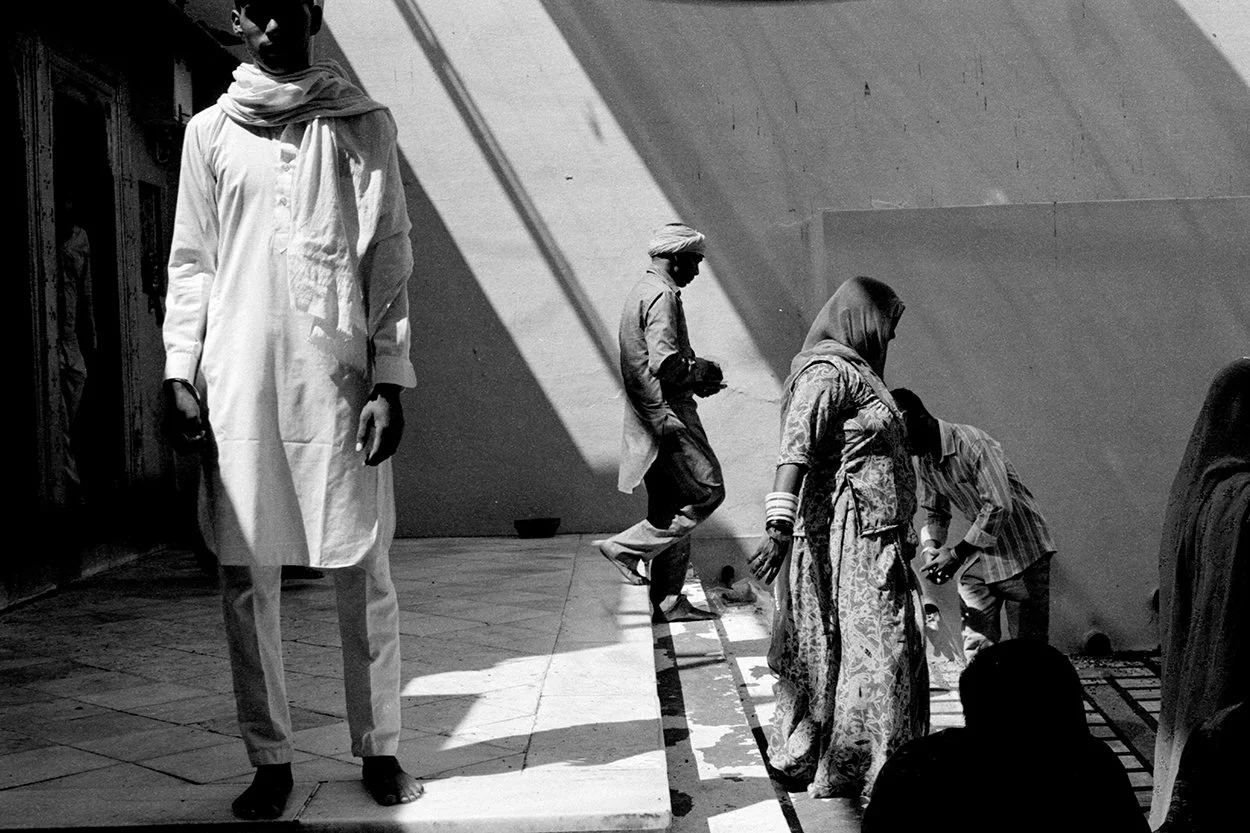
My work was made across time I spent in the town across two visits in 2024, one at the start of the year and the other towards the end. The temple itself is a pilgrimage site, and as with any attraction, the immediate area services visitors, tourists, and spiritual questing, but stepping further beyond that, the desert town is people's lives and homes. My work spotlights both rats and humans, all beings trying to survive as best as the climate and environment allow.
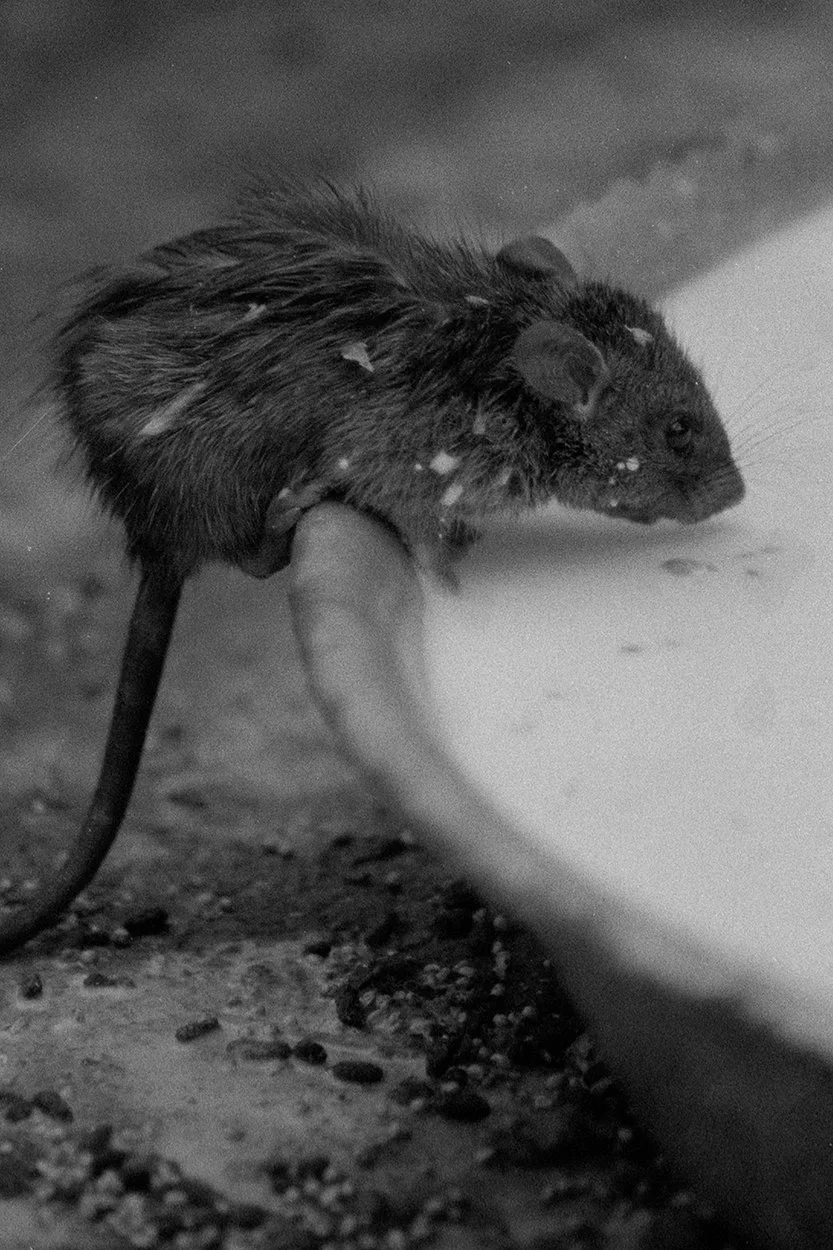
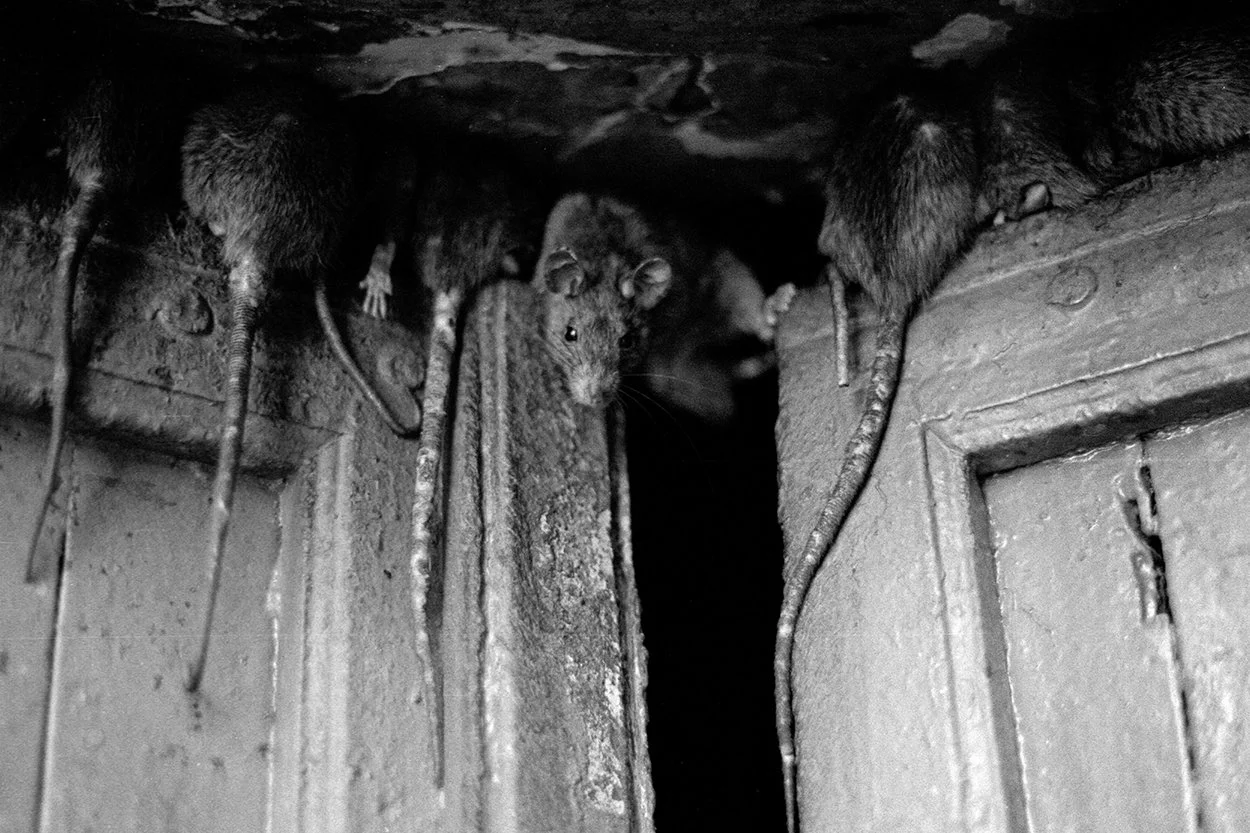
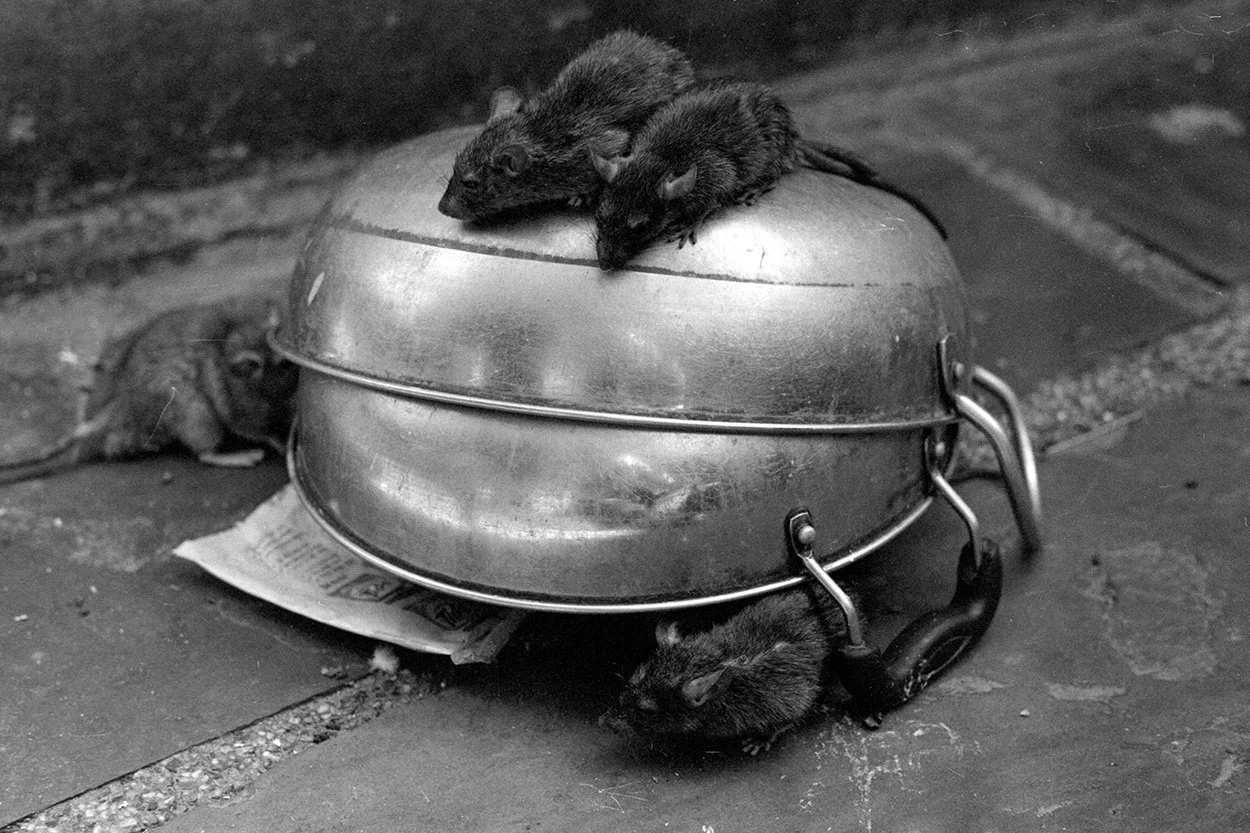
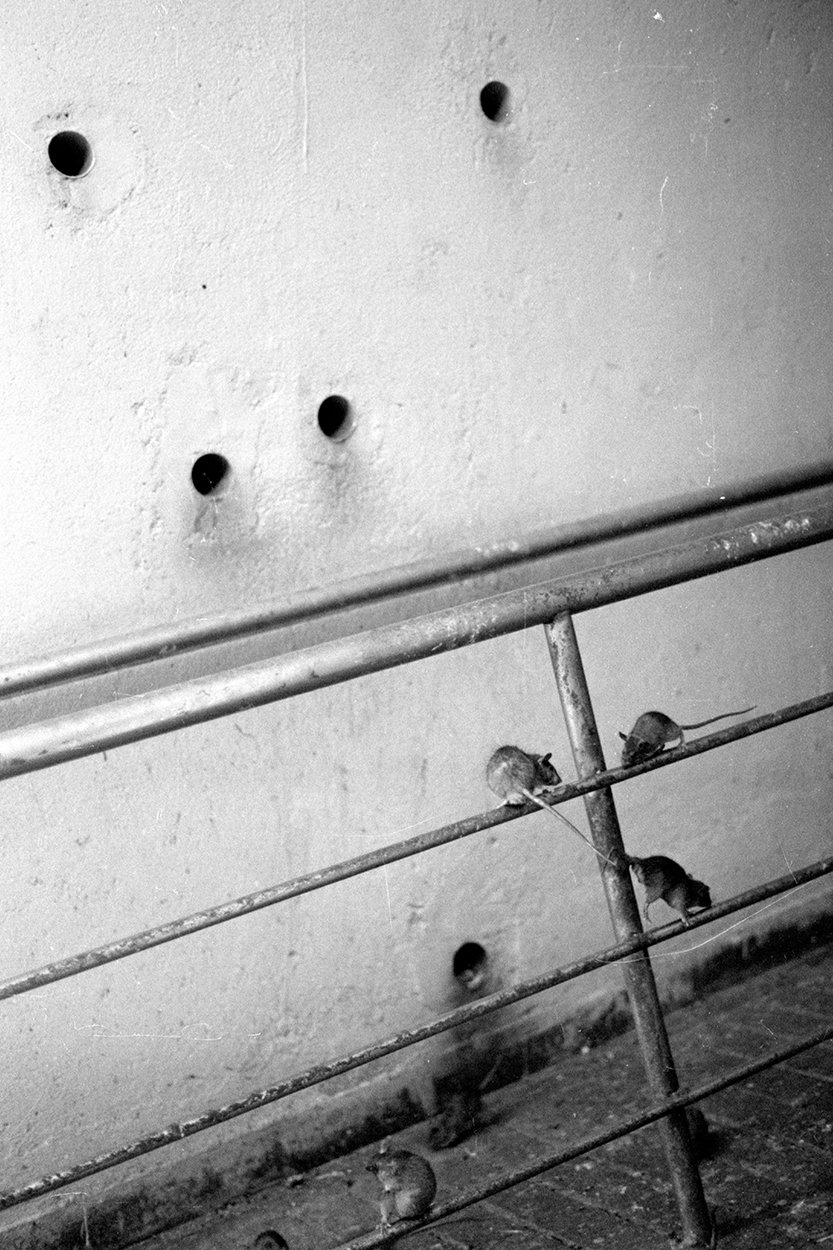
Outside the temple, tourists will make excuses to stay in the tour bus; for those who go inside, it is a carnival, an oddity, something to tell their friends about that they braved the rats. As I'm photographing, the rats crawl on me, nibble my socks, run up my leg as I go down on one knee to make a more detailed shot of a group of them huddling together in the cool shade. They are soft and friendly; my only fear was if I accidentally stepped on or crushed one. Any murdered rats are to be replaced by solid gold, in the same size, shape, and weight as your victim - but it wasn't just the possibility of having to pay; I obviously more directly wanted to avoid doing harm of any kind.
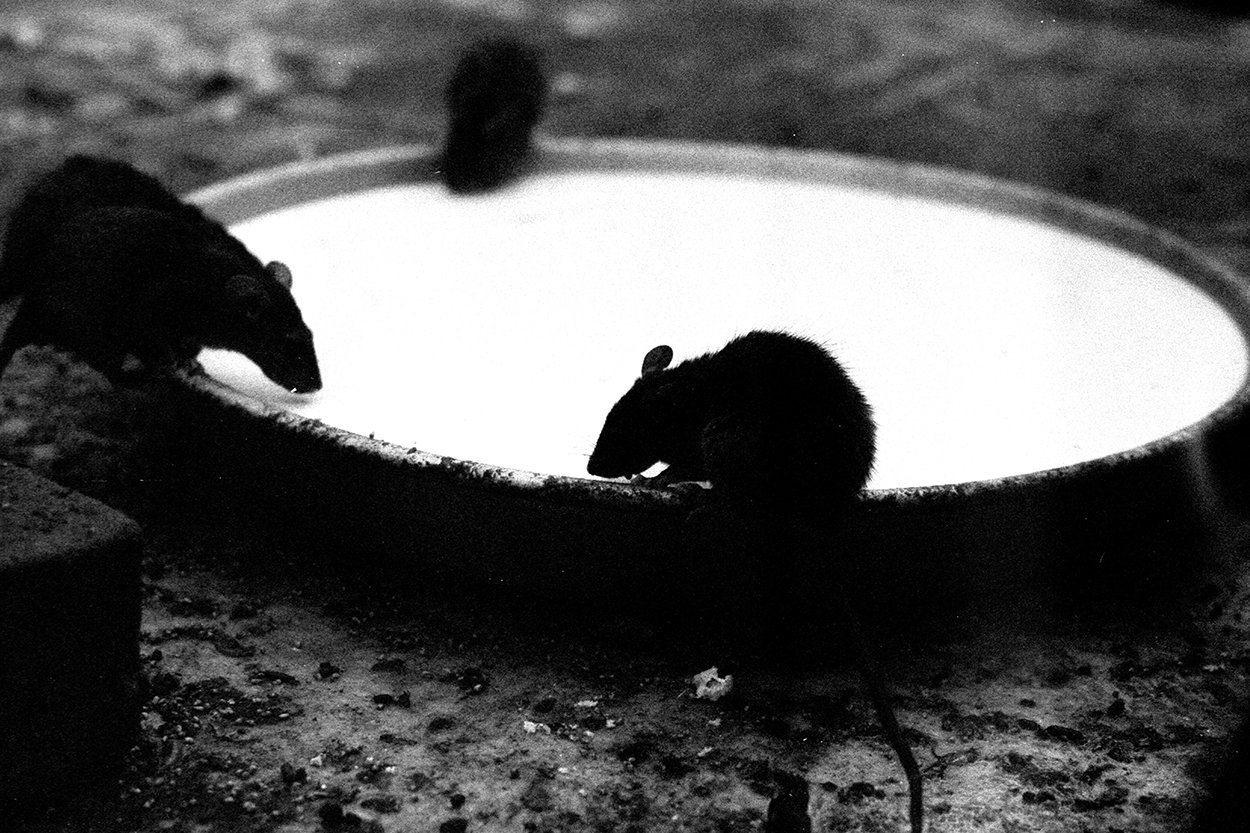
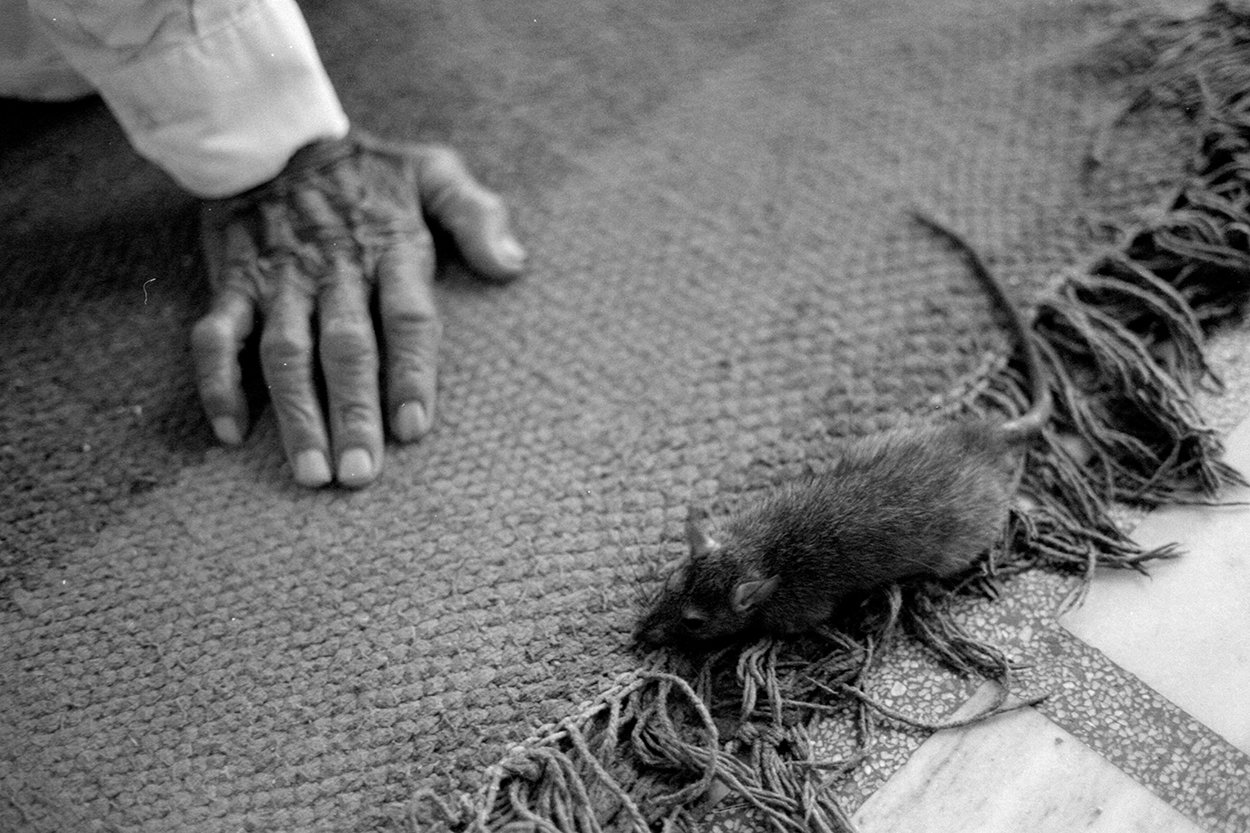
Rats drink from large bowls of milk, shared by human devotees. Light streams in through gaps in the pigeon netting along the ceiling, which in theory prevents predators from eating the holy rats, but there are always stray birds trying their luck. You can't shut out nature or keep it in. The enclosure itself is one with nature, not separate from it.
Albino rats are revered highly, and it is said that seeing one in the temple would mean your wish would be granted. Some pilgrims showed me on their phones their sighting, a small mass of pure white fur against the grey and black. I only saw an albino rat a couple of times and did not manage to make a photograph. I can't remember if I wished, but it probably came true.
You mention going back to Deshnoke twice in 2024. Did something feel unfinished after the first visit, or did you discover something new there that made you want to return?
I visited Deshnoke in Early and Late 2024 across two separate trips to India where I also visited other locations with other stories in mind. Deshnoke is peaceful, and unique, so returning felt natural to simply enjoy being in that space and community. It's not a matter of completeness, as the overall work in India is long term, and will likely take me many years of revisiting all kinds of places. I think Deshnoke will be worth returning to as often as possible, not only for the photography, but because of the simplicity of it all. I think if I were to ever move and live in India, it would be in Deshnoke.
Most tourists stayed on the bus or treated the temple like a dare. How did the locals and pilgrims react to you as an outsider who actually stayed, got down on your knees, and let the rats crawl on you?
I didn't visit as a tourist, as part of a group or anything like that. I stayed in a local hotel, with staff who (by now) know and are very friendly with me. It was as warm a welcome as I'd expect anywhere else in the country, the same goes for treatment by locals, pilgrims, the temple staff, pandits, and everyone else I met. I think there can be an attitude towards people who "present" as outsiders, but behaving as I do with familiarity and openness means I get treated the same way. There's no difference between me and any other Hindu pilgrim.
You write about the rats being soft and friendly and your only real worry was accidentally hurting one. Was there a specific moment inside the temple where something shifted and you stopped seeing them as rats and started seeing them differently?
Not really, as a Londoner I am used to rats and mice, and don't have a huge issue with them, I just see them as other living beings. It was interesting seeing the varying degrees of treatment, from prejudiced tourists to those who lived and worked at the temple, who called them by name, or as the names of the relatives they believed had returned in their form. Some would use familial titles, like Uncle, Grandmother, Father, Sister, to refer to them.
Your work covers both the rats and the people of the town, not just the famous temple. What did you find in the everyday life of Deshnoke, away from the tourists and the pilgrimage site, that you felt the temple pictures alone could not tell?
The temple has a gravity to it, but it still represents an aspect of everyday life: the everyday and the mundane, the sacred and profane, there's no difference to the way I'm framing my insight to the world, so there would be no greater significance in only showing the temple than anything else. I'm not a travel blogger or architectural photographer, I'm a humanist, so my approach champions the humanity of a story.

Michael Behlen photographed water that would not stay still. For three years, he returned to Millerton Lake in California’s Central Valley, making all the photographs during storms, when the reservoir became harder to read. Picture Story