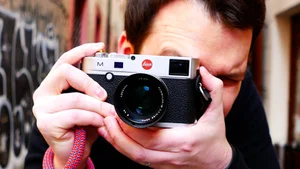
You are NOT a better photographer because you shoot raw. Should you learn photo rules? - Alex Kilbee
Hello fellow photographers. In this episode I am talking with Alex Kilbee, professional portrait photographer with more than 30 year of experience.
We are talking about Alex’s YouTube channel, about rules in photography, photography tips to make better pictures of your family and children and more. My name is Martin and this is a Podcast About Photography. Thank you so much for joing us on this episode. Make sure you are subscribed if you want to be notified when I post a new episode.
If you like this content and you think other people might enjoy it as well Feel free to take a screenshot and through it out on your instagram story or share it with your friends.
Check out Alex's channel The Photographic Eye
If you want to follow ME on social media 🙃
Instagram, Facebook, Twitter, Pinterest
YouTube index:
0:00:00 - Hello there!
0:01:28 - Talking about Alex’s YouTube Channel
0:04:34 - The direction of Alexe’s YouTube channel - Not gear just ideas
0:07:46 - Does YouTube algorithm influence the creators?
0:11:15 - How YouTube pushed me to create certain type of content
0:13:04 - Alex’s experience creating content on YouTube
0:18:11 - Studying photography VS experience
0:21:44 - Is photographic history and education that important?
0:25:37 - The influence of social media on photography and photography books
0:29:48 - Is Facebook and Instagram good for getting feedback?
0:33:02 - Alex’s recommendation for someone who wants to learn photography online
0:39:26 - Should you learn the rules?
0:48:24 - Shooting manual and camera settings
0:52:49 - Photography books
0:58:39 - Magnum contact sheet, process of creating photographs
1:01:40 - Does style matter?
1:05:17 - Alex talks about his style
1:07:17 - What is Alex’s photography process in his studio
1:08:58 - How Alex works with kids
1:17:40 - Trends in family portrait photography
1:20:30 - How professional photography influences your personal work?
1:29:08 - How to take better pictures of your children
1:31:13 - The end
In case YOUR Podcast Directory is missing, please let me know in the comments bellow and I will add that. Thank you!
His YouTube channel
You're a photographer, but you also run a YouTube channel called The Photographic Eye. Can you tell me something about that? Compared to your photography career, it's a fairly new project for you.
Yes, The Photographic Eye channel only started last November, after a lot of procrastination on my part. I'd wanted to do it for ages and ages, but I never really got around to it. It has dovetailed neatly with my photographic career, because I had a fairly formal education in photography, and that side of things I really enjoyed. I wanted a platform where I could share what I'd learned along the way with other people who might be interested, not necessarily professional photographers, but people who just do it for the love of it and don't often have access to that kind of structured education. It's nice to have a way of building a community of people who love photography, and fortunately, it seems to be resonating with people. I'm really happy about that.
Would you say the pandemic was part of what pushed you to finally start it? What sped things up, since you said it was something you'd always wanted to do but took a while to actually begin?
I have a physical family portrait studio locally, and that always took up a lot of my free time. Any time I had to myself outside of work went into family things, so I never really found the time. I also have a three year old boy at home. When everything closed down last March, I found myself with a lot of time on my hands, but having a three year old at home meant there was absolutely no chance of starting a YouTube channel. Towards the end of the year, though, nursery opened back up, so he could go, and I found myself with time to actually get started on The Photographic Eye. I think a positive that came out of that whole situation is that I was almost forced to find something to keep me occupied, because otherwise I could just stay home and play video games all day. It was a happy coincidence, because there were also a lot of people online looking for things to do at the same time. The response to The Photographic Eye has been really positive, especially over the last three months or so.
Not gear, just ideas
Your motto, which I found on your website, is "not gear, just ideas." When you started the channel, did you always want to avoid talking about gear?
Most people with a passing interest in photography online have probably heard of The Art of Photography and Ted Forbes. I think he was one of the original channels covering photography, and I really enjoyed his older videos. But over the years, I found that more and more channels I wanted to watch about photography were actually talking about lenses and cameras. It was disappointing. I understand why people do it, and there's clearly an interest in that kind of content, but it wasn't what I wanted to spend my time watching. So I thought, if nobody else is going to make these videos, I need to start making them myself. It seems a few other people, yourself included, had similar ideas and went ahead and made them too, rather than just complaining that nobody was making them. That way we could at least show people there's an option to talk about photography without discussing megapixels and focal lengths. For me, talking about photography itself is far more enjoyable, because we all interpret images in our own unique ways, and there's clearly a desire among people to have that kind of discussion. I know YouTube is a bit of a problem in that sense, because you can't really have a two way conversation, but I wanted to make it clear from the outset that my channel wasn't going to be about gear or camera reviews. That seemed as good a way as any to plant my flag in the sand and say we're not going to do lens reviews. If you want to watch lens reviews, you'll need to go somewhere else, because other people do that far better than me. But if you want to be part of a community that discusses photography as a photographer, with a capital P, then this is the place.
It's an art, right?
Exactly, yes. And that's exactly what people are resonating with. It's been really good to hear.
Does the YouTube algorithm shape what creators make?
Do you think we can blame the so called YouTube algorithm for that? People often say it pushes creators in certain directions, more focused on views and likes. Do you ever feel obligated, or at least feel that some topics simply perform better than others?
I think there's a case for some topics doing better than others. It's a complex question, but let me try to break it down simply. There are people who want to talk about photography, and it's easy to talk about lenses and gear, because that's a straightforward thing. There's a manual that tells you exactly what it is, so you can pick it up and say, look, it's X, Y and Z. You don't need any particular education to talk about that. You can read it off a website and say, I like this camera, it does this, and this is why I use it. It's much harder to talk about photography itself. If you look at someone like William Eggleston's work, you have to interpret it, put it into language, and then share that opinion with somebody. That's one barrier right there. So there are more gear reviews and tutorials and how tos, and what follows from that is more people who want to learn about new cameras, because buying a new camera or lens isn't cheap, it's often quite a hefty purchase. People gravitate towards that kind of content, it gets a lot of views, and then you think that's what you need to make more of. It becomes a bit of a vicious circle: people watch it, so you make more of it, and people watch it, so you make more of it again. If you look at videos about famous photographers from ten years ago, they've barely got a few thousand views, even people who I would imagine are quite well known. I think that's why someone like Ted Forbes managed to get some traction, because he built a subscriber base early. Everyone else puts out a video about a well known photographer and it gets a thousand views, but a review of a fifty millimetre lens gets ten thousand. Now, though, we're starting to see a shift. I did a video about a photographer that most people probably haven't heard of, and it got sixteen thousand views in about four weeks, which isn't a crazy number, but it shows that videos about the art of photography can get worthwhile views. If you look at one of your videos, about colour and composition in a Netflix series, things like that show that people are being smarter about the way they put ideas forward. As YouTube has evolved as a platform, I think creators like us have also become smarter about how we present our ideas and make them more entertaining, and that's probably the main thing.
Talking about that specific video, I liked that it got some traction and that people enjoyed it, but I don't like that it pushed me in a direction I'm not sure I want to go. Let me explain. I made a video about Ansel Adams, and one about a well known photographer, and then I made a video about a Netflix series. People were interested in the Netflix series, and the comments were full of requests for more videos like that, watch this series or that film and talk about it. There's only so much you can say about complementary colours or a particular colour scheme before it runs out, and I didn't want to turn the channel into something about discussing modern films, ending up talking about sitcoms. That's not the direction I wanted to go, but the YouTube algorithm showed me that's what people wanted to watch. I keep wondering whether you can follow your own direction and still find an audience that appreciates it, or whether it's simply harder than going for mainstream topics, whatever's trending, or gear.
It is tricky, isn't it. I've always maintained that one of the biggest hurdles, and I thought this when I started The Photographic Eye, is how you get people to search for or discover photographers they don't already know. If you're not familiar with a certain photographer, you're not going to go looking for them, so you can't find that content in the first place. It's a bit of a catch twenty two. I believe that once you have a bigger subscriber base, the process becomes easier, because you'll have people who watch regardless, and YouTube has a better idea of the kind of people who would enjoy it. Initially, though, this is why I built two parts into my channel. There are photographers whose work I enjoy, where we talk about the photography itself, looking at a book and talking about layering, for example, rather than making it a biography. It's more like, this is why you might enjoy this person's photography. But I also try to cast the net a little wider and talk about topics that aren't necessarily tutorials but address something that's lacking. That's where a series I do called The Art of Seeing comes in, helping people learn to use their eyes, which is the best tool a photographer has. That encourages people to come and look at the channel, and hopefully they discover the other content too. It's a kind of gateway that entices people in, and then you can say, if you liked this, have you considered this person, have you considered that. That seems to be doing okay. But it is frustrating when you make a video about a photographer you think is really good, someone people would benefit from knowing, and it just falls flat. You put out a video and it gets four thousand views and then it just dies.
It is tricky. You kind of need to play the YouTube game a bit, doing something like five things to learn from this amazing photographer, that sort of thing.
Yes, it is. And it does feel slightly, I don't want to say clickbaity, because the title isn't disconnected from the video, but it does feel a bit shouty, like you're just shouting into the noise, saying look, this is what you must do, rather than just being somebody who wants to share things. It is hard, because you do need to stand out from the crowd. But I've noticed, certainly among the channels my subscribers watch and the channels I watch myself, that the thumbnails and titles aren't necessarily "ten million things you can do with a camera in five seconds." They tend to be much more straightforward, things like "what I wish I'd known when I was starting out," which is a fair way to put it. I remember one of my own titles was about how a well known photographer said his street photography is about being a failure ninety nine percent of the time, which is one of his quotes. But it's good to see that people like Ted Forbes keep their titles fairly normal, for want of a better word. At least within our own environment, we don't need to be shouting to attract a certain crowd. I think that crowd is looking for something presented in a way that isn't a million cuts, ten seconds long, with someone telling you to smash the like button, and people connect with that.
Studying photography versus experience
You mentioned your tips on YouTube. I know you studied photography formally. When you make a video about tips, does it come more from that educational background, or from your thirty plus years of experience as a photographer? What matters more, in your view?
I think it's more the experience. The technical side, the nuts and bolts, is fairly easy to learn to a basic level, and fairly easy to become extremely competent with. But what people don't really talk about, or certainly don't teach, is the experience of it: the inner struggle of thinking everything you photograph is rubbish, of learning to think like a photographer, learning to see the world differently. That's a very tricky thing to teach. I can't do a tutorial on how to see the world like a photographer, but I can show you my own experience, which is why I tend to weave some kind of story or narrative through my videos, to give it context and show how it can help. That's a lot easier. So the experience of, say, people creating photographs for Instagram just to get likes, rather than making something for themselves, something that comes from within and expresses their own visual voice, but instead taking pictures they think other people will like, that comes from experience. I try to say, it's okay, you don't need people to like your photographs, in inverted commas, for them to be successful. You get to define what a successful photograph means to you, and you can't do that if you only picked up a camera ten minutes ago, because it only comes with experience. That's why a lot of my videos, even the ones framed as technical, end up touching on something closer to self esteem, almost a motivational talk, because there's so much that can trip you up as a photographer. I believe that anything you create, any photograph you take, has a bit of you in it. When people offer criticism, or simply say they don't like something, it's very easy to fall into thinking they're criticising you as a person, because that picture has some of you in it, and to feel like they're being nasty about you. Of course, that's not the case, but for a new photographer, especially online in the environment most new photographers find themselves in these days, it's very easy to fall into that trap. That's why I draw on experience and share what I've built up over the years, to hopefully help other people avoid those mistakes and feel happier with their own photographic process.
Is photographic history and education that important?
That said, you clearly think education matters, given the direction you've taken with your channel. As someone who studied photography, why is the history of photography important for someone taking pictures today?
It's interesting that you ask about the importance of knowing where you come from. If we look at Instagram, it's full of, as a gross generalisation, younger people who know how to take what a photography educator I admire calls "lollipop pictures." You look at them and think, oh, that's nice, and then you move on, because they don't have any real substance. If you only ever make lollipop pictures, and you go on Instagram and think that's what you should be doing, you never really grow, you never round yourself out, you never grow your skill set, because you're just copying a lightweight technique, something that looks pretty. That's perfectly fine in itself, because copying is one way of learning. But when you look at older photographers, when you go back through history, someone like Nadar, the French photographer from the 1800s, and look at his portraiture, you start to see how all these little things build on each other. They give you more building blocks, like Lego. If you give children only flat pieces, they can only ever build things that look flat. When you introduce other shapes and other types of bricks, it gives them more tools in their own toolbox to express themselves. That's why I think it's so important, not necessarily to study the history of photography in terms of knowing which process came first, but to look at older photographers, because they have so much to teach us about how we can all interpret the world. The early pioneers weren't doing it to impress people, they were doing it from a spirit of discovery and invention. The more you look at these things, the more they build up a visual library in your head, and the more ingredients you have to put in, the more unique the end result is.
Social media, single images, and photography books
Do you think this has changed over time, the way social media has influenced photography? You've talked before about photographers who took on projects that lasted weeks or months, and now, with the internet and Instagram, everything moves faster. I notice a lot of people leaning towards posting strong single images to get likes and comments. How has photography changed since you started, and how has social media changed photography as we know it?
I'll come back to that, but there's a nice example someone just mentioned in the chat: The Americans by Robert Frank. That's an excellent example of what you're talking about, looking at single images versus a book designed to be read as a whole. It's the same with Walker Evans's book American Photographs. In the original preface, it apparently said, in bold capitals, that you were required to look at the pictures in sequence, because they told a story and worked together, they weren't just randomly placed. I think that's one of the things people have lost in the digital age. On Instagram, it's all about the single image, not about photographs working together and building a narrative. That's one huge change: people are less inclined to look at photography as a body of work, it's all about that one standalone thing existing in a vacuum, which of course isn't the case, and certainly shouldn't be.
If I cycle back to when I was a student, in the early nineties, digital photography and the internet were both starting to appear, but for those of us there at the time, it took fifteen minutes to download a single one megabyte file. Image sharing simply wasn't a thing. My first website had six hundred and forty by four hundred and eighty pixel images, and I had to warn people it would take a while to download because the files were around two hundred kilobytes. The idea of image sharing, getting feedback, and being part of a wider online community of people you didn't know essentially didn't exist, certainly not in any context people would recognise today. So the only people you needed to impress were your fellow students. For me, that meant the whole photography school, about forty five people across three years, plus the lecturers. That was your peer group. It wasn't necessarily about making things to impress people and get everybody to like it, it was about being better than everybody else, in a good sense, because you'd have group critiques. You'd get an assignment, put up your pictures, and you wanted yours to be better than everyone else's, not so that people would say "I really like that," but so they'd say "wow, that's so much better than mine." That's a real difference. At the same time, it was also very supportive, because even though you felt this need to compete, you didn't dismiss other people's work by saying it was awful, you did it in a playful way. You could sit there and say, that picture's rubbish, try something else, but everybody helped everybody else, and that exchange of ideas was really inspiring, and it pushed me on. These days, with Instagram, new photographers go online and put their pictures up and ask, can you help me, what's wrong with this picture, how can I improve it.
Getting feedback on Facebook and Instagram
I saw a video of yours on that topic, and I really liked what you said, that you actually need to ask what you're looking for, to say, this is what I'm trying to achieve and I'm not getting there, can you help me get there.
Instagram isn't really a platform for helpful critique, and neither is Facebook, really, because so much of critique is about back and forth. If we were doing a critique right now, we could actually discuss it together, which is much trickier to do when it's purely text based.
Unless you have a dedicated group for critique, say a group of five or ten friends who share their pictures and want each other's opinions.
That's a fair point, groups are easier, but they need something close to an impartial leader, an impartial moderator or mentor. That's what you tend not to find online, which is a shame, because there are people who are good at mentoring or leading a group that's trying to improve. What you want is somebody who doesn't have an agenda, who isn't trying to push their own taste. I know what photographs I personally like, but trying to make your photography look like mine isn't what we're trying to do. If you ask me for critique, I'm trying to steer you in the direction you want to go and give you suggestions that will benefit you, not turn you into a clone of me. That's something you don't get in smaller groups without an outside person who can kickstart the conversation and offer suggestions. On forums online, it's all "I would have done this, I would have done that, have you considered this, have you looked at that." I remember someone once asked for critique on a landscape image, and I said, have you considered layering, because he had quite a lot going on and wasn't familiar with the concept, so I explained how he could introduce that into his landscapes to make the image richer. I also mentioned a photographer whose work his reminded me of, because that could be a helpful reference. That's the kind of thing I mean, as opposed to people just picking out faults and saying, that's wrong, I would have done this better, you're wrong for doing that. There's no spirit of support in that, and I find it quite sad. But that's the nature of the internet, unfortunately, and you're going to have people who use the platform to show how much they know, to say look at me, look how amazing I am, because they just want to pick holes in other people's work.
Where to learn photography online
So where would you recommend someone go if they want to learn photography online?
This is where I plug my own channel, and it is a real stumbling block. I think this is why photography is in an odd place at the moment, because the people who have the knowledge and experience to share don't really understand the modern digital world, so they're not really active online. New photographers are floating around looking for help, but the only people offering it, just by the nature of things, are people with only a little more experience than them. That's okay, but it's almost the blind leading the blind. One of the reasons I started The Photographic Eye is that I wanted to share knowledge and experience and give people some direction. For a long time, I struggled with how to replicate that environment I had at photo school, where there was a lecturer who was impartial, who didn't want us all to take photographs like him, who wanted us to grow, to express ourselves, to learn. It was useful having a group of people who wanted to learn but were being guided along their own individual paths by somebody with the experience to do so, and I don't think there's really anywhere online that offers that. That's why I thought I needed to create somewhere we could have discussions, something closer to a face to face setting, and now that the technology has caught up, we can actually do that. You can talk to people all around the world, in a place where nobody is selling Lightroom presets, nobody is saying take your pictures and make them look like mine, where you can sit in an environment and, say, be asked who your favourite photographer is.
My favourite photographer? I do street photography, and it depends, but when you start out in street photography you encounter the great masters, like Henri Cartier-Bresson or Elliott Erwitt, and then it tends to split depending on whether you prefer colour or black and white. My favourite colour photographer is Harry Gruyaert, from Belgium.
Right, so let's say you're interested in street photography, and you've said you lean towards colour, you're leaning in a certain direction. It would be silly for me, having heard that, to say, let's look at this through a more black and white, documentary lens. If I were trying to get you to take pictures like me, that's the wrong school of thought, it's pointless, it doesn't help you grow, it just turns you into me. What we need is honest feedback that says, I can see you're trying to do some layering, like the work of a photographer whose images are clearly stuck in your head, so have you considered this, this is what you could try, maybe if we took a step to the left here. That's proper critique, as opposed to "it doesn't work because it's not how I would have photographed it." That's what I'm trying to build in a photography community I've started as a membership on my site, a place where myself, and hopefully some other people I know who have the experience to share, can have that kind of discussion, live stream critiques, or something similar, where we look at an image and discuss it almost like a class. That matters, because I obviously only have one perspective, and other photographers will have their own. What I've found is that we learn so much more about our own photography when we look at other people's work, and when we engage with others and talk about theirs, because it helps unlock things in our own minds. I've always believed that somebody who picked up a camera yesterday has an opinion about a photograph that's just as valid as somebody who's been taking photographs for sixty years, or is a celebrated professional, because they'll see photography in a way that a professional doesn't, and their input matters. Everybody's feedback is important, because it might be an insight you'd otherwise dismiss, because you have a kind of mental barrier that says, no, you can't think about it like that, that would be ridiculous. Think about a photographer known for reflections in his work: think how many photographers have done things like that where somebody probably once told them, you can't do that, you're not supposed to do that. If you stick rigidly to ideas of what's acceptable and what isn't, then all of that disappears. Photography becomes dull and boring, because nobody ever experiments, nobody ever pushes the boundaries of the medium to see what's possible.
Should you learn the rules?
On a scale of importance, where does this whole idea of rules sit? I'd say you need to learn some basics, some so called rules, to understand other people's work, and I'd like to know how important that is in a photographer's life. Let me give you a silly example. If you want to take sharp photographs, you need to focus on your subject. That said, blurry photographs, like the ones we've talked about, are valid too, and it might be your artistic approach to only take blurry photographs. But if you don't know how that rule works, if focusing on your subject keeps it sharp, you might end up with some photographs blurry and some in focus without knowing why, which is a silly example, but there are others. A lot of people talk about the rule of thirds, and when you look at magazines, a lot of photographs use it. If you always use that rule, your photographs end up looking like regular magazine photographs, stock photographs, which you sometimes want and sometimes don't. So for me, it's probably good to know how to use these rules, and also know when not to use them, or how to use them to achieve what you're going for.
There's a quote for that, something like, you can't break the rules until you know them, that's always the thing. It's funny, because as you were talking I was thinking about Lego again, because I'm rediscovering my love for it now that my boy is nearly old enough to play with it. My approach to Lego has always been, you do it this way, you put the pieces together because that's how it's supposed to go, and his approach is much more freeform, he just builds things, and it drives my wife nuts, because she says, I don't know what I'm supposed to be doing. And it's like, well, he's just building things. That's kind of the thing with photography too: yes, you do need to know the technical basics, because if the camera is in control of everything, you're not really doing photography, you're just somebody holding a camera. If you fall back on saying, well, it's art, I made it art, but you can't explain why the photograph came out the way it did, that's a classic example of not being in a focused, conscious control of the medium, it was just an accident, maybe a happy one, but an accident all the same. We talked earlier about the idea of sequences, having a body of work. If it's all over the place, that's not somebody in control of their meaning, that's just randomly taking pictures. If you're able to sit and take a picture and visualise what it is you want to say, what you want to express, that gives you more freedom to take the rule, say, that all the bricks need to be stacked so they don't fall apart, and say, well, let's see what happens if we try it differently, and then see what happens. But if you don't know the basics of creating an image, you can't play with that palette in a way that allows full expression. So many new photographers make mistakes and then fall back on saying "it's art," and I think that's fine to say, because it lets you avoid admitting it was a mistake.
There's a quote I'll try to find. I think it's from Jordan Peterson, though the name might be different. He says something like, rules are there for a reason, you're only allowed to break them if you're a master. If you're not a master, don't confuse your ignorance with creativity or style.
That's it exactly. He's managed to sum up in a couple of sentences what I've spent months trying to explain. That's exactly the thing, and I think this is why it can be so frustrating online, because we're talking about critique earlier, and there are things that are quite clearly wrong, and things that are more subtle, where you can see the technique someone's trying, but they haven't quite pushed it far enough, which is an odd distinction to make. If somebody says, look at my exposure, it's right for this, and of course "right" is an arbitrary word, you can say, well, it's not, it's broken, because of what you were actually trying to do, your exposure isn't right for that intention. That's a technical aspect that's broken. But saying "I just wanted it like that" as an excuse is a bit of a nonsense.
Shooting manual and camera settings
Whether it's an accident or not: when you look at a photographer who overexposes deliberately, you can't say, that's overexposed, this subject has slipped into bright light, everything's white, because that's obviously what they wanted to do. It's funny, because when I started with photography, I looked up all the guides and the tutorials, and a lot of people were saying, you need to shoot manually, you need to set your exposure yourself, and so on. When I started walking with my kid asleep in the stroller, I had my Ricoh GR in one hand, operating it with one hand, and you simply can't shoot manually in that situation. So what I do is set the shutter speed and let the camera handle the rest, because you can't do that with a baby in a stroller. In street photography, people tend to shoot around 1/250 or 1/125 of a second and let the camera decide the ISO. You can't control whether the shadow is going to be completely black or not, but if you don't understand any of that, you'll just end up with some pictures blurry because your shutter speed was too slow, or the ISO too high or too low.
I think that's probably what it boils down to: whether you can recognise the difference between an image with a technical mistake that happened because you weren't in control of something, and one where you knew exactly why it happened and did it on purpose. If it happened because you don't know why, that's a mistake. If you know why it happened and it was a conscious decision, it's not a mistake. Talking about manual shooting specifically, I think when you're learning photography, it's important to understand how your equipment works, and being able to shoot in manual mode and take manual light meter readings is an important skill. But a lot of people confuse that with being professional, or being a good photographer, and it isn't that, it's simply an understanding of how things work, not something you wear like a badge that says "I shoot raw." Shooting raw doesn't make you a better photographer. I shoot JPEG on my phone. Just because you shoot raw doesn't make you inherently better than everybody else. If you understand why you shoot raw, and use its capabilities to their full purpose, that's great, but it's not the be all and end all of being a photographer, it's simply a tool. It's the same with people who say aperture priority or shutter priority is a crutch. It isn't, really, because it's exactly the same as using a light meter: you don't hold up a light meter, take a reading, and then leave the shutter speed or aperture untouched, you adjust the ISO too, to get the reading you want. I know that for my own work I'm usually on shutter priority and let the camera handle the ISO, though it depends. With my studio work photographing kids, because I shoot in natural light, I take the other approach: I know I want a fairly shallow depth of field for these portraits, because parents respond nicely to that with kids around six to ten years old, that tween-ish age. So I shoot aperture priority, because I want my aperture to stay consistent throughout every picture, I'm not going to sit and meter every single shot, because I need to work quickly, I've got a child in front of me and I need to keep photographing rather than stopping to meter constantly. I also know my studio well enough to have a feel for when the light changes, so I can glance at my viewfinder while I'm photographing to make sure my shutter speed isn't dropping too low, and if it is, I can push my ISO up a little. But that comes from understanding how your camera works, how light works, and how exposure works. It isn't a crutch, the fact that I shoot that way makes no difference, because I understand how the underlying system works. This idea that you have to shoot manual is a bit of a fabrication. I know I'm on my soapbox here, but I wish people would stop insisting you have to do X, Y and Z. Somebody mentioned in the comments a photographer whose shadows are completely black, no shadow detail at all, and that's what makes his photographs pop, that stark separation of shapes and colour, because he knows exactly what he's doing. But if you were trying to teach someone about that kind of contrast deliberately, and told them to photograph a scene with a seven or eight stop range and then process the film to compress that exposure range down before printing with a full tonal range, doing the opposite by accident is a mistake. Don't confuse the two. I think that's where so many people struggle, because without a more formal background, they can't always see that something was a mistake, they don't know how they got there in the first place.
Photography books
I think knowing these so called rules can help when you study photography and you're looking at a photography book, trying to understand why a photographer did this or that and how they actually achieved what they set out to do. So I was wondering, what do you think about how people should learn from photography books, and maybe also talk a bit about your own favourites?
One of the lessons we had at photo school was to copy. The one that jumps to mind is copying 1920s and 1930s Hollywood glamour portraits, the kind of work photographers like George Hurrell did, all those black and white images, and I think Steichen did some too. That was a good process for breaking an image down, seeing, well, what are they doing here, how did they get that line. I think that's why they chose studio portraits for the exercise, because you can copy that fairly directly, whereas outside it's a bit trickier. You learn to read an image, to look at its constituent parts, and once you do that, you start understanding how you could do it yourself, rather than somebody just telling you, you need a certain light, you need a hairlight, you need a certain lighting ratio, a kicker, some reflectors. That's not the same as discovering these things for yourself. Take a rim light on hair, for instance: if you look at an image and ask, how did they get that light on the hair, and work out that it's because there's a light positioned behind, shining onto the back of the head, you've learned it by picking it apart rather than being told. It's the same with something like a reflector, the kind of light kicking back onto a face from outside. If you don't know that trick exists, you're left trying to figure out how to light something like that, and you find that just overexposing doesn't quite work, so you realise you need to bring in more light, and that leads you to pick up a reflector yourself. So looking at photographs in a book that way increases your visual awareness of what's possible. In terms of favourite photography books, I think people somewhat gravitate towards photographers they already know, partly because photography books can be genuinely expensive, so you're not going to buy one unless you're already fairly committed to that photographer.
Monographs, right? If you go into the street photography niche, for instance, you can buy books that are more like a crossroads, say two hundred and fifty photographs from two hundred and fifty different photographers, which might be useful for people who don't yet know which style they like. But I feel a monograph can teach you much more, because you see the sequencing, the style, and, in the case of documentary photography, how the photographer chose to tell the story they wanted to tell.
Yes, monographs are exceptionally good in that regard, because they're a complete body of work. They give you a picture of the photography that you don't get from looking at an individual image. Take Robert Frank's famous picture of the car with the drape, the imagery of that shape reappearing throughout his work. If you look at that draped car as a single image, people might say, I don't really get it, it's interesting but not much more. But when you look through the whole body of work, you realise that shape appears again and again, there's an image of people standing by the side of the road in Texas, with a body that's been in a car draped in a cloth that looks just the same as the car itself. There's a common thread running through it, and that's what people miss when they only look at individual pictures rather than books, whether it's street photography, landscape, or anything else. Books are a good way to discover photographers you might not have heard of. In terms of actually teaching you to be a photographer, though, I don't think they're necessarily the most basic tool, that's probably the wrong way to put it, but I don't think they necessarily push you to go off and do your own thing.
Magnum contact sheets and the creative process
They show you the best work of the photographers featured, so they'll show you two pictures by a famous photographer, the one image everyone knows, and that's it.
Yes, exactly, and that's why I find books like Magnum Contact Sheets such a genius idea, this idea of showing contact sheets around famous pictures, because you get to see the process. That's something I really wish there was more of, the process of creating a picture, because I think a lot of new photographers, or even established ones, assume that great photography is just a case of going out and every picture turning out great, which isn't true. Seeing the process behind an iconic photograph, like Dorothea Lange's Migrant Mother, is a great example of how a photograph was actually constructed, and the slow, exploratory process going on in her mind as she worked through the possibilities. She didn't just turn up, take one picture, and move on knowing she had a defining image. So those kinds of books, if somebody's interested in seeing photography as a visual process, are ones I'd certainly recommend early on, because they're such a useful learning tool, and they also remind you that people take some rubbish pictures too, as long as you stay mindful about the process. I think street photography is very susceptible to this: a lot of new street photographers probably just pick up a camera and walk around photographing whatever they want, without much of a process, and I don't think that makes them a street photographer. You need some sort of idea, some sense of waiting for a decisive moment, seeing a scene and knowing it could become a picture. Someone like Alex Webb does that with layering, always looking for reflections and interesting colour, Harry Callahan too, they're all purposeful in what they're photographing. Even Joel Meyerowitz, if I'm remembering this correctly, stands and lets the world flow past him like a river, looking for interesting things, the detritus sweeping past in this river of humanity. He has a process too. So much of photography comes down to being intentional about what you're doing.
Does style matter?
So, do you think style is important? I'd say it's important within one project. If you do a project with, say, twenty or thirty photographs, and some are black and white, some oversaturated, some overexposed, some blurry, some sharp portraits, I think it doesn't work within that project. But I think learning multiple styles matters too, not boxing yourself in by saying, I'm a street photographer, I'm never going to shoot landscapes or anything else. What we see from a lot of famous photographers is different. Martin Parr, for example, photographs British tourists on holiday, and he has his own distinct style, I can't imagine him shooting a black and white landscape or a macro image, nothing like that. But what I tend to notice is that once photographers become famous, they try to keep their style unified. Steve McCurry, for example, when you look at his Instagram, the photographs aren't identical, but there's a consistent theme, that saturated look.
I think there's a real distinction between photographers who are working photographers and those who aren't. If you hire Steve McCurry, or Alex Webb, or a well known photographer like that, you're hiring them because you want that specific picture. If you want an Annie Leibovitz type picture, you hire Annie Leibovitz. So in a sense they have to conform to an idea of who they are. It's the same with music: you see what happens when a band does something completely different from what they normally do, and people go, I don't want orchestral music from a band I know for something else entirely, so bands tend to conform to a certain sound too, in a way that's almost a crutch. There's a photographer who I think straddles this quite nicely, whose work has evolved over the years while still keeping a distinct style, but who works across a number of different fields. For the rest of us, though, I think it's useful to have a broad but recognisable style, because people will recognise your work for what it is. My personal photography is very different from my working portrait style, and my personal portrait work is also different from my commercial portrait work. My working portraiture needs to be accessible, family friendly, something people want on their walls, so within that I have a specific style with a couple of consistent signifiers that, if you look at the work, you'd recognise as mine. My personal work has its own signifiers too, and then my personal, more playful pictures are different again, though they have a vague style of their own, in that they tend to be square. I photograph them on my phone and choose the square ratio, and they tend to lean more minimalist, more focused on architectural detail and things of that nature. I think it's important to have a style people can recognise as yours, because otherwise you don't really have a voice in photography. At the same time, those of us who aren't famous have the luxury of exploring different ways of expressing that voice, and that changes over time. I'm sure the photography you take now is very different from what you were taking ten years ago. It changes, and I don't think we should be too much of a slave to one fixed style. Feel free to try things, because we're able to.
His photographic process in the studio
Speaking of your professional work, can you tell me something about how it actually works at your studio, when a client comes to you and says they want you to photograph their family, their child, or themselves?
Unlike a lot of family photographers, I tend to keep my focus on a couple of specific subjects. One is babies, though not newborns. The other is what I'd call the tween age group, roughly ten, eleven, maybe twelve or thirteen, and I photograph those kids individually, because I find it a fascinating time in their life. They're still kids, still little, in some ways, but they're not teenagers yet, so on one hand they can look quite childish, and on the other hand they're starting to become, as one parent put it, the adult they're going to be. It's a genuinely interesting age to photograph. So what I do, if you think about a typical family picture, especially when you're older, it's you and the family, and mum says you'll dress like this and have your hair like that, and as a child you might feel, I want to express my own personality, but mum says no, this is going on the wall, you'll express yourself how I want you to. So I do something I call a "who I am" project, photographing the tweens on their own, not with the family, not with siblings, as a chance for them to express who they are. I give the parents a short questionnaire beforehand: where's your favourite place to go on holiday, what's your favourite food, who's your best friend, what sports do you play, that kind of thing, and I ask them to bring in a couple of things that reflect their hobbies and their life. A couple of changes of clothes too. I keep it very relaxed and low key. I have a lovely big window in my studio that I use for natural light, so the environment doesn't feel sterile the way it might if you walked into a studio full of strobes. We'll spend about ten minutes just having a chat, which is all part of helping the child feel relaxed, because if you think about anything you don't do very often, you tend to be a little tense, a little nervous, like going to the dentist, because you don't quite know what to expect. Photography is similar. So I'll start with something like, hey, when's your birthday, are you older than my brother, that kind of thing, nothing scripted, just connecting with the child.
It builds rapport.
Yes, and I don't really talk to the parent at that point, I don't ask what they want, because right then it's about the child, not the parent. We'll usually find some common ground to talk about, video games, music, that sort of thing.
More psychology than photography, in a way.
Yes, I haven't even picked up the camera yet at that point. If a child is into dancing, I might say, well, photography is a lot like dancing, so we're going to do some warm up pictures first, just to loosen up a bit, leaning against the wall, that kind of thing, and I don't give the kids too much direction beyond that, it's a little more relaxed than "move your hand like this, now do that." It's posed, but gently so, because these are still kids.
So they're not the kind of casual "say cheese" shots.
No, absolutely not. Part of what makes this kind of photography different is that I don't ask them to smile. I actually say to them at the start, look, you don't have to smile if you don't want to, you don't need to feel like you have to, you can just look at me. I don't contrive ways to make them smile, but what I do is put their minds somewhere they can drift a little. My studio window is frosted, so I'll have them look towards it and ask, where's your favourite place to go on holiday, and maybe they'll say Turkey, or Italy, and I'll say, imagine we're flying down towards it right now, you can see the sea, whatever they like, and that takes their mind out of the idea of being photographed. It also puts a kind of story in their eyes, the eyes being the window to the soul and all that, and they start to relax. I have a few set positions I move through in the studio, and once they've warmed up, after about ten or fifteen minutes, we can try different things. Occasionally, if I notice they've slipped into a more posed, almost model-like expression, I'll say, do you want to try something like this, and show them an example, and they'll say, yes, that's cool. But the whole thing stays laid back, it's not big smiles and it's not "say cheese," it's just talking. I think this is where a lot of photographers interested in portraiture fall down a little, because they're not so in control of their technical ability that it becomes second nature, so they spend all their time fussing with the camera, and the subject is sitting there thinking, he doesn't know what he's doing, I don't feel part of the process. If I can do all of that without really even looking at the camera, spending my time talking to you instead, then you feel like you're part of the process, and the whole thing flows a lot more smoothly, especially for young kids who so desperately want to express themselves, want to just be themselves, and who respond so well to someone letting them do that, with a bit of gentle guidance, sit here, sit down, whatever it might be. That makes the picture feel so much more honest, gives it real life. That's really what I want from a portrait. I know family photography can get a bit dismissed sometimes, treated as not serious, not important, there aren't monographs devoted to family portrait photographers at Magnum. But what you're creating for these families is something massively important, because it stays with that family for decades. I have all those photography monographs downstairs, and I love them, they're valuable to me, but if I lost them, well, I'd get insurance money and replace them. The pictures of my own little boy, and of all the kids I've photographed, of my grandparents, my family, it's such a cliche, but it's true, that what you're creating as a family portrait photographer isn't just a product to be sold, it's not simply a way of getting money out of somebody emotionally. You're making, I hesitate to say heirloom, because it's such an overused word, but you're making a record of that person at that age. That's where so much of the power of photography lies. If you close your eyes and think of a photograph from your own childhood, the one that stands out, maybe your parents kept it in a shoebox somewhere, it triggers all the other emotions of that time and place. I think of my grandfather, who was a keen amateur photographer, and there's a picture of me with his dog in a park, and that picture brings back memories of things we did together, of the time we spent, of being told stories. All of that comes flooding back from one picture. It's not a technically great photograph, but it's extraordinarily powerful. That's really what I'm trying to get at with these family portraits, and there are so many styles, so many little conventions, flat caps, kids in braces, all sorts of things.
Trends in family portrait photography
People come in and say, my neighbour had this style of photograph done, and I want the same, and then the following year people come in with different ideas.
There are definitely trends, and things people want. Younger kids often get dressed up in things like fairy outfits, and parents can find it a bit much, a bit too sweet, and as a young father myself I understand that reaction, but it's not new. I have a book of Victorian portraiture, and the children's pictures are much the same, a small child standing in something like a mock crow's nest built from an old sailing ship, dressed as a little sailor, maybe five years old. That was after the daguerreotype era, so it wasn't a matter of sitting still for hours, and it could have been photographed yesterday, because it's essentially a set with a child in a cute outfit. People put babies in little galvanised tin baths and photograph them, and it feels fresh now, but it was happening a hundred years ago too. There's nothing new under the sun. That's why, if you're looking at the history of photography, older photographs are such a useful resource for inspiration. If you want to take photographs that don't look like everybody else's but you're struggling to find inspiration, go back to the nineties, the eighties, the seventies, the sixties, and don't necessarily look at the great photographers, just everyday magazine photography, advertising photography. I draw a lot of inspiration from the nineties myself, album cover artwork and that sort of thing, because it's a source of inspiration that isn't influencing everybody else right now, so your photography ends up feeling unique. Everybody's looking at Instagram for inspiration, which is why so many pictures start to look the same.
Does professional work influence personal photography?
I think you might be following some of those trends without realising it sometimes. How does your professional work influence your own personal photography? I know you're a father, so I'm curious whether you find yourself thinking, that was a great idea in the studio, let's try it at home too.
Interestingly, with the exception of one thing I do with the littlest kids, I haven't photographed my own boy the same way at all, and I find it very tricky. You may have had a similar experience: when a child comes into the studio, I have a window of opportunity, because I'm a new person in their life, so they tend to be fairly well behaved, it's rare that I get a child who's completely unmanageable, and they'll listen to me in a way they don't always listen to their own parents. When I try to photograph my own little boy, especially now that he has more of a personality and is more insistent about what he wants to do, it's much harder, because he doesn't take direction the way the other kids do. He's a bit younger too, and he wants to see what daddy's doing, he wants to be right on top of me, so I have to be a bit trickier about how I take the pictures. I need to set something up almost like street photography: there's a picture here, I'd like him in this part of the frame, so I'll find a way, can you go and get that, can you go and do this, and then he falls into it naturally and I take the picture. So other skills come into play there. It's interesting that the photography I have of my own boy looks quite different from the photography I do of other people's children in the studio, mostly because he reacts to me very differently than other kids do to a stranger. We actually went to a friend of mine, also a photographer, for some family portraits last year, because it's a bit tricky being the photographer and the parent at once, and my wife wanted some proper family portraits. My boy was as good as gold, he took direction, he was charming and funny, and we got some lovely photographs, but he was responding to that other photographer in a way he never would with me. So the pictures I take of him now tend to be a bit more off the cuff, if you want to call it that, partly because I've mostly given up using my DSLR with him and just use my phone.
Better pictures of your own children
Most people take pictures of their children with their phones, so I was wondering if you have any tips for someone who has a child and wants to know how to get better at photographing them. One technical tip I'd give people who ask me about this comes from street photography: get down to their eye level. When you photograph a child from above, standing at your own height, most shots end up looking the same, but when you get lower, it changes the perspective completely. I've noticed that around ninety percent of people just stand there and take pictures of their children from above, and when you get down to their level, it transforms the image.
I think the biggest thing, the absolute biggest thing, is to stop worrying so much about the exact picture you want to take. Even within my own studio, I have a loose sense of where I want to go, I want to photograph in that corner, I want to move to that window, but these are just ideas in my head, and if something isn't working, you can't sit there with a child and think, hang on, this isn't working, you just move on. It's a bit like a card magician, who never tells you the trick in advance, because if you pick the wrong card, the trick won't work, so the trick has to adapt to the card you actually pick. It's the same with photographing children. If you're taking a picture of your own children, it's tempting to think, it'd be nice if you stood over there, looked at the camera, smiled, said cheese, and you end up trying to shoehorn the child into something, and quite often they just don't want to, which is why you get that resistance, especially once they become teenagers, the whole "stand over there" thing just doesn't work. What I tend to do with my own boy, who's quite energetic, quite inquisitive, quite full on, is to look at what he's interested in at that moment and find a way to photograph that, more from a documentary perspective, because I think photographs that capture a sense of person, time, and place need some suggestion of where that time and place actually is. A picture with nothing around it doesn't give you much to go on. So find what he's interested in, look for how it could become a good picture, and then either wait for him to react to me somehow, or just say something that gets a natural response, whatever works. He'll give you something real, because you're not pulling him away from what he wants to do, you're photographing him doing it. If you treat it like documentary photography, you can't walk up to someone in the street and ask them to just look here for a minute, and I think that's where parents will find they start getting pictures of their children actually being children. That's really what I want from pictures of my boy: not a picture of him standing in front of something, because he won't always have this energy, he might lose some of that curiosity as he becomes a teenager, and knowing him, he's probably going to become quite withdrawn and moody like I was. I want to see him as a child, having fun with things, if he's got a big stick, or he's jumping in a puddle, don't tell him not to jump in the puddle. During the lockdowns last year, that was a great example of this, we live in the countryside, so we were fortunate enough to be able to walk in the forest, and there are pictures of him jumping in puddles and doing all these things his mum isn't always thrilled about, and those are natural, lovely pictures. When I look at them, they make me smile, because I wasn't trying to force him into anything that went against what he wanted to do. I think if you want to take great pictures of younger children, or even older children, it's about not making a big production of it, using your skills as a photographer, and there's a Cartier-Bresson quote about the eye of a hawk with the gentleness of a velvet glove, something like that, about looking, seeking things out, but then being gentle with them once you want to photograph it, because that's the beauty of it, the pictures that are truly wonderful, that connect with us as human beings, have a gentleness to them, and those moments can vanish in an instant if you're too forceful about it. If you go in thinking, I have to be inspired right now, and force it, that's a recipe for an average picture at best. Let them be themselves, and just run with it, and if the pictures aren't technically perfect, it doesn't matter, because they're there for your own enjoyment, nobody else's.
One more thing worth adding: if you do want to photograph children professionally, and this comes back to what I said about my own boy, don't photograph your own children the way you'd photograph somebody else's. It just doesn't work the same way. As soon as you're photographing people you know well, it's a completely different situation from photographing models or strangers.
Thank you once again for joining me today.
You're welcome, it's been an absolute pleasure.