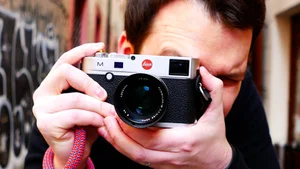
Eric Kim - Why you should photograph important life events and delete your Instagram - Video Podcast
Hello fellow photographers. In this episode I am talking with Eric Kim. We are talking about taking pictures during important life events such as funeral or wedding, about Eric's photography techniques and problems with social media. Thank you so much for joing us on this episode. Make sure you are subscribed if you want to be notified when I post a new episode. If you like this content and you think other people might like it as well consider sharing it with your friends.
Eric's website: erickimphotography.com
YouTube: www.youtube.com/user/erickimphotography
If you want to follow ME on social media 🙃
Instagram, Facebook, Twitter, Pinterest
YouTube Index:
0:00:00 - Hello There!
0:00:56 - Introduction
0:02:13 - Photographing important life events
0:05:20 - Taking pictures during the funeral of Eric’s grandfather
0:09:06 - Taking pictures during the wedding
0:11:05 - Evolving yourself as a photographer or Pokémon …
0:11:54 - Starting with photography, exploring different genres
0:14:05 - Photographing the child birth
0:16:17 - Christopher Anderson -PIA
0:18:16 - Style of Eric’s photography
0:20:39 - Photography Masters - Henri Cartier-Bresson etc.
0:21:56 - Eric’s photography techniques
0:24:04 - Buy film, no megapixels
0:24:50 - Evolution of every street photographer
0:25:33 - Eric prefers shooting black and white digital
0:28:29 - Shooting in color
0:31:06 - State of street photography
0:32:25 - Problem with Instagram
0:34:31 - Are you shooting treet photographs that speak to your soul?
0:36:12 - Getting into trouble because of street photography
0:40:53 - Photography projects and books - Suits
0:51:11 - Publishing photography books
0:55:53 - Do you still educate youself in photography?
1:01:05 - Photography goals - books, Exhibition
1:04:18 - How will pandemic impact street photography?
1:08:29 - If you could travel back in time, would you change anything? (in your photography)
1:10:26 - Delete your Instagram and advices to photographers
1:13:52 - Shift in Eric’s content on social media
1:18:35 - The problem with instagram
1:26:28 - Ricoh GR IV wishlist
1:29:37 - Talking about Leica M
1:31:59 - is shooting manual overrated?
1:37:29 - Eric’s Ricoh GR III setting for his B&W style
1:41:02 - thoughts about film photography?
1:46:50 - Last thing you guys read, watched, learned in photography that inspired you
1:52:08 - Future projects and Haptic
1:54:42 - Never work with a publisher, always self publish
1:56:22 - Projects
2:04:46 - Why do you take photographs?
#photographypodcast #streetphotography #aboutphotography
I know you photographed the birth of your child, but also other important events in your life, like your grandfather's funeral and your own wedding. Why did you decide to do that?
That's a very thoughtful question. I had the thought recently that photography is a tool for curating your personally meaningful memories. I was drawn to the idea that you can take universal human experiences, like the death of a grandparent or the birth of a child, and turn them into something artistic. When I was photographing my grandfather's death, it actually made me realise how much I appreciate being alive, and I like the idea of bookending that with the birth of my son and with my wedding. I can immortalise these important life events, which are also quite universal to other people, and try to make something beautiful out of them.
I have a poor memory, so looking back at the pictures is a good way for me to re-stimulate it. My son is only a few months old, and I already don't remember exactly what he looked like when he was one or two weeks old. Being able to go back and see that growth is amazing. I think the bigger thing, especially with photographing the birth, is that not many people document it. I always have my Ricoh GR III with me, so part of it was simply that it was personally meaningful to me. It made me feel more connected to the experience, more aware of how special it was. But sharing the images has also inspired other people. The best compliment I've had is people telling me that seeing the pictures of my son made them want to have a child themselves. If my photos, or my son being cute enough, can inspire people to have kids, I think that's a wonderful thing.
Was it what you expected before you did it? Did the funeral or the wedding disturb you, being in that kind of situation while also trying to take photographs?
I'll talk about my grandfather first, and then the wedding. I think it was around 2012 or 2013. I was living in East Lansing, Michigan, and I got a call from my mother at three in the morning saying my grandfather had passed and that I needed to come to South Korea immediately for the funeral. At the time I was shooting a lot of film, and I had a Ricoh GR1, the film version of the camera I use today. A friend of mine in Tokyo had given me a batch of Neopan 400 film, so I thought I'd bring about ten rolls and shoot it pushed to 1600, underexposing two stops in camera and processing it myself afterwards.
I felt that shooting film would help me be more present with the moment. With digital photography, people tend to shoot and then immediately check the back of the LCD screen, but I wanted to be fully present at the funeral instead. At first I was a little worried about how the family would react to me photographing it, but it turned out not to be an issue at all, because everyone in my family already knew I was a photographer. My uncle even handed me his own small digital camera so I could take pictures with that too. The only moment I wasn't allowed to photograph was the private family viewing the night before the funeral procession, when everyone gathers around the casket. My oldest uncle told me I could be there, but not photograph it, so I put the camera away.
I'd say that for anyone interested in photographing the death of a family member, it's a good idea, and I think more people should do it. Ironically, the death of my grandfather brought the whole family together, despite the usual family drama. And even though I didn't know him especially well, photographing the funeral made me feel closer to him. Afterwards I came back to the States with about ten rolls of film, and I hand-processed and scanned all of it myself. It's a much more tedious process, but holding the film, developing it, and looking through the scans made me feel more tactilely connected to the whole experience. I'd actually recommend that anyone photographing a funeral shoot film if they've done it before. It's more difficult, but I think it's more beautiful, and shooting Neopan pushed to 1600, dark and gritty, evokes the kind of heavy emotion that fits the occasion.
For the wedding, I had a Ricoh GR camera in my front pocket the whole time. Typical wedding photography is bright and colourful, but I didn't want that. A friend of mine in Los Angeles had photographed his own wedding, and that gave me the idea that I could do the same. So I photographed my wife getting ready behind the scenes. To me she's the most beautiful person in the world, so photographing that felt meaningful and fun, and it gave a unique perspective. Later, during the reception, I was shooting with a flash on the dance floor. A friend of mine also photographed the wedding properly, with a Canon DSLR, beautiful colours and architecture, but looking back, my own pictures feel more personally meaningful to me, because I was the one actually experiencing it. I'm grateful to have both. Sometimes people think you have to put the camera down to truly experience a moment, but for me it's the opposite. Photographing something while I'm living it feels like augmented reality. It lets me experience the moment more deeply, because taking the photograph is itself an acknowledgement that this is something special.
Do you think experiences like that evolved you as a photographer? Did you feel different afterwards?
I felt like a Charmander evolving into a Charizard. When I was starting out, street photography was my whole passion, and there's a danger in putting yourself entirely into one small niche, deciding that anything outside it isn't legitimate. Photographing my grandfather's funeral, my wedding, and now the birth of my son pushed me past that. I was able to use my street photography instincts, working candidly, watching for the decisive moment, but I also had to learn how to interact with and direct my subjects, especially my wife.
I think photographing a family funeral isn't really about skill at all. It's about having the nerve to do it. Any funeral a photographer documents is going to be emotional and meaningful, and the thing to overcome in your own head is the feeling that it's somehow disrespectful. I actually felt the opposite: that I was honouring him more by doing it. There's a word in Yiddish, chutzpah, which is close to having the audacity, or the nerve, to break a social norm in order to do something worthwhile. I think that's almost the ethos of street photography itself: overriding commonly accepted social practices to make something beautiful. The same idea applied to photographing my grandfather's funeral, my wedding, and my son's birth.
Was there a moment during the birth when your wife told you to put the camera away?
That's a good question, though I should mention I also photographed her pregnancy, and in some ways that felt even more intimate than the birth itself. During the birth, there wasn't a specific moment where she told me to stop. You're both exhausted, she's in enormous pain, and there's an almost delirious quality to the whole experience. I photographed everything except the most explicit moments, which I keep for the two of us and our family rather than sharing online. The most graphic photo I have is of our son right after he was born, still attached by the umbilical cord. It's graphic, but because it's in black and white, it doesn't look as intense as it would in colour. Shooting black and white was also useful practically, since the room was quite dark and needed strong high-ISO performance. I shot it in program mode, high-contrast black and white JPEG, auto ISO, autofocus, and it handled it surprisingly well.
So there wasn't really a put-the-camera-away moment during the birth itself. It was more that, while photographing the pregnancy, I was constantly trying to balance sharing something intimate and beautiful without sharing something too intimate.
I recently reviewed a book by Christopher Anderson. He made one called Pia, and before that one called Son, both photographing his children, though not posed exactly, more like a beautiful record of them. Did you like those pictures?
I did, very much. Christopher Anderson's Son project was actually part of what inspired me to start photographing my own son. I saw it on the Magnum Photos website and found it deeply moving. Pia, with his daughter, is almost a spiritual successor to it, same idea, different subject. I haven't held the book itself, only seen it online, and I think I might actually prefer the daughter pictures. There are also some nude images in Son that make it feel more intimate, while Pia feels more consciously artistic, since she's growing up in a family of photographers and is used to being photographed, so in some sense she's already performing for the camera. If my wife and I ever have a daughter, that could be an interesting project to try myself.
I'd like to talk about your style, because early on you tried a lot of different approaches to street photography, including shooting with a flash right in people's faces, which became quite well known. How did your style evolve? Did you deliberately try everything, or did you find yourself gravitating toward one particular approach?
I like to think of it through an analogy. I'm also really into weightlifting and callisthenics, one-rep-max deadlifts, squats, that sort of thing, and during quarantine, when the gyms closed, I started training bodyweight movements at the park instead, teaching myself muscle-ups and rings work. There's a similar divide in that world between people who are firmly in the weights camp and people who are firmly in the bodyweight camp, the same way people pick a side between Apple and Android.
My approach to street photography is closer to wanting to be like Batman, with a full utility belt. Sometimes you want the grappling hook, sometimes the smoke bomb, depending on the context and the situation. Honestly, I think a lot of it, for me, was building up my technique by trying almost everything and incorporating whatever was useful. I love Henri Cartier-Bresson, I love Bruce Gilden, I love all the classic street photographers, and it's interesting to think about them psychologically. Cartier-Bresson is one of my favourites, and a lot of his best work is still underappreciated, full of complex layers and curves, but by most accounts he was a shy, timid person, and I don't think he had the nerve to work the way Bruce Gilden does, right up in someone's face.
Gilden, on the other hand, is largely about charm. People assume he's aggressive, but I've met him, and he's actually a very charming person. I think the best description of charm is someone who can insult you and still make you feel good about yourself. When I first saw him shooting with a flash, what struck me wasn't so much the technique as the look it produced: a street photograph shot head-on, wide angle, with a flash, has this epic, film-noir quality, especially with someone smoking a cigarette. I love that look. I was terrified to try it myself, but a lot of my early YouTube videos were me teaching myself that flash technique and sharing it, and I discovered that the overwhelming majority of people were actually fine with it.
Depending on the situation, I might want to capture a decisive moment from a distance, or get right up close, or shoot more of a street portrait, sometimes with permission, sometimes without. I think the best street photographer is the one who can use every technique depending on the situation. Sometimes it's simply too cold for anyone to be outside, so you photograph the snow, the footprints, the architecture instead, which I imagine happens in Prague too. I've been trying to expand my own definition of street photography, and photography in general. That's actually why I like the broad name of this podcast, because I think a lot of photographers are quite insecure and retreat into a small niche where they can feel like the expert. I think photographers who are willing to embrace every form of photography end up more productive, and happier.
You also shot a great deal of film, and you've said things like "buy film, not megapixels." Then at some point you switched to shooting black and white digitally. Can you walk me through that?
That line wasn't originally mine, I forget who coined it, though my own tagline is closer to "buy books, not gear," or these days, "buy experiences, not stuff." I do think it was important for me to try every form of photography, because I think most serious photographers eventually want to shoot with a rangefinder, whether film or digital, it seems almost inevitable. Everyone I know who gets serious about street photography starts with a phone or a point-and-shoot, moves up to something like a Fujifilm, and eventually arrives at something like a Ricoh GR.
What I appreciate now is that I far prefer shooting digital black and white, mainly because in the past, even around 2010 to 2015, in-camera JPEG processing wasn't good enough to match a real black and white film look. Shooting black and white or film also kept me from staring at the LCD screen constantly. Even now I almost never chimp; I shoot using the screen, but I don't review my pictures as I go. Shooting film certainly builds a discipline that makes you a better digital photographer.
People love to say film is better than digital, but I think about it this way: everyone loves Tesla and electric cars, yet nobody feels the same nostalgia for "electric cameras." We're in 2021, and it would be strange to insist on driving a car that runs on petrol just for the sake of it. Film is essential, I think, for any photographer's development, but ultimately I still believe digital is the superior medium, especially now, with the pandemic making it harder to get film processed. I've found I'm far more productive shooting digital. Something as simple as the macro mode on the GR III, which can focus down to a few centimetres, lets me get shots of my son's tiny hands that I couldn't get any other way. Shooting digital has simplified my whole process. I shoot small JPEGs, high-contrast black and white, and lately I don't even use Lightroom, just Apple Photos, because it loads JPEGs so much faster. I think I might be the only person who still uses the MacBook's Touch Bar to flag favourites. Anything that simplifies your photographic life is probably worth doing.
Doesn't it feel limiting sometimes, having your camera set permanently to black and white JPEG, when you see something you'd love in colour? Do you ever regret it?
What I actually do is use the back button to quickly switch into a colour JPEG mode if I see something worth shooting in colour. Say you're out shooting and you see someone in a red dress, a great subject for a black and white frame, and occasionally I've had time to shoot it in black and white and then quickly switch and shoot it again in colour, similar to how Joel Meyerowitz used to shoot the same scene in both. What I've found, though, is that even when the colour version is genuinely striking, I almost always prefer the black and white one in the end.
My thinking is that when you see something vividly colourful in person, the colour itself is so impactful that you remember it. So you don't necessarily need the photograph to preserve it. When I shoot the same scene in black and white, it becomes more interesting and mysterious to me on review, because I can still sense the tonality and contrast, and I remember, that was a really vivid red, and yet it renders more interestingly in black and white. Shooting colourful scenes in black and white makes the world feel more mysterious, and it's harder to make interesting. As a photographer, or just looking at my own pictures afterwards, it forces me to use my memory to recall what the colour actually was, which is part of why I think people are drawn to black and white for old family photographs: your brain has to do the work of remembering. So even in the cases where I thought I'd regret not shooting colour, when I actually look at the picture, I still prefer the black and white version.
What do you think about the state of street photography today? Is it still the same as when you started, or has something changed?
I think the biggest shift, and this is my own honest critique, is that street photographers today are too focused on Instagram and follower counts, and I think that's a bad thing. When I started seriously, around 2010 or 2011, the only real platform was Flickr, and Flickr wasn't about how many followers you had, it was about how many faves you got. More people getting into street photography today is a genuinely good thing, but too many of them are chasing Instagram popularity, and I think that limits their creativity.
If you're only looking at pictures on a small phone screen, the images that perform best tend to be minimal, underexposed, black and white shots, which I love, but the problem is that it favours a fairly generic look. A friend of mine calls it "IKEA street photography," a nice-looking shot of, say, a guy walking by in a top hat. It sets the wrong incentive for what photographers should be aiming for. None of this is really the fault of individual photographers; it's just that we're social creatures, and social media functions a bit like an addictive drug. Whatever earns you likes and followers, you'll optimise for. You become less willing to take risks, because you understand the formula that gets engagement.
One of the best things I did for my own development was deleting my Instagram in 2017. I had around sixty thousand followers, and I realised it was affecting my head in a bad way. I'd become risk-averse about uploading photos I found genuinely interesting, because I sensed my followers wouldn't respond to them. There's a similar trend with composition: a lot of street photographers are still chasing the Alex Webb style, layered, colourful, busy frames, which is genuinely interesting work, but it becomes more about flexing technique than about whether the photograph reveals anything about who you are or how you see the world. Even something as simple as shooting street portraits with permission gets pushback from other street photographers who insist that isn't "real" street photography. There's a piece by the artist Barbara Kruger, an image of a man yelling, captioned "how dare you not be me," and that captures a lot of what happens in street photography: everyone assumes their own approach is the only legitimate one, and becomes intolerant of anyone doing it differently. I think of myself more like an ice cream shop with every flavour available. Imagine being told you could only ever eat one flavour for the rest of your life. My whole philosophy is an open one: the more people who get into street photography, in whatever way suits them, the better.
Have you ever gotten into trouble because of your style, shooting people close up or with a flash in their face? I think I read, or watched, that you were once held at gunpoint.
There are a few stories. The gunpoint one happened while I was vacationing and teaching a street photography workshop in Mexico City. Everything about that trip was wonderful, I'd go back in a heartbeat, but one afternoon my wife and I were walking down the middle of a busy street around three in the afternoon, and a man on a motorcycle rode up awkwardly close, pulled a gun, and told us in Spanish to hand over our belongings. I grabbed my wife's hand, we moved the opposite way, and he drove off.
Afterwards we talked about it and realised that if we had died right there, our biggest regret wouldn't have been about photography, or career, or money. It would have been that we hadn't yet had a child. That near-death experience was actually part of what pushed us to start trying to have our son, so in a strange way it turned into a life-affirming moment.
The other memorable incidents are smaller. In Tokyo, around 2011, I photographed a tough-looking man with a flash, and after I shot him, he turned around and kicked me hard enough that the flash flew out of my hands and shattered on the ground. In Toronto's Chinatown, I photographed an older man riding a bike, and he turned around and chopped me on the back of the neck, though fortunately I have a fairly muscular neck and barely felt it. I also had the police called on me once in Melbourne, when a woman accused me of assaulting her with my camera. The officers asked if I'd actually touched her, and when it became clear I hadn't, they just asked me to apologise, which I did.
For the most part, these situations are things we build up in our heads to be far worse than they actually turn out to be. I think of shooting street photography a bit like driving: it's not a question of whether you'll eventually have some kind of incident, it's when, and whether you're prepared to handle it. When people get upset, my advice is to stand your ground, apologise once, sincerely, and move on. Say something like, I saw a nice moment, I liked your style, here's my card or my website, and leave it there. It's important not to over-apologise, because people can take advantage of that. And technically, if someone grabs your shoulder to pull you back, they've committed assault against you, not the other way around.
I'd like to ask about your Suits project. I have a copy of the last edition. You don't publish that many physical books, do you?
Not recently, no. Lately I've been publishing more digital PDFs and e-zines. I discovered a piece of software on the Mac called Affinity Publisher, which is a much cheaper alternative to Adobe InDesign, after Apple discontinued iBooks Author, which I used to rely on. Publishing digitally has been hugely rewarding: it's faster, cheaper, more open, and anyone anywhere in the world can download it.
Suits was special to me because it's probably my most significant street photography project, and it took the longest, roughly from 2010 to 2017, about seven years. Almost all of it was shot on film, mostly a Leica rangefinder with a 35mm lens and Kodak Portra 400, a lot of it with flash, so there's a consistent look throughout, shot all around the world, photographing every kind of suit I could find. The idea behind it goes back to the fact that I've only ever been formally employed for about nine months of my life, and during that time I felt like a prisoner, like I was wearing a metaphorical suit even though I never actually had to wear one for the job. There was this idea that a good job and enough money would eventually make me happy, and it didn't. So ever since, I've had a kind of fixation on men in suits, and I photograph one whenever I see it.
My philosophy on books is that there's a bias in photography toward treating a project as something you work on for ten, twenty, thirty years and then release as one definitive, unchangeable statement. I think of it more like editions. Imagine if Apple had only ever released the iPhone 2G and never updated it, no copy and paste, none of it. I think about this partly through the lens of the new Zack Snyder cut of Justice League. I watched the original theatrical version on a flight once and thought it was terrible, and I couldn't quite say why. Years later, when the director's cut came out on streaming, I watched it in fifteen-minute chunks over about two weeks, whenever the baby was asleep, and it turned out to be extraordinary, one of the best superhero films I've seen. The tone, the colour grading, everything about it was completely different and far more considered. That's roughly how I think about my own work: rather than treating a finished book as untouchable, I could revisit, remaster, or expand it later, which is part of why I like ebooks and PDFs, since they let you go past the length and cost limits of a print run the same way streaming freed filmmakers from the two-hour theatrical format.
For the print edition of Suits specifically, we worked with a printer in Vietnam that we liked a lot. I wanted a fold-flat design so there was no gutter breaking up the images, and thick paper, because I think materiality genuinely matters. If the paper is too thin, the book feels cheap and disposable. The thicker and heavier it is, the more solid and substantial it feels, the same way a heavier, all-metal Leica feels higher quality than a lighter, more practical travel camera, even though technically the lighter one might be better for actually shooting. There's also a durability argument: thinner paper simply won't last as long. I was at an airport recently and noticed how thin modern magazines have become, almost like toilet paper, and they don't feel like quality objects any more. Because Suits meant so much to me and took so long to make, I wanted to use the best materials I could, so the book would hold up over time.
Why did you choose that particular paper?
There's a word academics like to use now, materiality, and it really is the right idea. If the paper is too thin, the whole object feels cheap and disposable. Thicker, heavier paper feels more substantial and durable, the same reasoning that makes a solid metal camera feel higher quality even if it's heavier to carry. Since this project meant so much to me, I wanted the physical book to reflect that.
Your approach to books seems to be publishing rare, more expensive limited editions, but also giving away plenty of free material as PDFs. Is that a deliberate strategy?
It is, and I'll share the thinking behind it. Nobody likes spending money if they can avoid it, we all like free things. My approach in photography entrepreneurship is to give away ninety-nine percent of what I make for free, and then make a smaller run of something physical, more expensive, more of a luxury item, whether that's a book or the camera straps and accessories we make under Haptic Industries. That approach turns out to be far more profitable, and more satisfying, than trying to charge people small amounts for everything.
Photo books, in a lot of ways, have become luxury objects now, and if someone wants to self-publish, I genuinely recommend it over chasing a traditional publishing deal. I've met plenty of well-known photographers who had to front thirty thousand dollars of their own money to get a book deal done, and then had to earn that back through sales. Photographers are almost always too optimistic about demand, they'll print three or four hundred copies, sell seventy-five or a hundred, and end up with hundreds of unsold books in storage and real debt to show for it. It makes far more sense to do a very small print run, printed well, maybe an edition of twenty or thirty, and sell it to the people who are genuinely enthusiastic. I printed thirty copies of Suits myself. Pairing that with a free PDF version also gets around the idea, which I think is mistaken, that a PDF is somehow less legitimate than a printed book. In terms of accessibility, I'd argue it's the better format. I think the ideal is to do both: publish something physical, but you don't need to make many of them. As long as you break even on printing, distribution, and shipping, you're succeeding, because you're not going into debt for it.
Suits in particular was a real labour of love. My sister hand-illustrated the front and back covers and the interior artwork in Illustrator, and she also designed another product we sell. My wife organised the whole project in InDesign and coordinated with the printer in Vietnam, and I handled the photography, the edit, and the selling. It was a genuinely wonderful process that brought the three of us closer together, and that's really the spirit behind Haptic Industries as a whole: a creative outlet that lets my sister's design talent, my wife's organisational skills, and my photography come together.
Do you still educate yourself through photography books? Do you have any recent favourites?
I recently got a photo book from a friend, a project documenting the protests in Istanbul, and it had some of the best images I'd seen in a while. My wife and I have been living a fairly nomadic lifestyle lately, so I still have several boxes of photo books sitting in storage that I haven't touched in a long time. I've been trying to become more minimalist and not acquire more physical things.
For visual inspiration these days, I've mostly turned to the Magnum Photos website. I went through the entire catalogue of Henri Cartier-Bresson's photographs there, something like ten thousand images, over about three hours across two days, and made composition notes from it that I later shared online. It's remarkable that you can look through a photographer's whole body of work like that for free.
More recently I've actually found more inspiration in cinema than in photography. I rewatched the original Blade Runner and the newer one and wrote a comparison on my blog. I think there's enormous compositional inspiration to be found in film, arguably even more than in photography, because studios spend enormous amounts of money to make sure the cinematography is excellent, whereas photography, especially street photography, is inherently more random and harder to control. Watching a film is a bit like flipping through an extremely high-frame-rate photo book. I'll pause a film on my laptop and screenshot a composition I like, sometimes drawing over it before posting it on my blog.
Most modern films don't feel especially interesting to me visually, so I tend to gravitate toward film noir, and I've been thinking about rewatching Kurosawa's Seven Samurai. It's a long film, three or four hours, and I still remember specific shots from it: the circular compositions, a simple golden-triangle framing of a boy lying in a field of flowers, and how striking the black and white lighting is throughout. These days I watch films in short bursts, ten or fifteen minutes at a time, because the baby tends to interrupt everything, so a single film can take weeks to finish. I'd also recommend older black and white classics like Citizen Kane or The Third Man. Sometimes I'll watch a film on mute purely to study the images, which is a cheap, accessible substitute for buying photo books.
Aside from books, do you still have standard photography goals, exhibitions or anything similar?
This might sound egotistical, but I feel like I've achieved most of the photography goals I set for myself. When I was eighteen or nineteen, my dreams were fairly standard: travel the world, shoot street photography like Cartier-Bresson, have a solo exhibition, publish a photo book, become known through my work. Around 2017, while I was in Vietnam, I had something of an epiphany that I'd actually reached all of it. In a strange way, that left me feeling low, almost existentially adrift, because there was nothing obvious left to reach for.
What I did instead was go back to basics. I started reading more philosophy and aesthetics, studying calligraphy, Renaissance art, sculpture, and poetry. In Zen philosophy there's a concept called beginner's mind, seeing the world fresh again, the way a child does. There's a nice symmetry to that, because my very first camera was a very basic point-and-shoot, and that early period, before I understood genres or what counted as a good or bad photograph, and before social media even existed, was pure experimentation and pure fun. Watching my son discover things for the first time, a tree, a dog, peekaboo, is genuinely inspiring, and what I'm trying to do now is recover some of that same purity of vision: not deciding in advance what counts as a good photograph, just photographing everything and figuring it out afterwards.
How do you think the pandemic will change street photography? Do you think people's habits or standards will shift?
There's the old Robert Capa line, if your photos aren't good enough, you're not close enough, and I half-joke that now you'll catch something worse than criticism if you get too close. I did a street photography workshop in Chicago recently and found I could still shoot close, intimate street portraits, even with masks on. I got a really nice portrait of a woman with striking eyes wearing a mask with small jewels on it, which made for an interesting pattern in black and white.
I think I was one of the few photographers I personally knew who kept shooting street photography when the pandemic first hit. I wasn't especially risk-averse about it, and in some ways I think the pandemic has been good for street photography, because it's made clear how important it is to document a moment like this. It felt like part of my responsibility as a photographer to document it. Simply being able to go outside and do anything now feels like more of a privilege than it used to. Where I live, things were slowly returning to normal by the time we spoke, most people I know were vaccinated, though I understand things were moving more slowly in Prague at the time, with restaurants only reopening for vaccinated visitors or those with a negative test.
Because so much else was closed, a lot of my pandemic street photography happened inside grocery stores, since they stayed open as essential businesses. Photographing people in masks there became an interesting new challenge, and oddly enough, an easier one in some ways. With a mask on, you look a bit like a ninja, and people are harder to identify, so they're less likely to come up and complain about being photographed. Combined with people generally keeping their distance, it's actually become somewhat easier to shoot street photography during the pandemic.
A viewer asked this one: if you could travel back to the moment before you started your blog and your photography career, would you do anything differently?
Plenty of things. My biggest regret is how much time I spent on social media, which at the time meant Facebook and Twitter, though today it would mean Instagram. My advice now would be to put something like eighty or ninety percent of your effort into your own blog, ten or twenty percent into YouTube, and largely ignore social media platforms like Facebook and Instagram, which is itself owned by Facebook.
I know it sounds like terrible advice, but I think it's actually good advice, and I still believe it today: delete your Instagram. I think it's bad for your psychology, bad for your photography, and bad for your entrepreneurship, because all the effort you'd otherwise put into social media could instead go into a blog you actually own. YouTube is still worthwhile, in my opinion, but the honest truth is that YouTube keeps changing its algorithm, which is part of why views and subscriber growth have slowed for a lot of creators. I got lucky starting early, before there were even ads on YouTube, and I don't think I'd be able to build the same kind of following if I were starting today, the platform has become far too polished and competitive. I still edit everything in iMovie, just dragging clips together. Ironically, I think the future still belongs to blogging, because it stays genuinely open in a way platforms don't.
The other piece of advice I'd give is not to trap yourself inside a single genre. People want to know your broader outlook on life, not just your speciality. It's less about the brand and more about the individual behind it. Even Apple, in a sense, wasn't really about Apple, it was about Steve Jobs, and everything the company has made since he died feels a little less compelling to me. Tesla works the same way, it's really about Elon Musk. So don't only talk about your craft. Talk about your actual philosophy on life too.
You once asked me why I think of you partly as a philosopher. It comes from the way you talk about life more broadly, not just technique. Looking at your blog and your videos, there's a real shift in the kind of content you're making, more reflective, less purely about composition or gear. What's behind that shift?
That tracks with something I've been doing deliberately. I've been continuing a series on the great masters of photography, and I'm thinking about widening it beyond photography entirely, into art more generally. There's a Bauhaus figure, László Moholy-Nagy, who was a photographer, but also a printmaker, painter, and architect, and I'd like to cover people like that. I'm also thinking about profiling filmmakers, someone like Denis Villeneuve, who directed the newer Blade Runner and is genuinely excellent.
More broadly, I want to keep talking about things beyond photography: philosophy, cinema, poetry, and I've also started making fitness content, lifting weights, talking about training and diet. People find that strange at first, why is a photographer posting about deadlifts, but it's actually broadened my audience into other communities entirely. Some people who come to my paid workshops have told me it's really my outlook on life, more than the technical instruction, that drew them in. I call this idea cross-pollination: the best way to become the fullest version of yourself is to take your different interests and recombine them in interesting ways, not just photography, but photography and coffee, photography and fitness, whatever it may be. And now that the phone is the most commonly used camera on the planet, photography can genuinely be combined with anything in life.
I'd also like to make more content about being a photographer and a new parent, because a lot of people assume having a child means their creative life is over, and I don't think that has to be true. I've been carrying my son in a front pack while doing pull-ups at the park. When life hands you something new, you find a way to make the most of it.
Going back to Instagram for a moment: you've said success is roughly ninety percent marketing and ten percent skill. Isn't Instagram, like YouTube, a legitimate platform for marketing yourself?
That's a good question. Do you remember the line from Star Wars, "it's a trap"? I still stand by that. I do think success in photography entrepreneurship is around ninety percent marketing and ten percent whatever you want to call skill. There are countless photographers technically far better than me, but I'm better than almost all of them at marketing, and I credit a lot of that to studying sociology, philosophy, and technology rather than photography itself.
But I'd still call Instagram a trap, and here's the historical parallel I use. After slavery was formally abolished in the United States, a system called sharecropping took its place. Poor farmers, mostly Black families, would rent a small plot of land from a wealthy landowner, farm it themselves, plant whatever they liked, but had to pay the landowner a fee for the privilege. It was structured to benefit the landowner far more than the farmer. I call the equivalent today digital sharecropping. Instagram, which is owned by Facebook, is genuinely the most effective marketing platform right now in a fairly superficial sense, you get the likes, the engagement, but it works as a bait and switch. I have a friend who was one of the first major Instagram influencers, with around ten million followers, and Instagram kept changing its algorithm to favour sponsored content, so eventually his posts would only reach a tiny fraction of his own audience unless he paid to boost them.
I'd say the same caution applies to YouTube, since you're always working on land you don't own. My prediction is that within ten years Instagram will more or less be absorbed into Facebook, and it's entirely possible that in ten or twenty years Facebook and Instagram together become the next MySpace, especially as younger users move to whatever comes next.
I think the real measure of success is longevity. I started my blog in 2010, and by 2021 I'd been doing this for eleven years, despite plenty of critics along the way calling it a house of cards. Longevity is everything. Think of the most successful entrepreneurs, or musicians: Jay-Z has been rapping for thirty years, Kanye West for two decades plus, Dr. Dre even longer. You don't want to be one of those artists who's huge for a year or two and then disappears, and I think that's the risk facing a lot of Instagram-built careers right now. Even younger audiences are already drifting away from Instagram and Facebook toward other platforms.
I take your point, though I'd say if Instagram is just one channel among several, rather than something you're entirely dependent on, it becomes less of a trap.
That's fair, and I don't disagree. What I'd still say is that if you redirected all the energy you put into Instagram back into your own blog, you'd get roughly ten times the effect, and it also gives people a reason to keep coming back to something you actually own. Part of the problem with Instagram, in my opinion, is that it functions a bit like an addictive substance. Nobody would say, give your child a small amount of heroin, in moderation, that's fine, and I feel similarly about Instagram. My own approach is closer to abstinence than moderation, because even a small amount tends to reshape your behaviour in ways that aren't good for you.
Let's talk gear for a moment. What's on your wish list for a future Ricoh GR?
Bring back the flash accessory. Although, thinking about it, making the camera bigger just to accommodate that would be a mistake, a bit like deciding to lose weight by cutting off an arm. Other than that, I think the GR III is close to a perfect camera. I like the USB-C charging. I wouldn't want a flip-out screen either. I've never been someone who wants to shoot from the hip looking at a screen, and I think adding one would just make the body bulkier and less sturdy. I've dropped mine on concrete at least five or six times, even handed it to my two-year-old nephew to play with, and it's held up fine every time.
You also shoot with a Leica M sometimes. How does that compare to shooting with the GR for you?
It's funny, because I think the whole romantic pull toward Leica rangefinders is mostly nostalgia, wanting to feel like Henri Cartier-Bresson, and honestly, I think the GR III is the superior camera, even at its price point. If Cartier-Bresson were shooting today, I think he'd either be using a Ricoh or an iPhone. The only reason he shot with a Leica in the first place was that it was the smallest camera available at the time. Serious photographers back then mostly used large or medium format cameras, so a compact 35mm rangefinder was seen roughly the way people think of a phone camera now, not a "serious" tool. But it was the most unobtrusive option available, and being unobtrusive is exactly the goal today too. Shooting with the Ricoh makes sense for the same reason: it's small, it's black, and people don't take it especially seriously.
I do think a Leica rangefinder is genuinely the best tool if you really, truly need it, if you're deliberately working with layers, you don't mind the shutter lag, you're in a dense city like New York, and your whole day is dedicated to that kind of shooting. But ninety-nine percent of the time, when I'm just going about my life, having a compact camera with autofocus, that I can shoot one-handed while holding my son, is far more useful.
Is shooting manual overrated?
I think so, yes. If you're shooting a fully mechanical film Leica, sure, of course you're shooting manual, the camera requires it. But in the digital world today, I don't see much reason to shoot fully manual. The only adjustment I consider genuinely essential is exposure compensation, and this is where the GR III's ergonomics are excellent, because you can adjust it so quickly. It's actually more efficient than adjusting exposure on an iPhone, where you have to unlock the phone and drag a slider. And the image quality on the GR III still beats even the newest iPhone Pro by a wide margin, while barely being bigger, and it's cheaper too.
There's something valuable in having a dedicated tool for one purpose. With a phone, I'm always half-distracted by calls or texts. It reminds me of switching to a Kindle even though I already owned an iPad: I ended up reading far more, because I'd take only the Kindle to bed, nothing else, and I could highlight and read in the dark without any of the distractions an iPad brings. It seems counterintuitive that a device that does less would be better, but that's exactly why it works. My young niece, whom I taught photography when she was two or three, actually preferred using my Ricoh, or my Lumix with its viewfinder, over a phone. I think kids genuinely respond to physical buttons.
It's the same reason I dislike fully touchscreen car interfaces. Having a physical button to adjust the air conditioning or the volume while driving is genuinely safer than reaching for a touchscreen. I used to drive a Prius with a minimal digital dashboard, and I found the analogue instruments in other cars easier to read at a glance. Watching my son learn to use his hands, grabbing things, putting them near his mouth, there's something deeply human about that tactility. The word manual comes from the Latin for hand, and there's real value in a physical, hands-on experience, the same reason reading a print book feels different from reading on a tablet. I think ergonomics is the most underrated quality in camera design. The GR is the smallest camera in its class, but the grip is comfortable, the buttons make sense, the menu makes sense.
Even with cars, I prefer driving manual transmission over automatic, because when I'm shifting gears myself, I'm more focused on the road. In an automatic car, I notice I'm more likely to fiddle with Spotify or skip through a podcast ad instead of paying attention.
That probably points toward voice commands eventually replacing touchscreens in cars.
It might, and it's worth it if it does. I actually wonder whether cars that rely entirely on a touchscreen cause more accidents. I was in a car once where the air conditioning was controlled only through the touchscreen, and trying to adjust it while driving nearly caused an accident.
A viewer asked about your exact settings for your signature black and white style.
I'll go through it. I shoot in program mode, P for professional, that's a joke, and in the JPEG filter settings I use high-contrast black and white. In the function menu you can fine-tune it further: I run the contrast setting at plus four highlight and plus four shadow, sharpness at plus four, and the grain effect at plus three, the maximum, with everything else left at zero.
The best tip I can offer, beyond that, is to shoot small JPEGs. I don't shoot RAW at all any more; I think it's hugely overrated for what I do. I use a small JPEG size, a few thousand pixels wide, which is more than enough resolution. I once shot with a Pentax medium-format digital camera set to small JPEG, and the photos still looked excellent. Chasing more megapixels just creates more problems: bigger files, slower transfers, more buffer lag, more storage, more time uploading to the cloud. Shooting small JPEGs makes moving photos to my laptop, reviewing them, and uploading them to my blog dramatically faster. My workflow now is about as simple as it gets: shoot small JPEG, import into Apple Photos, flag my favourites, export them as JPEGs into a Dropbox folder, and upload straight to my blog.
One more tip: when in doubt, underexpose. Even on a bright day, dial in minus one, two, or even three stops of exposure compensation if there's cloud cover. I've been experimenting with making photos as dark as possible while still being able to see the subject, and I find they end up looking more artistic and mysterious that way.
What are your thoughts on film photography today? It seems to be having something of a resurgence, with prices for old cameras going up.
I think film photography is still wonderful. If you genuinely want the most beautiful possible image, film will usually beat digital. That said, the black and white mode on my GR III now gets me somewhere around ninety to ninety-five percent of the way to what I used to get shooting Kodak 400 pushed to 1600 with a yellow filter on a film Leica. Film grain will probably always be superior aesthetically, because it's truly random noise, which has a kind of organic quality digital grain simulation can't quite replicate. The same is true in cinema: film stock generally looks more beautiful than digital because of its imperfection, though when I rewatched the new Blade Runner against the original, I actually preferred the newer film's colour grading. The old one felt almost too grainy to me, which surprised me.
I'd encourage any photographer curious about film to experiment: pick up a disposable camera, a cheap film SLR, or an old Ricoh GR1, though those are notoriously prone to breaking down. If you want to go further, something like a film Leica M with an affordable 35mm lens is a great combination. I still have a film Leica myself, and my plan is to eventually pass it down to my son when he's older, maybe even teach him film photography with it.
I know there are photographers who avoid shooting digital because they worry it makes them look less serious, and to them I'd say, just try the GR III, its black and white and colour modes are excellent, and Fujifilm's in-camera film simulations, like Classic Chrome, are genuinely great too. I think the future of digital photography is heading toward increasingly sophisticated in-camera film simulations.
Ultimately, though, I think film's real value now is as a bridge that makes you appreciate digital more. Once you've shot your own roll, developed it, and scanned it yourself, and realised how much of a hassle that actually is, going back to digital feels like an enormous relief. Part of why I originally moved away from film was that it became a bottleneck: it's expensive, and you constantly need to buy more of it. With the pandemic, it's also become harder to find labs that still process film. I used to get mine developed cheaply at my local pharmacy. I currently have around thirty rolls of unprocessed Kodak Portra 400 sitting in a bag, not even refrigerated, that I haven't had time to get developed. I have no plans to sell my film camera, and once things are more convenient again, I'd like to shoot more of it, maybe even get my son started on film himself one day.
I'd like to bring up a photographer whose work I recently reviewed. She photographs strangers she meets on the street, sometimes staying overnight at their homes, and later returns with an exhibition of the images and invites the same people to write their own reactions directly onto the photographs, which she then publishes as a book. What do you think of that approach?
I love that. What she's really doing is taking a photograph and transforming it into something else entirely by folding in other people's responses to it, which is a fascinating way to present work. There's a certain kind of photography purist who insists a photograph has to remain untouched to count as art, and I don't agree with that. I think photography is art, and anything you do with a photograph afterwards, remixing it, adding to it, combining it with other material, can genuinely deepen it, especially if it adds to the story. Something like handwriting is so personal, everyone's is different, and that adds a layer of intimacy. It also makes the work feel far less exploitative than a lot of documentary photography can be, where you spend time with vulnerable subjects, photograph them, and exhibit the work without their involvement. Inviting people back to actually see the photographs, knowing they'll eventually see themselves in them, pushes you to represent them more honestly and generously in the first place. I might genuinely borrow that idea for something of my own eventually.
The best thing I've watched recently is still Blade Runner 2049. I think it's considerably better than the original, in the cinematography, the storyline, the characters, the central relationship. I'm a fan of that cyberpunk, dystopian aesthetic generally, and I bought it through the iTunes store, which came with a set of behind-the-scenes extras that were well worth watching too.
What's next for you, and for Haptic Industries?
The newest product is a wallet with two slots built in for SD cards, so you're never caught without storage. I've had a card get corrupted or throw a write error more than a few times, probably from dropping the camera so often. My broader philosophy, which really applies to everything I've built, is to make things you personally wish existed, that you'd want to buy yourself, and see if other people want them too. It's the same instinct that led me to start running street photography workshops in the first place, which wasn't really a common idea at the time. I wished something like that had existed when I was teaching myself, since it took me around five years to work it out alone, whereas now I can teach someone the fundamentals in about a day. Beyond that, I plan to keep publishing more open, freely available PDFs and e-zines.
Would you ever work with a traditional publisher on a book again?
Never. I always self-publish, and I don't plan to change that. The only real advantage of a traditional publisher, in my experience, is prestige. For everything else, profit, creative control, actual freedom, self-publishing wins outright. I had a completed manuscript once, around three hundred pages, a collection of lessons I'd learned studying the great photography masters, and I actually had an offer for a proper book deal. I turned it down, because my intention was to also release a free PDF version online, and the publisher wouldn't allow it. So I made the harder decision, said no to the deal, and self-published it with the free version included. I'm genuinely glad I did. It gave me far more creative control, and it meant far more people could actually access it.
I've also been dipping a toe into crypto and NFTs, thinking about ideas like a token tied to the photo-feedback platform I built a few years ago. Realistically, I haven't had much energy for new projects since becoming a father, most of it goes into keeping the baby alive, but I'm happy to share a few ideas freely, since they all take real work to build.
One idea is a kind of automatic curation tool: you import a huge batch of photos, and it learns your taste, dark and moody, or portraits, or whatever you prefer, and automatically picks out your best shots. That would solve a real problem, since most of us now have far more photos than we have time to sort through.
Another idea came out of a conversation with another photographer I'd interviewed, who pointed out that most requests for photo feedback online are hopelessly vague, someone just posts an image and asks for feedback without saying what they were even trying to achieve. I'd like to build something closer to a marketplace, real photographers and mentors giving specific, paid feedback, almost like a ride-hailing app but for photography mentorship.
A third idea is an automated composition tool, something that could analyse an image and overlay compositional guides, leading lines, framing, even live in the viewfinder as you shoot, a kind of augmented reality assistance. It's a bit like guardrails on a road: you still have to drive yourself, but the guidance helps. Someone like Cartier-Bresson had the advantage of formal training under a painter early in his career, a kind of classical education in composition that most photographers today never get access to, so anything that helps close that gap seems worthwhile to me.
The last idea is something I've been calling photo link, inspired by the crypto project Chainlink. The idea is that you could upload an image and have it trace the stylistic lineage behind it, which photographers likely influenced that particular look, almost like a family tree of visual influence. Daido Moriyama's gritty, high-contrast black and white style, for instance, is widely understood to have come from William Klein's earlier blurred, jittery street photography, though Moriyama gets most of the credit for it today. Bruce Gilden's flash technique has its own lineage too, tracing back through earlier flash photographers like Weegee and Diane Arbus. Even Cartier-Bresson's approach to composition was rooted in Surrealism. Every photographer builds on ideas that came before them, the same way Steve Jobs modelled his presentation style on Edwin Land, who invented the Polaroid camera. I'm actually listening to the Steve Jobs biography again right now, and I think it's one of the best biographies ever written. There's a nice irony in it too: Jobs reportedly said he'd never make a larger iPhone, and Apple did exactly that after he died.
Last question. Why do you take photographs?
Part of it has to do with legacy. I like the idea that my son, at twenty-one, will be able to look at these pictures and know that his father documented his birth. But you can't actually enjoy your own legacy once you're gone, so philosophically, what I like is the idea of devoting myself now to helping the next generation of photographers, artists, and creators, including my own son, which is a large part of why I believe so strongly in putting information out there freely. It's strange to think how quickly things can grow. Not long ago you hadn't started this podcast, and now you've made an enormous number of episodes. I like the idea that you can pay something like that forward.
I think about all the people who helped me get to where I am, mentors, books, information that was freely available, and I feel a responsibility to give something back to the next generation the same way. But honestly, I think the simplest reason is that photography brings me joy. The act of making pictures brings me joy. Looking back at them brings me joy. Sharing them, and teaching other people, and helping them find more meaning in their own photography, brings me joy too. If I had to sum up my mission, it would be trying to help other people discover why they want to make pictures in the first place.